

Expands Welfare and Job Creation Plans
 KRC TIMES Assam Bureau
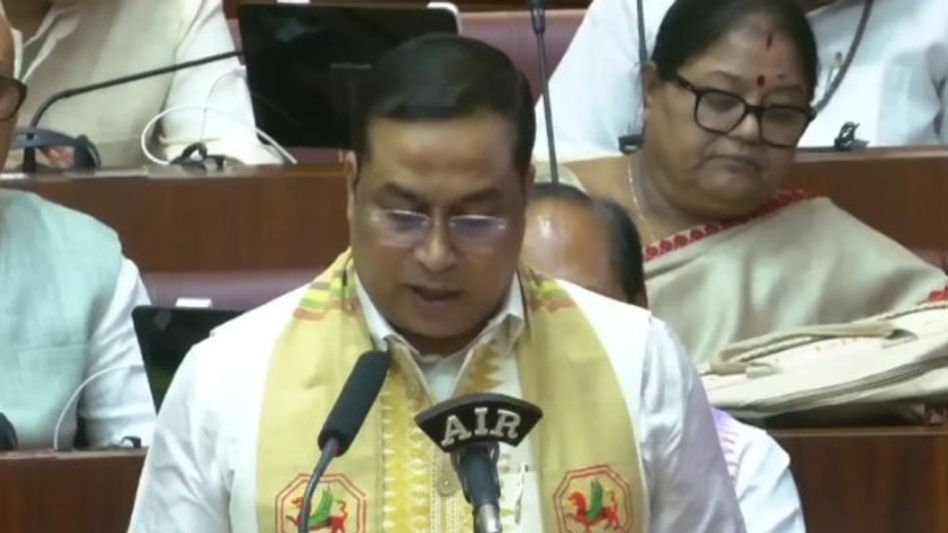
GUWAHATI | Assam Finance Minister Jayanta Malla Baruah on Friday presented the State Budget for 2026-27 in the Legislative Assembly, outlining an ambitious roadmap centred on infrastructure development, welfare expansion, agricultural support and employment generation over the next five years.
A major highlight of the budget is the proposed allocation of Rs 10,000 crore for infrastructure projects, underscoring the government’s focus on accelerating economic growth through capital investment. Of this, Rs 4,954 crore has been earmarked for the Guwahati Ring Road Project, one of the state’s flagship infrastructure initiatives aimed at improving urban connectivity and easing traffic congestion.
The budget also places significant emphasis on social welfare, with an allocation of Rs 6,000 crore for various assistance programmes. The government expects the schemes to benefit thousands of women, students, farmers and differently-abled persons across the state during the current financial year.
Under welfare measures, the government has proposed financial assistance of Rs 15,000 for pregnant women residing in tea garden areas. The initiative is aimed at improving maternal health and providing additional support to one of Assam’s key workforce communities.
The Finance Minister announced the continuation of monthly financial assistance of Rs 2,500 for graduate students pursuing higher education. A total of 48,366 students are expected to benefit from the programme, which seeks to reduce financial barriers to higher studies.

Send your resume:
biswa@jigyasu.co.in
krcfoundation@gmail.com
In a boost to the agricultural sector, the government will continue the Chief Minister’s Agricultural Equipment Scheme, under which small and marginal farmers will receive assistance of Rs 11,000. The budget also proposes additional incentives for farmers selling crops above the Minimum Support Price (MSP).
Paddy and wheat growers will receive an additional Rs 200 per quintal over the MSP, while mustard farmers will be provided an extra Rs 300 per quintal. The measures are intended to enhance farm incomes and encourage higher agricultural productivity.
The government also announced support for the differently-abled community through the Divyang Vahan Scheme. According to the budget, around 3.75 lakh persons with disabilities are expected to be covered under the initiative.
From August 2026, 621 Udasin Bhakats will receive a monthly honorarium of Rs 1,500, recognising their contribution to the state’s cultural and religious traditions.
Baruah informed the Assembly that applications under the Mukhyamantri Nijut Moina Scheme will open in August, with financial assistance scheduled to be disbursed from October. More than 5.3 lakh students are expected to benefit from the scheme during the year.
The Finance Minister also highlighted the continuation of flagship welfare programmes such as Orunodoi, which he described as Assam’s largest direct benefit transfer initiative, and Jibon Prerana, aimed at supporting youth and students.
On employment generation, the government has set a target of creating more than two lakh jobs over the next five years. Baruah said a dedicated task force has already been constituted to formulate and implement strategies for achieving the employment goals.
In a policy announcement concerning government service rules, the minister stated that any government employee found guilty of practising polygamy would face dismissal from service.
Highlighting Assam’s economic performance, Baruah said the state’s per capita income has risen to Rs 1,85,429. He also reiterated the government’s objective of increasing the share of own-source revenue to 50 per cent, thereby strengthening fiscal sustainability.
The Finance Minister noted that capital expenditure reached Rs 26,531 crore during 2025-26, reflecting the government’s emphasis on infrastructure-led development and long-term economic growth.
The 2026-27 budget seeks to balance large-scale investments in infrastructure with targeted welfare measures, while focusing on improving livelihoods, strengthening agriculture, expanding educational support and creating employment opportunities across Assam.