

The displacements and deaths have created a divide so deep that it will take generations to heal the wounds, let alone reconciliation. The fault line may rest with anyone, but the division once created is hard to ‘forget’ if not forgive.
 Biswadeep Gupta
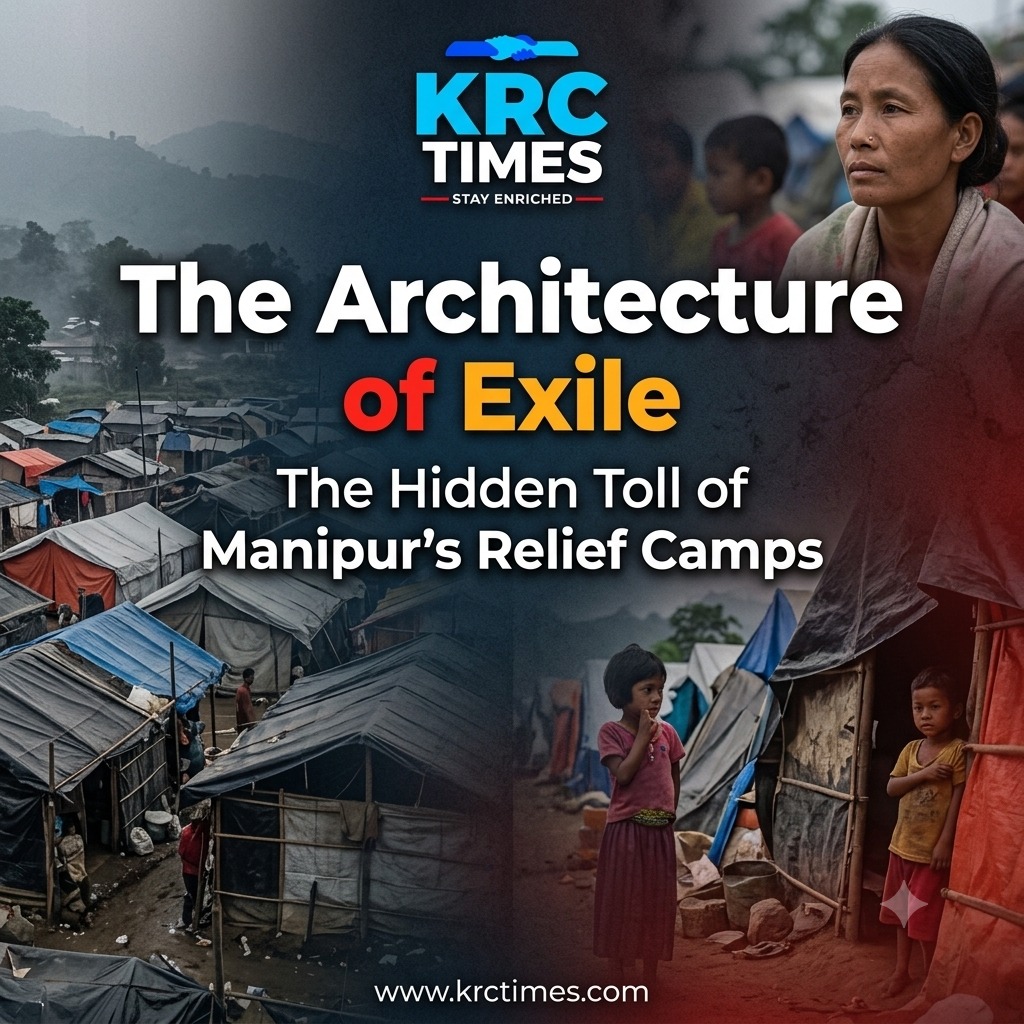
The Architecture of Exile: The Hidden Toll of Manipur’s Relief Camps
Behind the volatile buffer zones and militarised checkpoints of Manipur lies a slower, quieter catastrophe: the institutionalisation of displacement. Months after violence tore through the state on May 3, 2023, tens of thousands of citizens across both the Imphal Valley and the surrounding hills remain marooned in overcrowded relief camps, school halls, and prefabricated shelter units. What was initially conceived as an emergency transit arrangement has hardened into a permanent state of suspended animation, unravelling the socio-economic fabric and collective mental health of an entire generation.
In both Meitei settlements across the valley and Kuki-Zo camps in districts like Churachandpur and Kangpokpi, the economic rupture is absolute. Displacement has violently divorced communities from their productive assets. Farmers cannot cultivate ancestral paddy fields situated along contested foothill peripheries without risking sniper fire; shopkeepers, artisans, and daily wage earners have watched their life savings, shops, and tools turn to ash. Within the camps, economic agency has been replaced by aid dependency—a precarious existence tethered to periodic government dry rations, civil society charity, and erratic ad-hoc allowances. When men and women do find work, it is often distress manual labour that pays subsistence wages and strips away professional dignity.
The displacements and deaths have created a divide so deep that it will take generations to heal the wounds, let alone reconciliation. The fault line may rest with anyone, but the division once created is hard to ‘forget’ if not forgive. The memories of a dear one lost, the cries of the mothers make man more determined to hate the other side; the trust deficit seems permanent. When can this end? No one knows; at least I have lost hope. Meiteis blaming the Central Government, Kuki’s demanding separate administration,
This economic paralysis cascades directly into the social sphere, with children bearing the most severe institutional brunt. While makeshift schools operate inside camp compounds, they are fragile stand-ins for real education. Disrupted curricula, severe shortages of textbooks, absent laboratory infrastructure, and digital blackouts have effectively stalled educational progression. The loss of stable schooling threatens to create a “lost cohort,” cementing long-term inequality and eroding social mobility well into the next decade.
Yet the most serious, most insidious damage is psychological. Relief camps—defined by tin partitions, tarpaulin ceilings, and a total absence of privacy—are cauldrons of chronic stress. Families of five or six share cramped, humid cubicles where intimate grief must be negotiated in full public view. Healthcare workers on the ground document widespread manifestations of post-traumatic stress disorder (PTSD), severe clinical depression, sleeplessness, and psychosomatic ailments. Mothers worry constantly over sanitation and child nutrition; fathers grapple with emasculating despair over their inability to provide or protect; elders deteriorate without familiar hearths and customary support networks.
Compounding this psychological toll is the suffocating sense of political abandonment. As national headlines move on and political discourse settles into rhetorical posturing, camp residents exist in an existential void—neither able to return to burnt-out ancestral homesteads nor integrated into a viable future.
Treating displacement camps merely as logistics problems—counting distributed rice sacks and corrugated sheets—fundamentally misdiagnoses the crisis. Rebuilding Manipur cannot simply mean freezing demographic partitions behind fortified security fences. True rehabilitation requires a credible political roadmap for secure, voluntary return, comprehensive compensation for destroyed livelihoods, and sustained trauma rehabilitation. Until the state addresses the profound human decay festering inside these relief camps, the peace heralded by official communiqués will remain nothing more than an enforced silence over an unhealed wound.