


The urgency of an agreement must be understood against Washington’s increasingly assertive trade policy
 KRC TIMES Desk
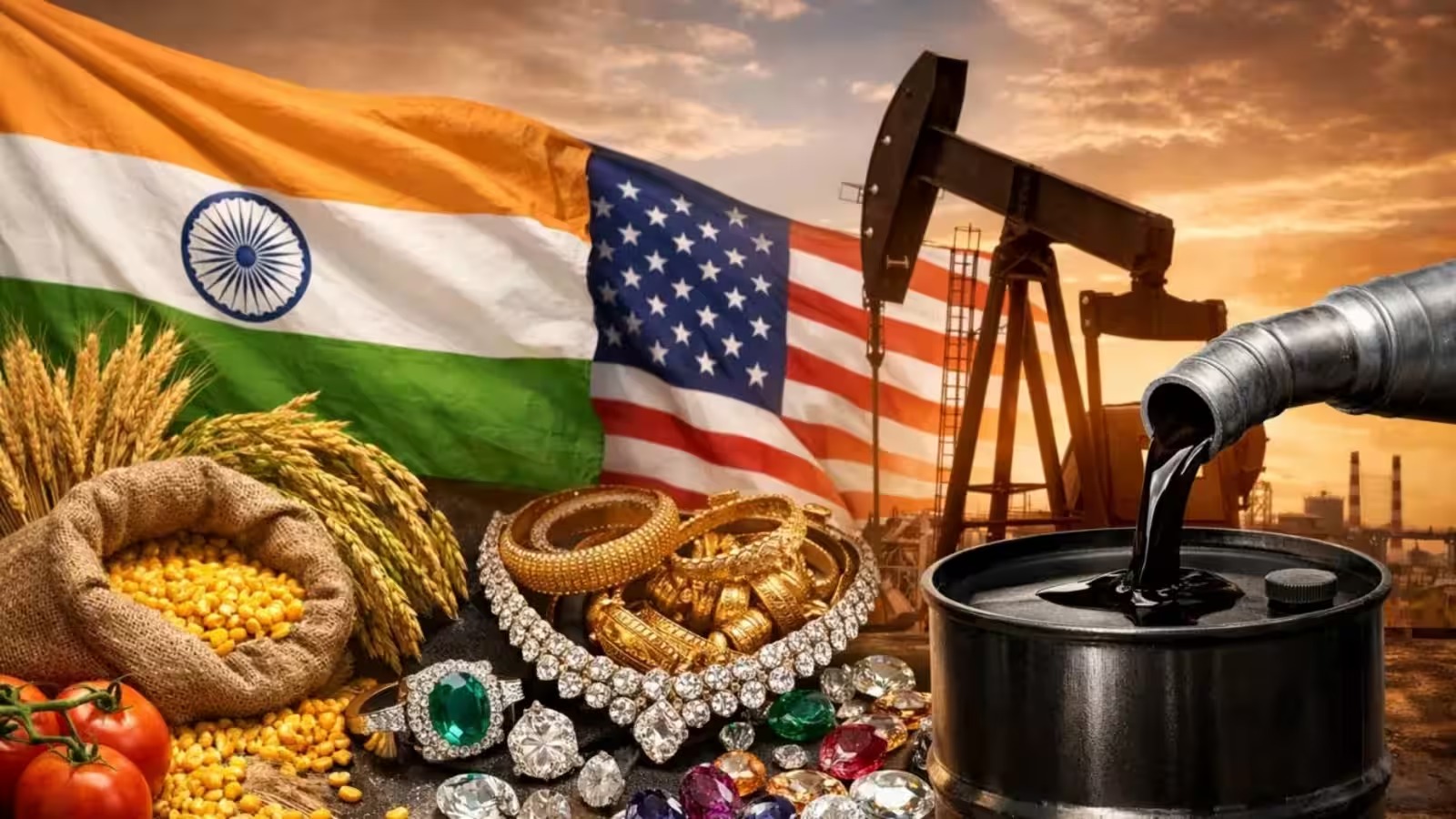
A durable agreement between New Delhi and Washington will depend on mutual concessions, respect for national interests and a recognition that strategic partnerships cannot be sustained through economic pressure alone.
Geopolitical alliances are rarely static. They are forged by shared interests, tested by crises and reshaped by changing economic and security realities. As the Russia-Ukraine war continues to unsettle global markets and the confrontation between the United States and Iran threatens critical energy supplies, the proposed India-US trade agreement has acquired significance far beyond tariffs and market access.
US Secretary of State Marco Rubio’s recent visit to India and his assessment that the pact is “about as close as you can be without having an executed agreement” suggest that both sides are keen to overcome their differences. Yet the final stretch of negotiations may prove the most consequential.
The urgency of an agreement must be understood against Washington’s increasingly assertive trade policy. The United States has used tariffs as an instrument of economic leverage against both competitors and partners, arguing that trade imbalances and unequal market access require corrective action.
However, such an approach carries unequal consequences. Wealthier economies possess greater capacity to absorb tariff shocks and retaliate, while developing countries often face disproportionate pressure on exports, employment and investment. India, despite its expanding economic strength, cannot remain insulated from these disruptions.
The bilateral economic relationship is too substantial to be reduced to a contest over duties. Indian exports to the United States exceed $100 billion, while imports from the American market stand at roughly $43 billion, according to the figures cited in the debate over the proposed agreement. The relationship also extends to advanced technology, defence manufacturing, energy and strategic cooperation in the Indo-Pacific. Disrupting these connections through prolonged trade friction would impose costs on both countries.
Energy has emerged as one of the most sensitive dimensions of the negotiations. Washington has repeatedly expressed concern over India’s purchases of Russian crude oil, viewing them through the prism of the Ukraine conflict and its broader sanctions strategy. India, however, has maintained that energy procurement must be guided by national requirements, affordability and the security of supplies. For a country with a vast population and a rapidly expanding economy, access to reasonably priced energy is not merely a commercial consideration; it is fundamental to economic stability.

Rubio’s comparatively conciliatory remarks in Mumbai, including his acknowledgement that diversifying energy sources is a sensible but gradual process, indicate a measure of pragmatism in Washington’s position. Such flexibility is welcome. Energy markets cannot be reshaped overnight, particularly when geopolitical conflict disrupts established supply chains, shipping routes and refining operations.
The confrontation involving Iran and the uncertainty surrounding the Strait of Hormuz have underscored the vulnerability of global energy supplies. Any prolonged disruption in this strategically vital passage can affect oil prices, transportation costs, inflation and industrial production across continents.
For India, which depends heavily on imported crude, the consequences can be particularly severe. The United States, despite its substantial domestic energy production, is not immune to the wider economic effects of instability in international markets.
This changing energy landscape also highlights India’s growing importance in global refining. The country has developed sophisticated processing capabilities, including at Reliance Industries’ Jamnagar complex in Gujarat, one of the world’s largest refining hubs. Its ability to process different grades of crude makes India an important participant in the international petroleum market. Rubio’s description of India as a refining “superpower” reflects the commercial and strategic value of this capacity.
However, energy cooperation must not become another instrument for imposing one-sided obligations. Washington may seek greater Indian purchases of American crude, liquefied natural gas and other energy products. New Delhi, in turn, must retain the freedom to diversify suppliers and secure the most competitive terms available. A trade agreement should expand commercial choices, not narrow them.
The same principle applies to defence and technology. India needs access to advanced technologies, dependable defence supplies and investment that can strengthen domestic manufacturing. The United States, meanwhile, sees India as an increasingly important strategic partner in balancing China’s influence and maintaining stability across the Indo-Pacific. These interests create considerable scope for cooperation, but they also make mutual confidence indispensable.
Trade negotiations, therefore, cannot be conducted as though India were merely seeking access to the American market. New Delhi represents a major consumer economy, a growing manufacturing base and a strategic partner whose importance extends well beyond bilateral commerce. A successful agreement must recognise these strengths rather than treating market access as a concession that Washington can grant or withdraw at will.
Agriculture remains one of the most difficult areas of negotiation. The United States has an interest in expanding access for its agricultural products, while India must protect a sector that supports hundreds of millions of people, including small and marginal farmers. Differences in farm sizes, production costs, subsidies, rural employment and social safety nets make a straightforward comparison between the two agricultural systems misleading.
India’s caution on agricultural concessions is consequently justified. Opening sensitive sectors too quickly could expose vulnerable producers to intense competition and create economic distress in rural areas. At the same time, protection cannot become an excuse for avoiding every form of reform or competition. The challenge is to identify areas where greater access can benefit consumers and producers without undermining livelihoods or food security.

A balanced agreement should provide safeguards for vulnerable sectors, establish clear rules for market access and create mechanisms to address disputes. Any concessions should be assessed on the basis of their long-term economic value rather than their immediate political appeal. An agreement that delivers export opportunities but weakens rural livelihoods would be difficult to defend. Equally, an arrangement that fails to generate meaningful gains for Indian exporters would offer little justification for the compromises involved.
Predictability is another essential requirement. Businesses make investment decisions over years, not electoral cycles. Frequent changes in tariff policy, uncertainty over market access and the threat of sudden restrictions discourage companies from building supply chains or committing capital.
India and the United States need a framework that reduces such uncertainty and provides transparent procedures for resolving disagreements. Immigration and mobility also remain relevant to the broader relationship. Indian professionals, students and businesses have long contributed to economic and technological links between the two countries. Tighter immigration rules and uncertainty over the movement of skilled workers can complicate commercial
cooperation, even when governments publicly emphasise their strategic partnership. Although these issues may not be settled through a trade agreement alone, they illustrate why bilateral relations cannot be measured solely by the value of goods exchanged.
The reported progress in negotiations is encouraging, particularly Rubio’s suggestion that only a limited number of issues remain unresolved. But optimism should not be mistaken for a completed agreement. The remaining questions-agricultural access, energy purchases and the pace and extent of tariff reductions-are precisely those that will determine whether the final arrangement is economically meaningful and politically sustainable.
Both governments must resist the temptation to present negotiations as a test of national prestige. Public ultimatums and political grandstanding may generate short-term domestic support, but they can make compromise more difficult. Diplomacy works best when difficult differences are addressed through sustained engagement, technical consultations and clearly defined reciprocal benefits.
India and the United States have compelling reasons to reach an understanding. Washington needs reliable partners, expanding markets and resilient supply chains. New Delhi seeks investment, advanced technology, energy security and greater access to the world’s largest consumer market. Neither side benefits from allowing disagreements over tariffs and procurement to weaken cooperation in areas of shared strategic interest.
Yet partnership cannot mean automatic alignment. India must preserve its strategic autonomy and defend legitimate domestic interests, just as the United States will continue to pursue its own economic priorities. The objective should not be to eliminate every difference but to establish rules through which those differences can be managed without repeatedly destabilising the relationship.
The proposed trade deal offers an opportunity to achieve precisely that. If both governments approach the final negotiations with flexibility, realism and respect for each other’s concerns, the agreement could strengthen bilateral commerce and provide a measure of stability amid wider global uncertainty. If, however, it is shaped primarily by pressure and unequal concessions, its durability will remain in doubt.
The real test of the India-US trade agreement will not be how quickly it is signed or how impressive the initial announcements appear. It will be whether the arrangement delivers tangible benefits to businesses, workers, farmers and consumers in both countries. A lasting partnership must rest on reciprocity, not compulsion. In an increasingly fragmented world, that is not merely good trade policy; it is sound strategic judgment.