

Born from the devastation of the Second World War, the United Nations remains central to international cooperation, but funding pressures, Security Council vetoes and geopolitical rivalries continue to undermine its ability to maintain peace
 KRC TIMES Desk
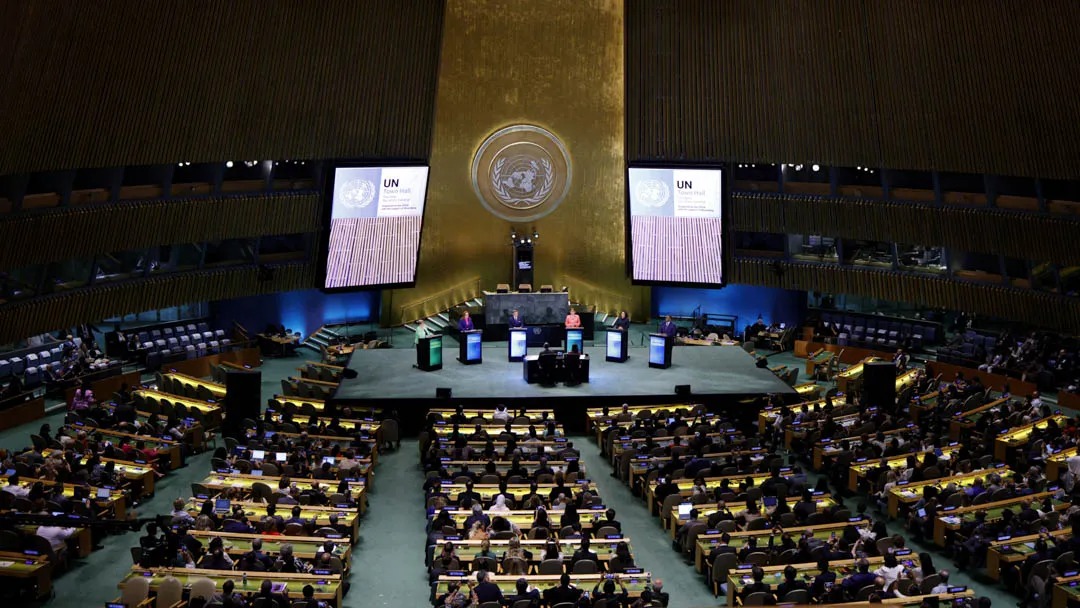
The United Nations marked the 81st anniversary of its founding Charter coming into force on October 24, 2026, at a time when its authority, finances and ability to respond to global crises face mounting challenges. Established to prevent another world war and promote international cooperation, the organisation is increasingly constrained by the rivalries of the very powers entrusted with safeguarding global peace.
The financial strain is one indication of its difficulties. The UN’s regular budget for 2026 has been reduced to $3.45 billion, around 7 per cent below the previous year’s level. Unpaid contributions from member states, including the United States, which traditionally accounts for roughly one-fifth of the regular budget, have added to the pressure on the organisation.
Leadership transition has presented another challenge. The process to select a successor to Secretary-General António Guterres has also exposed divisions among major powers. According to the reported straw poll held on October 16, none of the seven candidates had secured the support of all five permanent members of the Security Council. The selection process highlights the influence these countries continue to exercise over the institution’s leadership.
Lessons from the failure of the League of Nations
The UN emerged from the failure of the League of Nations, established after the First World War to prevent future conflicts. The League lacked effective enforcement mechanisms and never included the United States as a member. Its inability to respond decisively to aggression by Japan, Italy and Germany contributed to the collapse of the international arrangements intended to preserve peace.
The UN Charter, signed in San Francisco in June 1945, sought to create a stronger framework. It prohibited the use of force against the territorial integrity or political independence of states, empowered the Security Council to take enforcement measures and linked international peace with development and human rights.

However, the arrangement also reflected the realities of power at the end of the Second World War. The five victorious powers – the United States, Russia, China, Britain and France – secured permanent seats on the Security Council, along with veto powers over substantive decisions.
The compromise helped persuade the major powers to participate in the new organisation. At the same time, it created a structural limitation: when a permanent member’s interests clash with a proposed international response, collective action can be blocked.
That tension continues to shape the UN’s record.
A record of achievements and shortcomings
Despite its limitations, the United Nations has played an important role in international cooperation over the past eight decades. Its membership has expanded from 51 founding countries to 193, largely reflecting decolonisation and the emergence of independent states.
UN agencies have contributed to global public health, humanitarian assistance, refugee protection and food security. The eradication of smallpox, supported by international cooperation and led by the World Health Organization, stands as a landmark achievement. UN peacekeeping operations have also helped implement peace agreements and support political transitions in countries including Namibia, Cambodia and Sierra Leone.
The organisation has provided a forum where countries of different sizes and political systems can negotiate, raise disputes and coordinate responses to shared challenges. Its humanitarian agencies continue to deliver assistance in conflict zones and areas affected by natural disasters.
The absence of a third world war since 1945, however, cannot be attributed to the UN alone. Nuclear deterrence, diplomatic negotiations, regional arrangements and other factors have also shaped the international security environment. The continued existence of wars and humanitarian emergencies demonstrates the limits of the organisation’s ability to prevent conflict.
Security Council vetoes expose divisions
The Security Council’s inability to act consistently in major conflicts remains one of the most persistent criticisms of the UN system.
The failures to prevent mass atrocities in Rwanda and Srebrenica during the 1990s damaged the organisation’s credibility. More recent disagreements over Gaza and Ukraine have again highlighted the difficulty of securing collective action when the interests of major powers diverge.
In 2025, the United States vetoed two proposed Security Council texts on Gaza drafted by the ten elected members of the Council. Russia, meanwhile, vetoed amendments to a text on Ukraine, including one that reaffirmed Ukraine’s territorial integrity.
These episodes illustrate how veto power can prevent the Council from adopting resolutions even when other members support action. The consequences extend beyond individual votes, raising questions about consistency, accountability and the ability of international institutions to apply agreed principles across different conflicts.
Secretary-General Guterres warned in 2024 that divisions among major powers had seriously damaged the Security Council’s authority. The challenge is particularly pronounced when permanent members are directly involved in a conflict or support one of its parties.
The veto was designed to keep the major powers within the UN system. Yet its use can also leave the organisation unable to respond when its collective intervention is most needed.
Financial pressure is not a substitute for reform
Questions about the UN’s administrative costs and efficiency deserve attention. Critics have argued that its bureaucracy needs streamlining, resources must be used more effectively and programmes should be assessed against measurable outcomes.
But financial pressure caused by unpaid contributions does not, by itself, address these concerns. When member states fail to meet their financial obligations, the organisation’s ability to sustain programmes and fulfil mandates is weakened.
Reform therefore requires both greater accountability within the institution and a stronger commitment from member states to honour their obligations. Budgetary discipline and timely payments are essential if the UN is to maintain its humanitarian, developmental and peacekeeping responsibilities.
A Security Council that reflects today’s world
The composition of the Security Council is another major issue. Its permanent membership reflects the distribution of power in 1945 rather than the political and demographic realities of the present day.
Africa and Latin America have no permanent representation, while India, the world’s most populous country, also lacks a permanent seat. Calls for reform have increasingly focused on expanding representation to make the Council more reflective of the contemporary international system.
Changing the UN Charter is difficult because amendments require ratification by two-thirds of member states, including all five permanent members of the Security Council. Any comprehensive reform must therefore overcome resistance from countries that benefit from the existing arrangement.
One possible avenue is greater restraint in the use of the veto, particularly in cases involving genocide, war crimes and crimes against humanity. Proposals for voluntary commitments by permanent members not to block action in mass-atrocity situations have gained attention, although their effectiveness would depend on political willingness.
A 2022 General Assembly resolution also established a mechanism for the Assembly to meet and debate when a permanent member casts a Security Council veto. While this does not remove the veto, it provides an avenue for broader scrutiny of decisions that might otherwise end discussion within the Council.
Leadership will shape the next phase
The selection of the next secretary-general will provide an early indication of how the major powers view the organisation’s future. The five permanent members will remain central to the process, but the wider membership will also have a stake in choosing a leader capable of representing the international community.
The next secretary-general will face the task of navigating geopolitical divisions while defending the UN’s core principles. The role requires sustained diplomacy, the ability to build coalitions and a willingness to raise difficult questions with powerful governments.
There have also been calls for the next secretary-general to be a woman, which would mark a historic first in the organisation’s leadership. The eventual choice, however, will depend on the selection process and the support of member states.
At 81, the United Nations remains an essential platform for diplomacy and international cooperation, even as its limitations become increasingly visible. Its agencies continue to perform functions that individual countries cannot easily replace, from coordinating humanitarian assistance to supporting public health and development.
The central question is not whether the world can dispense with the UN, but whether its members are willing to reform it. Without changes to representation, greater restraint in the use of vetoes, more reliable funding and stronger political commitment, the organisation risks becoming increasingly limited to humanitarian relief and diplomatic declarations.
The UN was created to help build an international order in which disputes could be managed through cooperation rather than force. Preserving that ambition will require its members, particularly the most powerful among them, to accept that the credibility of the institution depends on more than their participation. It also depends on their willingness to allow collective principles to guide their actions.
The challenge at 81 is therefore reform, not retirement: making the United Nations more representative, accountable and capable of responding to a world whose conflicts and power structures have changed considerably since 1945.