


A Crucial Test of Netanyahu’s Leadership
 KRC TIMES Desk
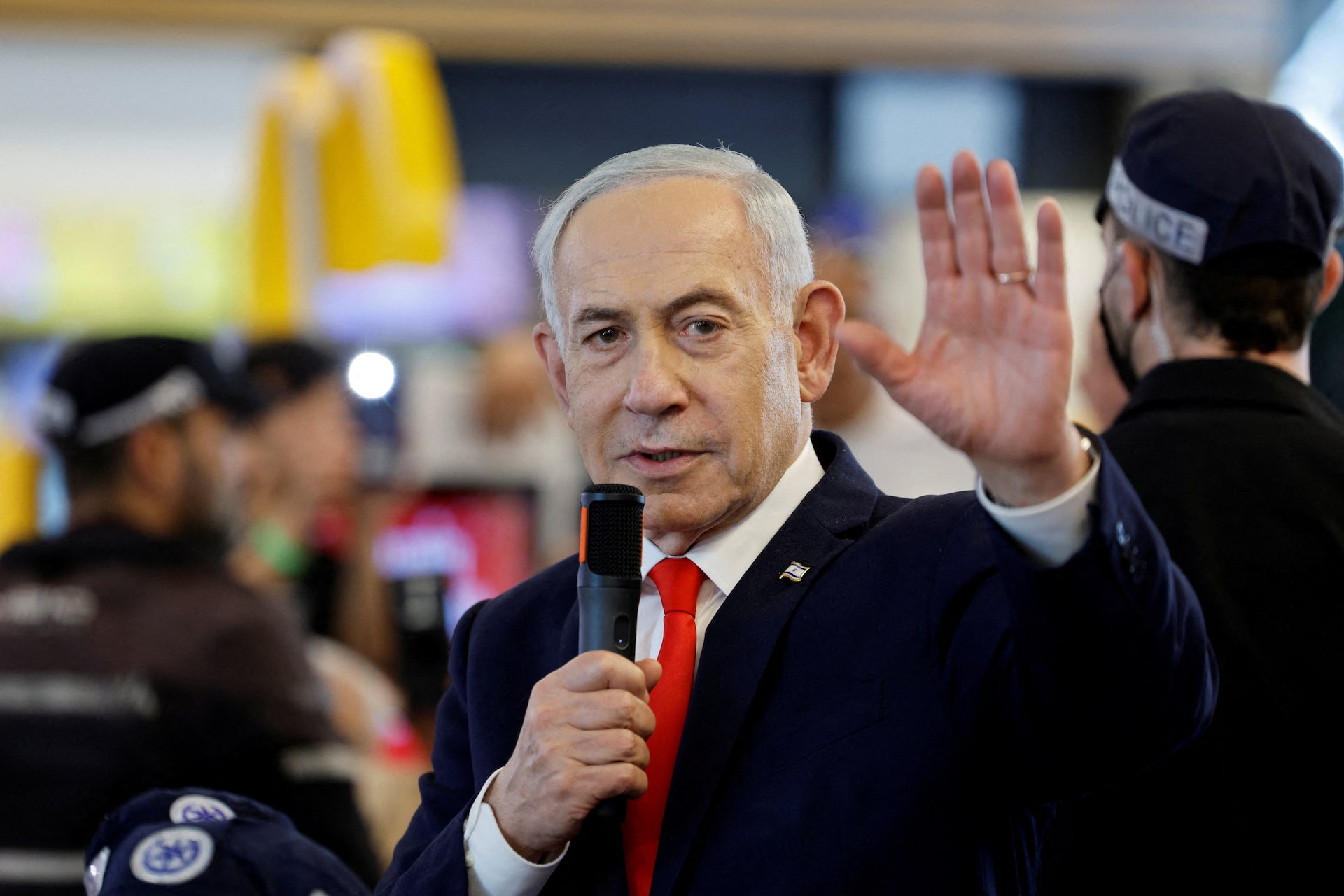
With the October 7 security failure, the unresolved wars, rising living costs and military conscription dividing the electorate, Israel’s vote could determine not only Benjamin Netanyahu’s political future but also the direction of its regional policy and relations with Washington.
Israel’s election has emerged as a defining political contest over leadership, accountability and national security. For Prime Minister Benjamin Netanyahu, the vote is far more than a battle to retain power. It is a test of whether voters still trust the man who built his political identity around keeping Israel safe, despite the unprecedented security failure of October 7, 2023, and the prolonged conflicts that followed.
The political stakes are exceptionally high. Netanyahu’s Likud party faces a challenge from a fragmented opposition, with former military chief Gadi Eisenkot and other political figures seeking to turn public anger into an electoral alternative. Yet the contest remains difficult to predict. Opinion polls have offered conflicting assessments of the two leading camps, while neither side has consistently demonstrated a clear path to the 61 seats required for a majority in Israel’s 120-member Knesset.

The uncertainty reflects a deeply divided electorate. For many Israelis, the election is an opportunity to hold the government accountable for the Hamas-led attacks of October 7, 2023, when Israel suffered one of the gravest security failures in its history. For others, Netanyahu remains a leader with the experience and determination required to confront the country’s enemies in an increasingly volatile Middle East.
The October 7 attacks remain central to this political calculation. According to findings cited by the Israel Democracy Institute, more than 60 per cent of Israelis say the events influence their voting decisions. However, the national trauma has not necessarily translated into a decisive shift in political loyalties.
Netanyahu’s supporters argue that the intelligence and security establishment failed to prevent the attacks and that the government subsequently took steps to restore Israel’s military deterrence. His critics counter that a prime minister who repeatedly presented himself as the country’s foremost security expert cannot escape responsibility for such a catastrophic failure.
The demand for accountability has become a major electoral issue. Thousands of demonstrators gathered in Tel Aviv shortly before the vote, calling for an independent state commission of inquiry into the events of October 7. Opposition leaders have promised to establish such a commission if they form the next government.
Netanyahu’s reluctance to accept an independent investigation has reinforced suspicions among his opponents that political survival is taking precedence over institutional accountability. For the families of those killed or taken hostage, the issue extends beyond party politics. They want answers about how the attacks occurred, why warnings were not acted upon and who should bear responsibility.
Security remains central, but the public mood is changing
National security continues to dominate Israeli politics, but the electorate’s concerns extend well beyond the immediate battlefield. Hamas remains a security challenge, Hezbollah continues to threaten Israel from Lebanon, and Iran remains a central concern in Israeli strategic calculations. The outcome of the conflict with Iran and the effectiveness of the ceasefire have also raised questions about whether the government has achieved its declared objectives.
Netanyahu has long argued that confronting Iran and weakening its regional network are essential to Israel’s survival. His political appeal has rested partly on his promise to prevent hostile forces from acquiring the capacity to threaten the Israeli state.
Yet military operations alone cannot settle the question of political success. Voters must also assess whether the conflicts have produced sustainable security, whether the threat of renewed violence has diminished and whether the country has a credible strategy for the period after the fighting.
The distinction between military achievements and long-term political outcomes is becoming increasingly important. Even when military operations inflict substantial damage on adversaries, the absence of a clear post-war settlement can leave the underlying conflict unresolved. For Netanyahu, this creates a difficult challenge: he must defend his security record while facing questions about the costs, duration and ultimate objectives of the wars.
The wider regional implications are equally significant. Israel’s relations with its neighbours, the future of the Palestinian question and its strategic partnership with the United States will all influence the country’s next political chapter.
Economic pressures and military service deepen divisions
The cost of living is another major concern. Higher household expenses have added to the burden on families already affected by prolonged conflict and uncertainty. Defence expenditure has risen sharply since 2023, placing additional pressure on public finances and intensifying debate over how the costs of national security should be distributed.
For many voters, the central question is whether the government can maintain military preparedness without allowing the economic burden to fall disproportionately on ordinary citizens. Rising prices, housing costs and pressure on public services can weaken support for a government even among voters who broadly agree with its security objectives.
The controversy over military conscription has further complicated Netanyahu’s position. Ultra-Orthodox exemptions from compulsory military service have become a major source of public resentment, particularly as reservists and their families shoulder the demands of prolonged military operations.
The High Court of Justice has challenged the legal arrangements that protected broad exemptions for ultra-Orthodox men. The issue has exposed a wider disagreement over equality, religious identity and civic responsibility. With tens of thousands of ultra-Orthodox men of military age outside regular service, demands for conscription or meaningful sanctions have gained support across much of the electorate.
The dispute also threatens the stability of Netanyahu’s governing coalition, which depends on religious parties whose support for exemptions is politically important. Any attempt to change the system could therefore create a conflict between electoral demands for greater fairness and the coalition arithmetic required to remain in power.
Netanyahu’s political and legal battles
Netanyahu enters the election with considerable political experience. Having served multiple terms as prime minister over nearly two decades, he has built an international profile as a leader who places military strength and confrontation with Iran at the centre of Israeli policy.
The endorsement of US President Donald Trump has also provided Netanyahu with an important political advantage. His supporters present the relationship as evidence of Israel’s influence in Washington and argue that his experience is essential during a period of regional instability.
However, Netanyahu faces serious challenges on the domestic front. His coalition has lost political ground in several mainstream opinion polls, while opposition parties with different ideological positions are attempting to coordinate around a common objective: ending his premiership.
The opposition is far from ideologically united. It includes security hawks, centrists and left-leaning politicians who disagree on important questions of domestic and foreign policy. Their principal point of agreement is that Israel needs a change of leadership and a more accountable approach to governance.
Netanyahu’s legal difficulties add another layer of uncertainty. He denies the bribery, fraud and breach-of-trust charges against him, which he argues are politically motivated. His ongoing corruption trial and request for a presidential pardon have kept the issue in the public spotlight.

A change of government could alter the political circumstances surrounding these disputes, although the legal process would remain subject to the applicable judicial framework. Netanyahu’s opponents have made his departure from public life a condition for any arrangement that might bring the trial to an end.
The election therefore carries consequences beyond the immediate question of who will occupy the prime minister’s office. It could determine whether Netanyahu continues to negotiate from a position of political authority or faces his legal and political challenges without the advantages of incumbency.
A fragmented opposition and the arithmetic of power
Even if Netanyahu’s Likud fails to emerge as the largest party, removing him from office will not necessarily be straightforward. Israel’s proportional electoral system makes coalition building essential, and a fragmented opposition may struggle to assemble a stable majority.
Arab political parties could hold a significant number of seats, but Netanyahu and several opposition leaders have ruled out relying on them as formal coalition partners. This political exclusion narrows the options available to parties seeking to replace the incumbent government.
The result could be a prolonged period of negotiations, an unstable coalition or another election if no political camp can secure a majority. Under such circumstances, Netanyahu could remain prime minister in a caretaker capacity while negotiations continue.
That possibility illustrates the difference between winning public support and securing the parliamentary numbers needed to govern. A party may perform strongly in the election yet remain unable to form a government if its potential partners cannot agree on a common programme.
For the opposition, defeating Netanyahu is only the first challenge. It must also demonstrate that its competing political factions can work together on security, the economy, religious exemptions and the Palestinian question.
What the result could mean for the Middle East
The election’s regional consequences should not be exaggerated. A change of prime minister would not automatically produce a fundamental shift in Israeli policy, particularly on security and the future of Palestinian statehood.
Both Netanyahu and several leading opposition figures have expressed opposition to the establishment of a Palestinian state under current conditions. This creates a significant obstacle to diplomatic initiatives aimed at achieving a broader regional settlement.

Saudi Arabia’s position on normalising relations with Israel has also been linked to progress towards Palestinian statehood. Consequently, even a new Israeli government could face difficulties in advancing a major diplomatic agreement unless it is prepared to address the Palestinian question in a more substantive way.
Washington will remain central to Israel’s strategic calculations. Trump’s support for Netanyahu has highlighted the close relationship between the two leaders, while differences over the future course of military action against Iran could become more pronounced under a different Israeli administration.
The next government will have to balance its security priorities with international diplomatic pressure, regional stability and the economic costs of prolonged confrontation. Whether Netanyahu remains in office or a successor takes over, these challenges will not disappear with the election.
Ultimately, Israel’s vote is about more than the survival of one politician. It is a judgement on the government’s handling of the October 7 attacks, its conduct of the subsequent conflicts, its approach to economic pressures and its willingness to accept institutional accountability.
Netanyahu’s supporters believe his experience makes him indispensable at a time of continuing danger. His opponents argue that the country cannot rebuild public trust without a change in leadership and a transparent investigation into its gravest security failure.
The election may not immediately resolve Israel’s internal divisions or its regional conflicts. But it will establish the political conditions under which the country confronts them. For Netanyahu, the question is whether a long record in power remains an asset or has become a liability. For Israel, the larger challenge is to determine whether its next chapter will be defined by the continuation of existing policies or by a renewed effort to combine security with accountability, economic stability and a credible diplomatic strategy.
Festivals should be a time of celebration, not a reminder of economic insecurity. The measure of effective economic management is not merely whether inflation remains within a numerical target, but whether families can meet their essential expenses without abandoning the small pleasures and traditions that give social life its meaning.
The government must act with urgency, but also with foresight. Short-term relief can soften the immediate blow; only sustained improvements in agriculture, energy security, logistics and market efficiency can offer a lasting solution. India’s festive cheer should not depend on temporary discounts or the willingness of small businesses to sacrifice their margins. It should rest on an economy in which rising prosperity is accompanied by stable prices and stronger purchasing power. That is the real test of inclusive growth.

