

Nearly 20% of pregnant and breastfeeding women surveyed in Assam’s Barak Valley and adjoining Tripura found deficient; researchers call for dietary diversification and targeted nutritional intervention
 KRC TIMES Assam Bureau
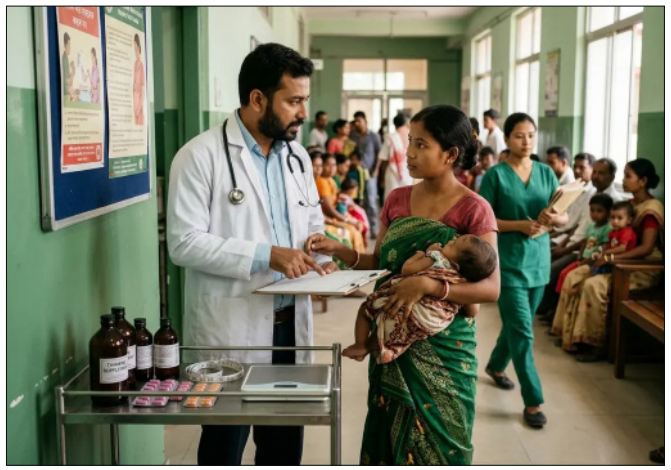
GUWAHATI | A diet dominated by polished white rice may be leaving thousands of women in parts of Northeast India vulnerable to an overlooked nutritional deficiency, with new research highlighting the growing risk of Vitamin B1 deficiency among pregnant women, nursing mothers and infants.
A community-based study covering 120 villages across Assam’s Barak Valley and adjoining districts of Tripura has found that nearly one in five pregnant and breastfeeding women surveyed had biochemical or functional thiamine deficiency. More concerningly, almost one in 10 showed severe functional impairment, raising questions about the nutritional quality of everyday diets in the region.
The findings, based on research conducted during 2023-24, underline how food habits, economic limitations and inadequate dietary diversity can create serious health risks even when maternal healthcare services are available.
Researchers identified the heavy dependence on polished white rice as one of the major factors behind the deficiency. Although rice remains the principal source of daily calories for most participants, the study found that foods containing significant amounts of thiamine, including green leafy vegetables, legumes and nuts, were consumed far less frequently.
Fish was the most commonly consumed animal-source food. However, eggs, poultry, meat, dairy products and fruits featured only occasionally in the diets of many women. This imbalance between high carbohydrate consumption and limited nutritional diversity is particularly concerning during pregnancy and breastfeeding, when women’s requirements for essential vitamins and minerals increase.
Thiamine, commonly known as Vitamin B1, plays an essential role in converting food into energy and maintaining normal nervous system function. Its deficiency can lead to beriberi, a potentially serious disorder. In infants and pregnant women, severe deficiency can have particularly damaging consequences.

One of the major concerns highlighted by the researchers is that the deficiency frequently remains hidden. Early symptoms may not be clinically obvious, meaning women with inadequate thiamine levels could remain undiagnosed until more serious complications develop.
The researchers cautioned that the prevalence of subclinical deficiency suggests the actual nutritional burden may be substantially greater than the number of clinically identified beriberi cases.
The findings also bring attention to the relationship between poverty and nutritional vulnerability. Limited household resources and restricted access to diverse foods can force families to depend heavily on inexpensive staple foods, even when these provide insufficient quantities of essential micronutrients.
Polished rice itself is an important part of the problem. The milling and polishing process removes much of the thiamine naturally present in the outer layers of the grain. Communities relying almost entirely on polished rice, without adequate dietary alternatives, therefore face a greater risk of Vitamin B1 deficiency.
Published in the Annals of the New York Academy of Sciences, the multi-institutional study is among India’s largest community-based investigations examining both biochemical and functional thiamine status among pregnant and lactating women.
The researchers have called for Vitamin B1 deficiency to receive greater attention in India’s maternal and child nutrition programmes, particularly in vulnerable communities across the Northeast.
Among the suggested interventions are targeted thiamine supplementation, prenatal multiple-micronutrient supplements containing Vitamin B1, greater awareness of nutritionally balanced diets and the promotion of food diversification. Population-level food fortification could also be considered as a longer-term intervention.
The study points to a broader challenge for public health authorities: improving access to hospitals, antenatal check-ups and institutional deliveries may not be sufficient to address maternal and infant health risks if the nutritional quality of everyday food remains neglected.
For rice-dependent communities in the Northeast, the question is no longer simply whether families have enough food, but whether their daily meals provide the essential nutrients needed to protect mothers and ensure healthy infant development.