


Death is not an end but a transition – Identity stretches across lifetimes, shaped by karma and purpose
 KRC TIMES Desk
Ashk Machhanvi
A disciplined young boy named Kumar lived in the serene Himalayan village of Bhairavpur near Rampur, Himachal Pradesh. He began experiencing dreams unlike any other. Each night, he was transported to a scorching desert where ancient armies clashed under a blazing sun, and a grand palace loomed over golden sands.
In these dreams, he was not Kumar but a powerful general, leading troops into battle with unwavering resolve. The sensations were vivid, he could hear the clash of swords, feel the weight of armor, and sense the sun’s heat on his skin.
Troubled by the realism of these visions, Kumar sought out Pandit Dina Parashad, the village’s young revered spiritual teacher. Known for his wisdom and deep knowledge of ancient scriptures, Pandit Dina listened intently as Kumar shared his experiences.
The Pandit’s Wisdom
Beneath the shade of an ancient banyan tree, Pandit Dina spoke of punarjanma, rebirth. He explained that the soul (Atman) is eternal, journeying through many lifetimes, each shaped by the karma of the past. Actions, thoughts, and intentions, he said, leave impressions that the soul carries forward.
He taught Kumar meditation and guided him through sacred texts, helping him explore his inner world. The dreams became more detailed. Kumar began sketching maps of the desert kingdom he saw in his sleep, identifying places he had never visited. He often uttered the name “Viraj Singh,” a name that stirred something ancient within him.
Echoes of the Past
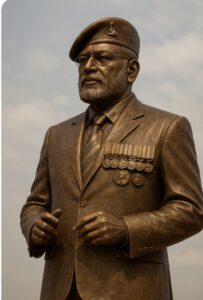
One serene evening, during a deep meditative trance, Kumar had a powerful vision. He stood on the ramparts of a sandstone fort, gazing out across a vast desert, shouting orders “Attack! Capture them!” He was General Viraj Singh, the protector of a noble desert kingdom.
He recalled swearing allegiance to a young prince and defending the realm against overwhelming odds. His final memory was of falling in battle, pierced by arrows, eyes fixed on a burning horizon.
Kumar awoke with tears in his eyes. The memory was no longer just a dream, it had become a part of him.
A Life of Duty
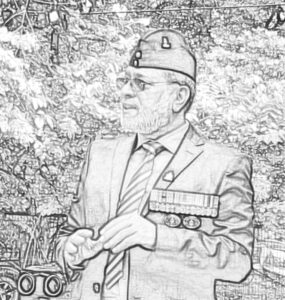
Driven by a deep sense of discipline and service, Kumar joined the Indian Army. He excelled in training, instinctively demonstrating strategic prowess, particularly in desert warfare. He was proficient in military tactics, raids, and leadership, skills he seemed to possess innately. During his postings in Jammu & Kashmir and Operation Pawan with the IPKF, he was awarded a Gallantry Medal. His chest bore many decorations, and his colleagues often remarked on his uncanny instincts, as if he had done it all before.
Kumar rose to the rank of Colonel. His career was marked by honor and success, but the dreams never left him. Despite all his accomplishments, a lingering sense of incompletion remained. Something from the past continued to call out.
The Soul Remembers
After retirement, Kumar followed his intuition. One winter, he travelled to a remote village in Rajasthan—a place he had seen countless times in his dreams. As he stepped into the village square, a strange familiarity washed over him. An elderly woman approached tears in her eyes.
“Viraj,” she whispered, placing a trembling hand on his cheek. “You’ve returned.”
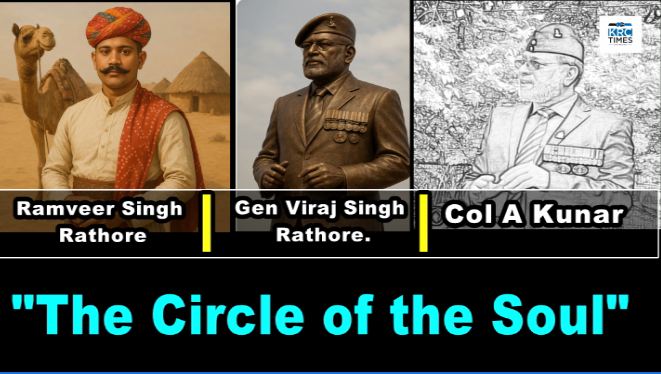
Nearby stood a blackened statue of a general, one that bore an uncanny resemblance to him. The name etched on the pedestal is General Viraj Singh Rathore.
The Desert Awakens
The villagers led him to the ruins of an ancient palace. As he walked through its crumbling corridors, memories surged forth. He named rooms before anyone could speak. He pointed to a faded mural buried in dust and identified it as the Map/sand model room.
Local lore confirmed his visions. The villagers spoke of General Viraj Singh, a brave warrior who died defending their kingdom generations ago. His legend lived on in folk songs and stories. Until now, no one imagined he might return.
Karma’s Path
Sitting at the base of the old fort, Kumar closed his eyes and reflected on the past. His life as an officer, his path of discipline and service, was no coincidence. It was the continuation of a soul’s unfinished journey. Karma had brought him back to complete what was left undone.
In his past life, he had died with regret, believing he had failed his people. His years were spent defending his riyasat and living a life of duty and pleasure. In this life, through service and sacrifice, he had redeemed that karma.
Circle Complete
Returning to Bhairavpur, Kumar embraced a quiet and dignified life. He continued learning from Pandit Dina Nath, mentored young minds and began writing about his journey. The concept of rebirth, once mystical, had become his lived truth. Villagers would gather under the shade of an ancient banyan tree, to listen to his stories. He became the talk of the town. Journalists visited him, and his story was aired on television.
He now understood: that the soul is eternal, and life is a series of evolving journeys. Death is not an end but a transition. Identity stretches across lifetimes, shaped by karma and purpose. In embracing both his past and present, Kumar had found peace.
His life had come full circle, a testament to the enduring journey of the soul.
A New Beginning of Life
One quiet winter morning, the sleepy village of Bhairavpur awoke to solemn news: Colonel Saab has left his body. The air was still, the birds silent, as though nature itself paused in reverence. Pandit Dina Parshad, now older but still radiant with inner calm, gathered the villagers beneath the ancient banyan tree. With folded hands and a steady voice, he announced, “Kumar Saab has taken samadhi. He has not died… he has departed, in full awareness, into the arms of the Eternal.”
His body was laid to rest in a simple shrine near the village stream, the same stream where he once guided children, spoke of Dharma and shared stories of distant wars and forgotten kingdoms. Flowers were offered, conch shells blown, and people wept, not in sorrow, but with a strange peace in their hearts. They knew his journey wasn’t over.
Months later, in the desert state of Rajasthan, in the same sun-scorched village where General Viraj Singh had once fought and fallen, a child was born under a moonless sky. The elders noted the stars, the Guru was in ascendance, and the yogas in the birth chart were rare. They named him Ramveer Singh.
From an early age, Ramveer showed an unusual quietude. He didn’t cry much as an infant. As he grew, he avoided frivolous games and instead spent hours sitting by the dried well, watching birds, helping old people walk, feeding stray animals. His eyes, deep, and observant, often made elders say, “He’s been here before.”
By the time he turned twenty, Ramveer had become known across the region for his tireless work, organizing blood donation camps, reviving dried-up water tanks, helping impoverished farmers, and even mediating local disputes with unusual wisdom. Though he had never studied philosophy formally, he often uttered words that echoed ancient truths.
But what truly set him apart was his quiet but firm devotion to Sanatan Dharma. In his small home, beside a lamp that was never allowed to die, stood a framed image of Adi Shankaracharya and a photograph of Sharada Sarvagya Peeth in Jammu & Kashmir. Few knew where he first heard of the ancient seat of wisdom, but he often quoted its teachings with striking clarity. Ramveer saw no contradiction between seva and sadhana, he saw them as one.
Inspired by Shankaracharya’s doctrine of Advaita (non-dualism), he would often tell villagers, “You and I are not separate. When you are hurt, I must act. When you feel hunger, I must serve. That is Sanatan Dharma, not ritual, but realization.”
He began conducting Vedantic study circles under a neem tree near the temple ruins. He promoted the revival of Sanskrit learning in nearby schools, encouraged village youth to study the Upanishads, and celebrated Sharada Jayanti each year with simple devotion and deep thought. His presence became a bridge, between the past and present, knowledge and action, prayer and practice.
People began visiting him, some out of curiosity, others with trembling hope. Many claimed to have known him in his previous life. One blind singer from Jaisalmer wept at his feet, swearing he was the rebirth of General Viraj Singh. Another, an old havildar who had once served with Colonel Kumar, fell to his knees in disbelief. “Those eyes… that walk… it’s him,” he whispered.
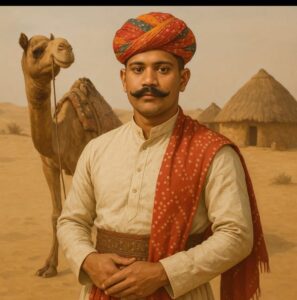
But Ramveer Singh only smiled humbly. “I do not remember anything before this life,” he would gently say. “But if I can serve, then that is all that matters.”
Despite the claims and chaos, he never let attention distract him. He refused interviews, declined awards, and lived in a modest mud-brick home with minimal possessions. His mission was clear: seva, service to humanity. Be it building a new school, lighting pyres during a COVID-19 outbreak, or planting neem trees across the village, he was always there, quietly doing, never claiming any credit for his deeds.
Some say the desert wind carries his name at night. Others believe he is a karma yogi, a soul that chooses to return again and again, not for fame or fortune, but to finish what was left incomplete.
In this life, there were no swords or uniforms, no medals or ranks. But his service, his sense of duty, and the fire of compassion remained unchanged. Where once he fought for a kingdom, he now lived for the forgotten. Where once he led armies, he now led silently by example.
He was no longer General Viraj Singh, nor Colonel Kumar, he was simply Ramveer, a servant of Dharma, a follower of Jagadguru Shankaracharya Swami Amritanada Devtirath ji Maharaj, a carrier of light.
The Circle of the Soul never truly ends.
It had simply evolved.
From war to wisdom, from command to compassion,
from battlefield glory to the silent flame of Jnana and Seva.
Promotional | Subscribe KRC TIMES e-copy