


The Supreme Court has done what courts do best: reasserted a constitutional principle and tightened the procedural screws on those meant to enforce
 KRC TIMES Desk
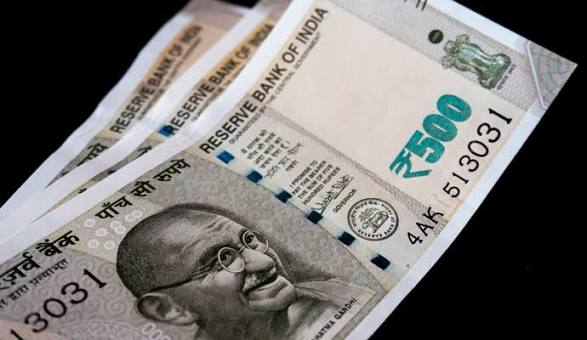
The Supreme Court’s intervention regarding black money in elections initially appears to be a technical ruling concerning timelines, reporting formats, and quarterly affidavits. However, it is a judicial acknowledgement that Indian democracy’s biggest enemy is not always the ballot but the briefcase that arrives before it. In holding that illicit money “compromises democracy, rule of law and the electoral process itself”, the SC bench has put into words what election observers have argued for decades – that a vote purchased with cash is not really a free vote at all.
The order, arising from a decade-old dispute over cash seizures during the 2014 LokSabha election in Karnataka’s Bellary district, does three practical things. It requires seizing authorities to report cash or assets to a magistrate within 24 hours, along with reasons establishing a prima facie link to an electoral offence.
It obliges investigating officers to complete their probes within a year; if they fail to do so, they must record the reasons and submit them to the EC. And it directs that any cash haul exceeding Rs 10 lakh detected by Static Surveillance Teams be flagged to the income tax authorities. None of these measures invents a new offence; they simply insist that existing law be enforced with discipline and speed.
That, in a sense, is the order’s real significance. India already has a reasonably elaborate architecture to police election money – expenditure ceilings under the Representation of the People Act, Static Surveillance Teams, Flying Squads, video surveillance, and the ECI’s citizen-reporting app cVIGIL.
What has been missing is not rules but rigour: cases drag on for years, seizures are reported erratically, and the gap between headline-grabbing raids and actual convictions has remained embarrassingly wide. By imposing hard timelines and a reporting chain running up to the EC, the Court has effectively told the enforcement machinery that visibility and accountability are no longer optional.

Will this ruling change things on the ground? Realistically, only in part, and only over time. Timelines mean little without capacity. India’s police and investigative agencies are chronically overstretched, and election-related financial offences compete for attention with everyday crime.
The EC itself lacks an independent financial-forensics wing and depends heavily on state police and district administration for field enforcement – bodies that report, in the end, to the very political executives whose parties are often implicated. A one-year deadline for investigations is a useful discipline, but discipline without institutional muscle risks becoming just another compliance ritual, generating paperwork rather than convictions.
Several measures deserve urgent attention. The EC needs an autonomous financial intelligence capability, drawing real-time data from the Financial Intelligence Unit and the CBDT to spot unusual liquidity spikes before polling day rather than after. As the Indrajit Gupta Committee recommended nearly three decades ago, partial state funding-in kind, through logistics, media time and digital infrastructure-could meaningfully reduce candidates’ dependence on private and often illicit financiers.
The last-mile inducement – cash or kind handed out 24 to 48 hours before voting – remains the hardest link in the chain to break, precisely because it is designed to evade surveillance windows. Static surveillance teams and flying squads need to shift from fixed checkpoints to intelligence-led, mobile deployment in the final 72 hours of campaigning, coordinated with local excise and transport departments to intercept vehicles rather than merely random spot checks.
Equally, market-rate valuation of “in-kind” inducements – liquor, sarees, mobile recharges – should be brought squarely within the definition of candidate expenditure. None of this requires new legislation; it requires the existing Conduct of Election Rules to be enforced. Finally, fast-track courts dedicated to electoral financial offences would ensure the Court’s one-year investigation timeline is matched by an equally swift trial process so that detection is not divorced from consequence.
The Supreme Court has done what courts do best: reasserted a constitutional principle and tightened the procedural screws on those meant to enforce it. But judgements, however well-reasoned, cannot substitute for political will. Only Parliament can cap party spending, ban cash donations and empower the Election Commission with real financial teeth. Implementation is the key. Until it does, this order will remain an important marker of judicial intent rather than the turning point Indian elections badly need.