


The deployment of the Indo-Tibetan Border Police (ITBP) along the Chinese frontier is part of India’s broader border-security architecture
 KRC TIMES Desk
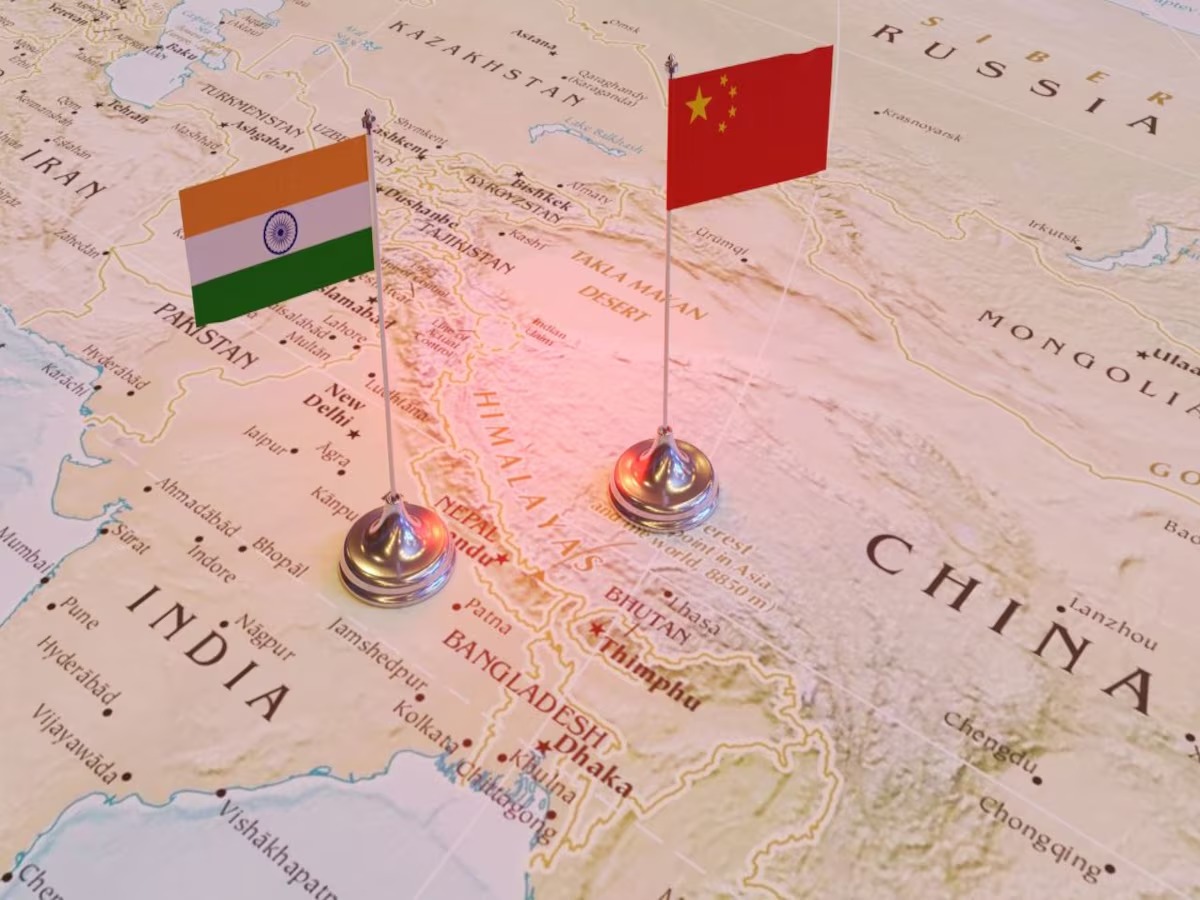
The reported face-offs between Indian and Chinese troops in Arunachal Pradesh have once again brought the unresolved boundary dispute between the two Asian neighbours into sharp focus. While such encounters inevitably raise concerns about border security, they should not automatically be interpreted as physical confrontations or signs of an imminent military escalation. Rather, they reflect the fundamental problem underlying the India-China border dispute: the absence of a mutually agreed and clearly demarcated Line of Actual Control (LAC).
As explained by retired Lieutenant General Sanjay Kulkarni, who has commanded a brigade and a division along the LAC and served as chief of staff of the XIV Corps, overlapping patrol routes are a recurring feature of the disputed frontier. Both countries operate according to their respective perceptions of where the boundary lies. Consequently, Indian and Chinese patrols can enter the same territory, each believing that it is operating within its own jurisdiction.
This distinction is important. A face-off between patrols does not necessarily mean that troops have engaged in physical combat. Such encounters must be differentiated from serious military confrontations, including the December 2022 clash in the Yangtse area of the Tawang sector. Nevertheless, repeated encounters underline the fragility of the existing border-management arrangements and the urgent need for a durable diplomatic solution.
The deployment of the Indo-Tibetan Border Police (ITBP) along the Chinese frontier is part of India’s broader border-security architecture. Following the Kargil conflict, the Kargil Review Committee and the subsequent Group of Ministers recommended significant reforms in India’s defence and security arrangements. Under the principle of ‘One Border, One Force’, the ITBP was assigned responsibility for guarding the India-China border. It operates alongside the Indian Army in most sectors, providing an additional layer of surveillance and security along the frontier.
However, the presence of multiple security forces cannot, by itself, resolve a dispute rooted in competing territorial claims. India officially recognises a 3,488-km land boundary with China, but Beijing disputes India’s assessment and maintains a substantially different position. The disagreement concerns not merely the length of the frontier but also its geographical alignment and the territories claimed by both countries.

The problem is particularly evident in the western sector, where historical boundary alignments have shaped the competing claims over Ladakh and Aksai Chin. India follows the Johnson Line, which places Aksai Chin within Indian territory, whereas the McCartney-MacDonald Line places most of the region on the Chinese side. These competing interpretations, inherited from the colonial period, continue to complicate efforts to arrive at a mutually acceptable boundary settlement.
In the eastern sector, the principal disagreement revolves around the McMahon Line, which India recognises as the boundary but China rejects. Extending approximately 1,140 km, the line forms the basis of India’s territorial position in the region, including Arunachal Pradesh. Differences over geographical features and the interpretation of natural boundaries have further complicated the situation. While India generally follows the highest mountain ridges as the natural boundary, China advances competing claims in certain areas based on lower valley alignments.
The 1986 Sumdorong Chu stand-off demonstrated how such differences can trigger serious military tensions. Chinese troop movements into an area claimed by India led to a prolonged confrontation, highlighting the dangers inherent in the absence of an agreed boundary.
Despite decades of negotiations, the two countries have made limited progress in clarifying their respective perceptions of the LAC. Diplomatic engagement through the Special Representatives’ mechanism and the Working Mechanism for Consultation and Coordination on India-China Border Affairs (WMCC) has continued, but a comprehensive understanding remains elusive. The limited exchange of maps during discussions in 2001 concerning the central sector, particularly Uttarakhand, and their subsequent withdrawal illustrate the difficulties involved in reconciling the competing territorial positions.
Meanwhile, both sides have developed procedures to prevent patrol encounters from escalating into violence. One such mechanism is the banner drill, under which troops display bilingual messages in English and Chinese to communicate their respective territorial claims and request the opposing patrol to withdraw. These procedures are important confidence-building measures, helping soldiers manage potentially tense situations without resorting to force.
Yet, such arrangements should not be mistaken for a permanent solution. They can prevent misunderstandings and reduce the immediate risk of violence, but they cannot eliminate the underlying territorial disagreement. As long as the two countries continue to patrol areas based on different interpretations of the LAC, face-offs will remain a recurring possibility.
For India, the challenge is to maintain military preparedness while ensuring that diplomatic channels remain active. Arunachal Pradesh is strategically important, and any attempt to alter the status quo through unilateral actions must be addressed firmly. At the same time, unnecessary escalation would serve neither country’s long-term interests, particularly when both have significant economic and geopolitical priorities.
China, too, must recognise that lasting stability along the frontier cannot be achieved through military posturing or unilateral territorial assertions. Mutual respect for existing agreements, transparency in military deployments and a willingness to clarify disputed stretches of the LAC are essential prerequisites for restoring confidence.
The larger lesson is that border management and border settlement are two different challenges. While military commanders can manage patrol encounters through established protocols, only sustained political and diplomatic engagement can resolve the fundamental dispute. Confidence-building measures must therefore be accompanied by meaningful progress towards clarifying the LAC and ultimately achieving a mutually acceptable boundary settlement.
India and China are major Asian powers with considerable responsibilities in an increasingly uncertain international environment. Their relationship cannot remain hostage to recurring border tensions. Until both sides demonstrate the political will to bridge their differences, face-offs in Arunachal Pradesh and other disputed sectors will continue to test bilateral relations. The priority must be to prevent localised encounters from developing into larger confrontations while pursuing a peaceful, durable and clearly defined border settlement.

