


The six landmark agreements signed during Modi’s stopover represent a coming of age for one of Asia’s most consequential bilateral relationships
 KRC TIMES Desk
In a world convulsed by conflict and haunted by the spectre of supply chain disruption, the meeting between Prime Minister Narendra Modi and UAE President Sheikh Mohamed bin Zayed Al Nahyan in Abu Dhabi was far more than a diplomatic courtesy call. It was a decisive reaffirmation that in times of profound global uncertainty, the bonds of genuine friendship between nations are not merely desirable – they are indispensable.
The six landmark agreements signed during Modi’s stopover represent a coming of age for one of Asia’s most consequential bilateral relationships. Spanning energy security, defence, shipping, infrastructure and advanced technology, these accords collectively signal that India and the UAE are no longer simply trade partners – they are strategic anchors for each other in an increasingly turbulent world order.
For a nation of 1.5 billion people, India’s energy arithmetic is unforgiving. The wheels of the world’s most populous democracy must keep turning – factories, farms, hospitals, homes – and all of them depend on an uninterrupted supply of fuel. The ongoing conflict in West Asia has cast a dark shadow over the Strait of Hormuz, through which a substantial portion of India’s crude oil and gas imports passes.
Every disruption to that critical artery sends tremors through the Indian economy. Against this precarious backdrop, the UAE’s commitment to enhance its participation in India’s strategic petroleum reserves to 30 million barrels is not merely generous – it is transformative. Building storage capacity of that magnitude demands enormous capital investment and considerable time.
The UAE’s pledge effectively compresses that timeline, offering India a meaningful strategic buffer that it could not easily have assembled on its own. Equally significant is the commitment to develop liquefied petroleum gas storage facilities in India. LPG is not a luxury commodity in India; it is the cooking fuel for hundreds of millions of households, particularly in rural areas.
Ensuring long-term, stable supply through a dedicated sale-and-purchase agreement with Abu Dhabi National Oil Company addresses a vulnerability that has long concerned Indian policymakers. In an age where sustainability must be the governing principle of energy policy, this partnership lays a foundation that transcends the immediate crisis and looks towards decades ahead.

The UAE has, over recent years, emerged as what one might fairly describe as India’s all-weather friend. This relationship has matured quietly but with remarkable consistency – through global pandemics, financial turbulence and geopolitical upheaval. The new accords elevate that friendship to an altogether different plane.
The strategic defence partnership framework, which envisages joint development of military hardware, technology sharing and maritime security cooperation, is particularly noteworthy. It signals a level of trust between the two nations that goes well beyond commerce – it speaks to a shared vision of regional stability.
The UAE’s investment commitment of USD 5 billion is a further testament to this deepening bond. Infrastructure has long been India’s Achilles heel – the gap between what exists and what is needed remains vast.
The Abu Dhabi Investment Authority’s planned collaboration with India’s National Infrastructure and Investment Fund, the Emirates NBD investment in RBL Bank, and the International Holding Company’s stake in Sammaan Capital collectively represent the kind of patient, long-term capital that India urgently needs to upgrade and expand its physical and financial infrastructure. These are not speculative bets; they are expressions of sustained confidence in India’s growth story.

Tourism, too, deserves special mention. The UAE is already one of the most visited destinations. As bilateral relations deepen, UAE’s experience will help infrastructure upgrade- bringing revenue, employment and people-to-people understanding – will flourish further.
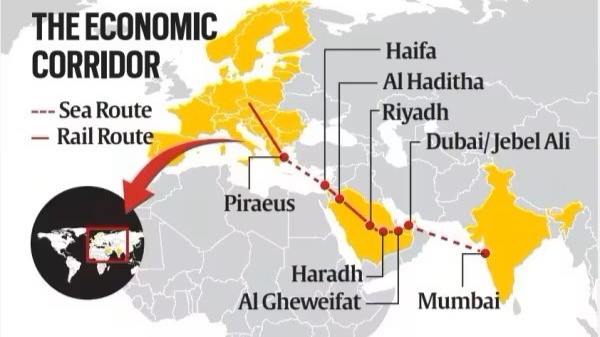
The operationalisation of a virtual trade corridor linking customs and port authorities, the ship repair centre, and the supercomputing cluster for artificial intelligence – each of these initiatives reflects a partnership that is thinking not just about today’s challenges but tomorrow’s opportunities.
What makes the India-UAE relationship particularly remarkable is the mutual trust upon which it rests. Trust, as any seasoned diplomat will attest, cannot be manufactured overnight. It is earned through consistency, reciprocity and goodwill demonstrated across years and crises alike.
India and the UAE have built precisely that. As the West Asia conflict eventually subsides – as all conflicts must – the architecture erected during this visit will provide the scaffolding for far greater cooperation.