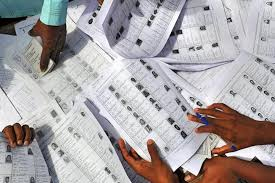


Industry experts believe the agreement could pave the way for fresh investments in the Northeast’s energy sector
 KRC TIMES Assam Bureau
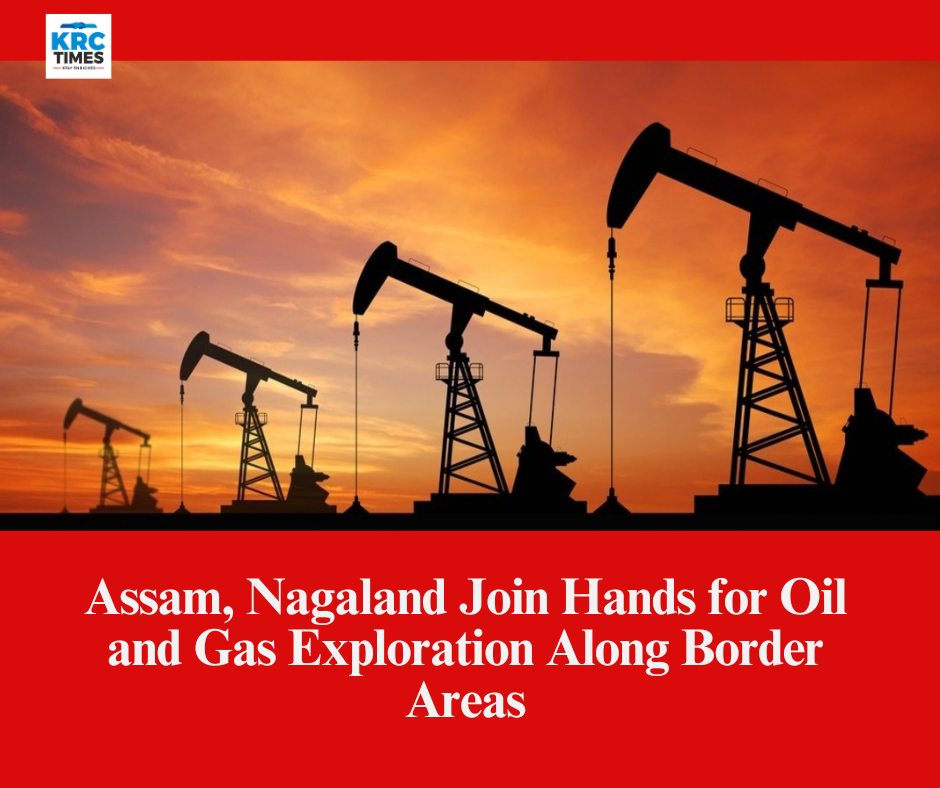
Guwahati : In a significant step towards unlocking the hydrocarbon potential of Northeast India, Assam and Nagaland on Thursday signed a landmark Memorandum of Understanding (MoU) aimed at facilitating oil and natural gas exploration in resource-rich areas along their shared boundary.
The agreement is being viewed as a major breakthrough in inter-state cooperation, with officials describing it as a move that could transform the energy landscape of the region while fostering stronger ties between the two neighbouring states.
The MoU seeks to create a framework for exploration and development of hydrocarbon reserves in border areas that have remained largely untapped for decades. Despite indications of substantial oil and gas deposits, exploration activities in several stretches along the Assam-Nagaland boundary have been constrained by longstanding border disputes and administrative challenges.
Officials said the new arrangement is expected to provide a conducive environment for coordinated exploration efforts, allowing both states to leverage their natural resources while ensuring mutual benefits.
The agreement comes at a time when India is intensifying efforts to increase domestic energy production and reduce dependence on imported crude oil and natural gas. By facilitating exploration in previously underutilised regions, the initiative is expected to contribute to the country’s broader energy security objectives.

Send your resume:
biswa@jigyasu.co.in
krcfoundation@gmail.com
According to officials familiar with the development, the MoU is designed to establish mechanisms for cooperation between the two states in matters related to hydrocarbon exploration, project implementation, security arrangements and administrative coordination.
It is also expected to address issues related to revenue sharing and operational management, creating a transparent framework for future energy projects.
The signing of the pact in the presence of Union Home Minister Amit Shah has added significant political and strategic weight to the initiative. Observers noted that the Centre’s involvement underscores the importance attached to the agreement and reflects the government’s commitment to promoting cooperative federalism as a means of resolving complex regional challenges.
Industry experts believe the agreement could pave the way for fresh investments in the Northeast’s energy sector. With a clearer policy framework and improved inter-state coordination, both public-sector enterprises and private energy companies may be encouraged to expand exploration activities in the region.
The hydrocarbon-rich belt along the Assam-Nagaland border has long been regarded as an area of immense potential. Assam has a well-established history of oil production and hosts some of India’s oldest oilfields and refineries. Nagaland, too, possesses significant hydrocarbon reserves, but large-scale exploration has remained limited due to logistical, regulatory and territorial concerns.