


While the nation sleeps, a soldier stands awake, beyond hours, beyond hardship, beyond comparison
 KRC TIMES Desk
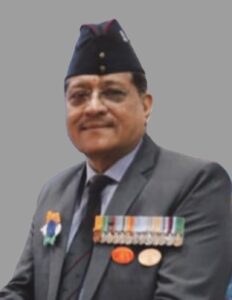
Col (Dr.) Ashwani Kumar, MiD, VSM (Retd.)
There are issues that concern policy, and there are issues that concern the soul of a nation. The denial of Non-Functional Upgradation (NFU) to the Armed Forces falls firmly in the second category. It is not merely a matter of pay scales or administrative interpretation, it is a question of fairness, morale, and national security.
NFU was introduced to ensure that when an officer of a particular batch in civil services is promoted, officers of the same batch in other services receive corresponding financial upgradation, even if they are not promoted functionally. This principle has been extended across Group A civil services. However, the Armed Forces, the very institution that safeguards the nation have been kept out. The question is simple and uncomfortable:
Why is parity acceptable for civilians but not for soldiers? A Legacy of Imbalance That Has Deepened Over Time.
The roots of this issue go back decades. Senior military leadership has repeatedly highlighted how, over successive Pay Commissions, the relative status and financial parity of the Armed Forces have steadily eroded.
There was a time when the Armed Forces enjoyed marginally higher scales than civil services, recognizing the unique nature of military service. But over time, that distinction was diluted. Comparisons began to be drawn that ignored the stark differences in career progression, risk, and service conditions.

An officer in civil administration, with significantly fewer years of service, began to be equated with senior military leadership. This was not just an anomaly, it was the beginning of a pattern. NFU, instead of correcting this imbalance, has widened it.
The Financial Argument: A Narrow Lens on a National Issue. The primary justification offered for denying NFU to the Armed Forces is the financial burden it would impose. But let us examine this argument honestly.
Is national security a cost center or a national investment? Can we place a price tag on morale? And more importantly, can we afford the cost of neglect?
When large financial commitments are routinely made for administrative expansion, subsidies, and governance structures, citing financial constraints only in the case of soldiers raises serious questions. A nation that hesitates to invest in its defenders risks paying a far higher price later.
Equalization in Perks, But Not in Sacrifice
There is another subtle but deeply concerning trend, the equalization of perks without equalization of sacrifice.
Over time, many benefits once unique to the Armed Forces have been extended across civilian services in the name of uniformity and fairness. On paper, this may appear progressive. But in reality, it has led to a dilution of the distinct identity and recognition of military service. Let us ask a basic question:
Are civil officials required to serve in extreme climates? Are they posted in conflict zones? Are they required to risk their lives as part of routine duty?
The answer is obvious.
Yet, when perks are distributed equally without accounting for these differences, it does not create equality, it creates imbalance disguised as fairness. 24 Hour Duty vs 10 AM to 6 PM Culture
Perhaps the most fundamental difference between the Armed Forces and civilian services lies in duty conditions.
A civil official typically operates within a defined work structure —
10 AM to 6 PM, governed by administrative and labour norms and in the evening he is enjoying the comfort s of his family life and free to move it go anywhere. Whereas it is not in the case of a soldier.
A soldier, on the other hand, is on duty 24 hours X 7 a day, 365 days a year.
There is no concept of: Overtime. Weekends. Fixed working hours. A soldier is a soldier at all times, whether on patrol, in barracks, or on standby.
If labour laws and work-life balance are to be applied uniformly, then a logical question arises: Should the Armed Forces also shift to an 8-hour duty culture?
If that were to happen, the nation would require three times the manpower to maintain the same level of operational readiness. Is that practical? Certainly not. Which leads to the only fair conclusion:
If the Armed Forces cannot be given reduced duty hours, they must be compensated appropriately for their continuous service. Anything less is inequitable.
Red Fort Declarations and Ground Realities.
Every Independence Day, the nation hears powerful words from the Red Fort: “Our borders are secure… the nation is in safe hands.”
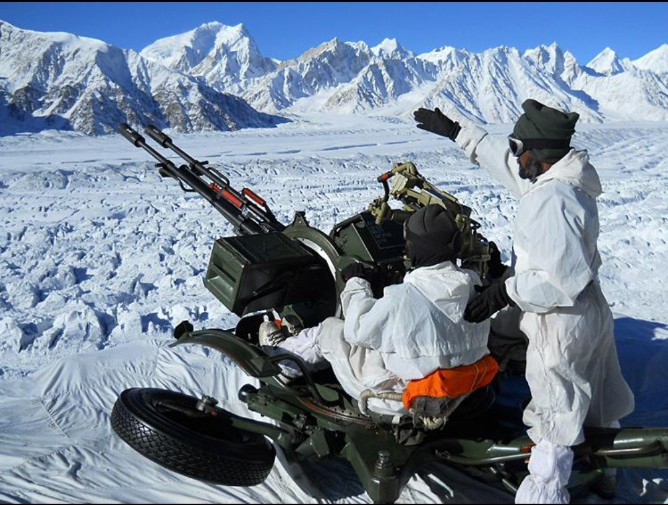
But let us be clear, those hands are not symbolic. They are real. They belong to soldiers. A soldier in Siachen does not experience rhetoric, he experiences survival. A soldier on the Line of Control does not hear applause, he hears gunfire
A soldier in counter-insurgency operations does not see celebration, he sees uncertainty. Security is not a statement. It is a lived reality, sustained by sacrifice. The Human Factor, The Man Behind the Weapon.
Military strength is often measured in terms of weapons, technology, and numbers. But history has repeatedly shown that wars are ultimately decided by the man behind the weapon.
Today, concerns about modernization remain. But an even more pressing concern is the psychological and moral state of the soldier.
When a soldier observes: Stagnation in financial progression. Lower comparative status than other services. Lack of recognition of hardships. It begins to affect not just morale, but identity.
A silent question emerges: “Is my sacrifice truly valued?” A nation must never allow that question to go unanswered. Agniveer and Short Service Officers (SSCO), the Changing Mindset.

The introduction of the Agniveer system and SSCO has brought a new dimension to military service. It has also introduced uncertainty.
A young recruit today sees: A limited tenure:- An unclear long-term future.Comparative disadvantages in benefits. Now add to that the denial of NFU and perceived inequities.
The result?
A potential shift in mindset, from service to nation to service as employment. This shift, if it deepens, will have long-term consequences for military ethos. Promises Made, Promises Remembered.
The Armed Forces community has a long memory. The assurances made during the Rewari rally of 2014 were not merely political statements, they were seen as commitments to restore dignity and fairness.
Many veterans and serving personnel openly supported a vision that promised to address their long-standing concerns. Today, there is a growing perception that those promises remain unfulfilled.
This perception must be addressed not politically, but morally.
The Hard Truth: Wars Are Won at the Border, Not in Offices. It must be stated clearly:
Wars are not won by bureaucrats in air-conditioned rooms and discussing to impress political leadership.
Wars are won by soldiers standing guard at the borders and on ground with his own wisdom and training. In 45 years of experience I am yet to see a General, delegation, or a beaurucrate gone abroad for training and after come giving a talk to the audience about his experience except having the benefits to himself.
Administration is essential. Policy is necessary.
But neither can replace the soldier at the decisive moment. To undervalue that soldier is to misunderstand the very nature of national security. The Way Forward: A Balanced and Just Approach.
The issue of NFU requires a structured and sincere resolution. A constructive path forward could include: Formation of a representative committee with: Serving officers across ranks. Veterans. Government officials.
A time-bound review of NFU applicability A broader reassessment of pay, perks, and parity frameworks.
The goal should not be confrontation, it should be correction.
Conclusion: A Call to Conscience.
A soldier does not demand privilege. He demands fairness. A soldier does not ask for comfort.
He asks for recognition.
The denial of NFU is not just a policy gap, it is a signal. And that signal is being watched closely by every man in uniform.
A strong army is not built only on weapons and budgets. It is built on trust, respect, and morale. And a nation that weakens these pillars, even unintentionally, risks weakening itself.
It is time to act. It is time to correct. It is time to honour those who stand between the nation and uncertainty. Because in the final analysis: A strong army alone ensures a strong nation.
Author’s Closing Note.
The intent of this article is not to create division, but to draw attention to a concern that directly impacts the morale and effectiveness of those who guard our nation. The Armed Forces have always stood above debate, above self-interest, and above all else for the nation.
If there is an imbalance, it must be addressed.
If there is a concern, it must be heard.
Because a soldier does not speak for himself,
he stands silently for all of us.
Let us ensure that his silence is not mistaken for acceptance, and his sacrifice is not taken for granted. The author can be contacted at: machhral@hotmail.com
Disclaimer:
The views expressed in this article are personal and based on the author’s understanding, experience, and interpretation of available information, including publicly discussed policy matters. These views are intended to encourage constructive dialogue and reflection. They do not represent the official position of any organization, institution, or government body.