


A Story Brewed in Time
 KRC TIMES Desk
SATARUPA ACHARJEE
Assam, a lush green state in northeast India, is globally synonymous with tea. The very mention of Assam evokes images of endless emerald plantations, mist-covered hills and the strong, malty aroma of black tea. But Assam’s tea culture is far more than a commercial success story- it is a living heritage shaped by colonial ambition, indigenous knowledge, labor movements and everyday rituals that continue to define the region’s identity.
- Origins before the British: Indigenous roots
Contrary to popular belief, tea in Assam did not originate with British colonization. Long before European interest, the indigenous Singpho (or Singfo) tribes of Assam and neighbouring regions were known to consume tea leaves. They brewed wild tea plants growing naturally in the Brahmaputra Valley, often fermenting the leaves and using them for medicinal and ceremonial purposes.
In 1823, Robert Bruce, a Scottish trader, encountered these tea plants and learned about their usage from the Singpho chief Bessa Gam. This discovery challenged China’s monopoly on tea production and laid the foundation for Assam’s future as a global tea powerhouse.
- Colonial Expansion and the Birth of the Tea Industry
The early 19th century was a turning point. After confirming that the tea plant in Assam was a distinct variety-Camellia sinensis var.assamica-the British East India Company began systematic cultivation. The Assam Tea Company, established in 1839, marked the formal beginning of commercial tea production in the region.
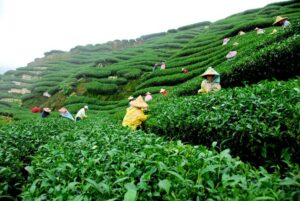
The fertile alluvial soil of the Brahmaputra Valley, heavy monsoon rainfall, and humid climate proved ideal for tea cultivation. British planters rapidly expanded estates, clearing forests and reorganizing the landscape into vast plantations. However, this growth came at a heavy human cost.
- Labour, Migration and Social Transformation
Tea cultivation required an enormous labour force. Local populations were unwilling or unable to meet the demand, leading the British to recruit workers from central India-present-day Jharkhand, Chhattisgarh, Odisha and West Bengal. These workers, often referred to as “tea tribes”, were brought under harsh conditions, bound by exploitative contracts and subjected to brutal working environments.
Mortality rates were high in the early decades due to diseases, malnutrition and abuse. Over time, these migrant communities settled permanently, developing a distinct socio-cultural identity. Today, they form a significant part of Assam’s population, contributing richly to its music, festivals, and language and food traditions. Assam’s tea culture, therefore, is inseparable from the lives and struggles of these communities.
- Growth, Nationalization and Modernization:
By the late 19th and early 20th centuries, Assam had become the world’s largest tea-producing region. Tea estates evolved into self-contained townships with hospitals, schools, clubs and factories. After India’s independence in 1947, the tea industry underwent major changes.
Indian entrepreneurs gradually replaced British ownership, and the labor laws improved working conditions. Institutions like the Tea Board of India played a role in regulation, research and global promotion. Technological advancements modernized processing, but the essential character of Assam tea-bold, brisk and malty-remained unchanged.
- The Science Behind the Brew
Assam tea undergoes a meticulous process:
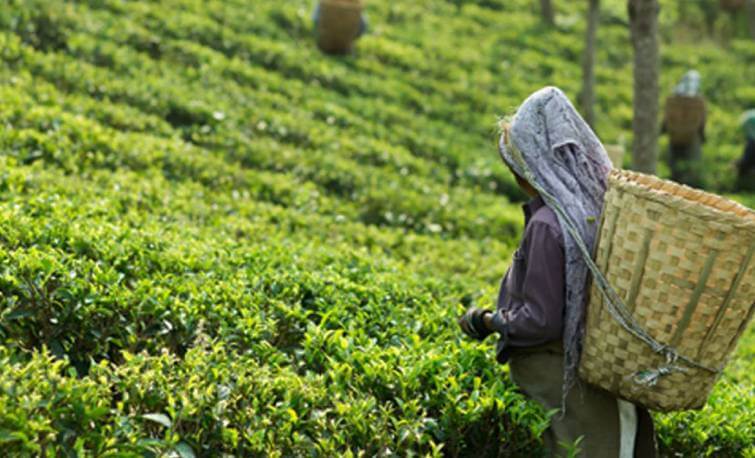
- Plucking – Only the top two leaves and a bud are hand-picked
- Withering – Leaves lose moisture to become pliable
- Rolling – Releases enzymes and initiates oxidation
- Oxidation – The critical step that gives black tea its color and flavour
- Drying – Locks in the final taste
The strong flavor of Assam tea is largely due to higher levels of tannins and polyphenols. These compounds not only give tea its briskness but also contribute to its health benefits, such as antioxidants.
- Tea in Everyday Assamese Life
Tea in Assam is not ceremonial-it is constant. From early morning to late evening:
- Workers begin their day with strong, sweet chai
- Offices pause for multiple tea breaks
- Guests are always welcomed with tea
Unlike delicate teas served plain, Assamese tea is often consumed as milk tea, heavily brewed and sweetened. The “lal cha” (red tea without milk) is also popular, especially among those who prefer a lighter drink. Tea stalls-locally known as “addas”-are spaces of:
- Political debate
- Storytelling
- Social bonding
They function as informal public spheres where ideas flow as freely as tea.
- Festivals, Rituals, and Symbolism
Tea is subtly woven into Assamese traditions:
- During Bihu, tea is served alongside traditional snacks
- In rural areas, offering tea signifies respect and hospitality
- Tea gardens celebrate their own localized festivals, blending tribal and Assamese customs.
Tea is not sacred in a religious sense, but it holds deep symbolic value as a connector of people.
- Assam Tea in the Global Imagination
Assam tea is a cornerstone of global blends:
- English Breakfast Tea
- Irish Breakfast Tea
Its strength makes it ideal for pairing with milk and sugar, which is why it became central to British tea culture. Today, Assam tea competes in a global market alongside:
- Darjeeling (known for delicate flavours)
- Sri Lanka (Ceylon tea)
- Kenya
Yet Assam retains its niche as the producer of the world’s strongest black teas.
- Modern Challenges
Despite its legacy, Assam’s tea industry faces significant challenges:
- Climate Change
- Erratic rainfall affects crop cycles
- Rising temperatures alter flavor profiles
- Market Pressures
- Competition from cheaper global producers
- Fluctuating auction prices
- Labour Issues
- Continued demands for fair wages
- Need for better living conditions
- Innovation and the Future
To stay relevant, Assam is evolving:
- Organic Tea: Growing demand for chemical-free products
- Specialty Teas: Orthodox, white, and artisanal teas gaining popularity
- Tea Tourism: Visitors explore estates in places like Jorhat and Dibrugarh
Luxury tea resorts, heritage bungalows, and curated tasting experiences are redefining Assam’s image from purely industrial to experiential. Digital platforms and direct-to-consumer brands are also helping small tea growers reach global audiences.
- A Living Legacy
Assam tea is not just a product-it is a living narrative. It carries:
- The wisdom of indigenous communities
- The imprint of colonial ambition
- The resilience of generations of workers
- The evolving tastes of a global audience
Every cup tells a layered story-of soil and sweat, of tradition and transformation.
Conclusion: More than Just Tea
To call Assam tea merely a beverage would be an understatement. It is history in liquid form, culture in daily practice, and economy in motion. From the misty plantations to bustling roadside stalls, Assam tea continues to define a way of life. It is both deeply local and profoundly global-a rare balance that few commodities achieve. And so, the story continues-brewed every morning, shared every afternoon, and remembered in every sip.