


From Dubai to Sydney, Toronto and the United States
 Sangram Datta
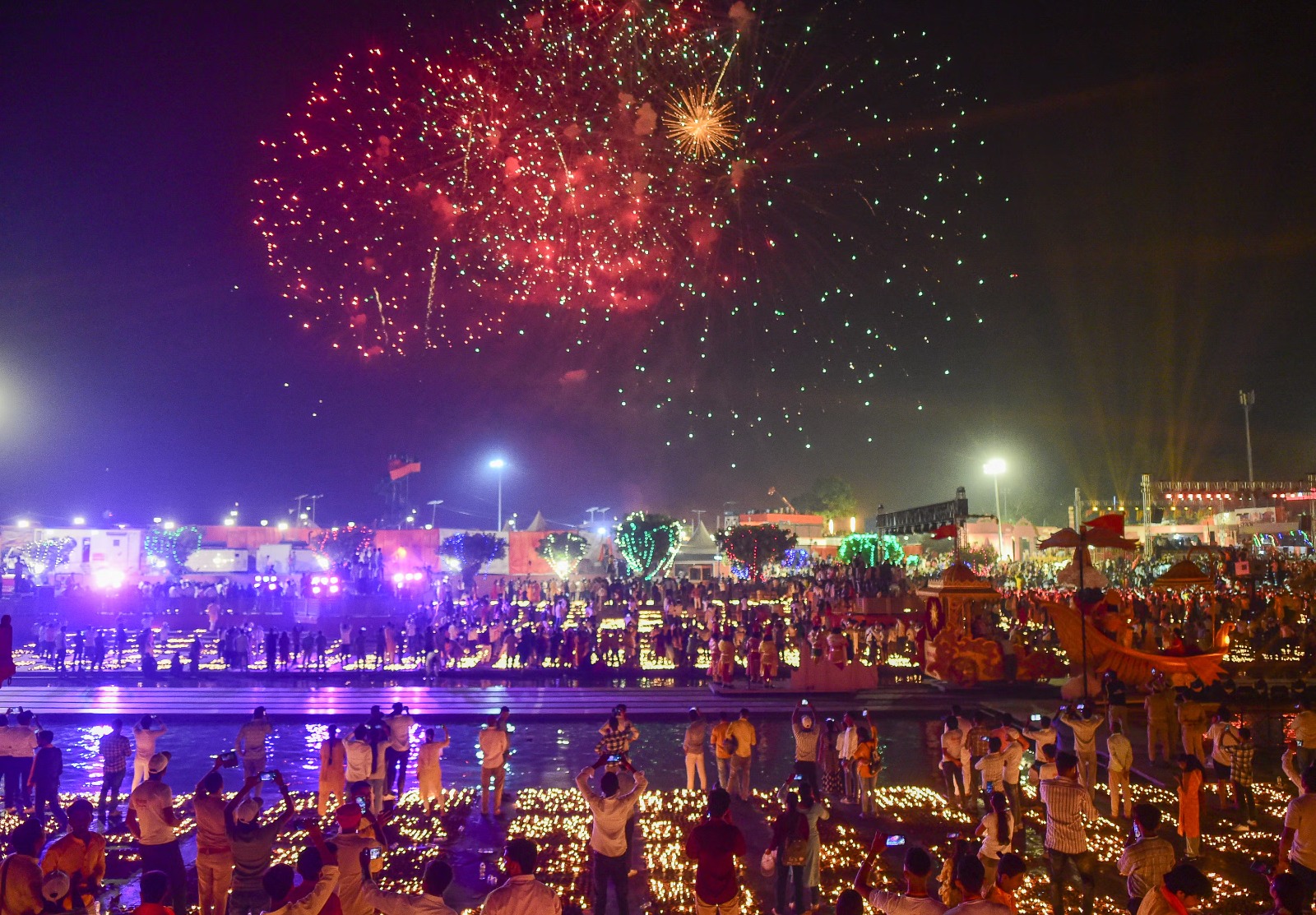
From the glittering streets of Dubai to the waterfronts of Sydney, the public squares of Toronto and cities across the United States, Diwali is increasingly being celebrated far beyond the country where it originated. What was once largely associated with the religious and cultural traditions of the Indian subcontinent has become an increasingly visible feature of the international cultural calendar.
In Dubai, the sight of crowds gathering to admire Diwali illuminations offers a striking illustration of how traditions travel across borders. Against a backdrop of towering skyscrapers and spectacular modern architecture, people from different nationalities, faiths and cultural backgrounds come together to enjoy the festival.
Some stop to photograph the decorations, others record videos, while many simply watch as the city is transformed by the glow of festive lights.
At first glance, such scenes might be mistaken for celebrations in Ayodhya, Varanasi, Bengaluru or one of the cities of Tamil Nadu. But this is not India. It is Dubai, in the United Arab Emirates, where a festival deeply rooted in Indian tradition has found an enthusiastic audience.
The significance of the occasion extends beyond its visual appeal. It reflects a growing willingness among people of different backgrounds to appreciate and participate in one another’s cultural traditions. In a world often divided by religious and national identities, Diwali offers a reminder that celebration can also be a shared human experience.
From India to the international stage
Diwali, also known as Deepavali, is among the most widely recognised festivals to emerge from the Indian subcontinent. Its international presence has grown considerably, particularly through the Indian diaspora, whose communities have carried its traditions to cities across Europe, North America, the Middle East and Australia.
Today, celebrations are regularly held in Sydney and Melbourne, Toronto and London, as well as New York, Chicago and various cities across California.
The festivities take different forms. Streets and prominent buildings are illuminated, cultural organisations arrange music and dance performances, and families gather to share traditional food and exchange greetings. In some cities, public celebrations also include fireworks and large-scale cultural events, often organised with the support of local authorities and community organisations.

Although the Indian diaspora remains central to these celebrations, the audience is increasingly diverse. People with no direct connection to India or Hinduism also attend public events, admire the illuminations and become acquainted with the traditions behind the festival.
This growing international appeal has helped Diwali develop a cultural presence that reaches beyond its original religious setting, without diminishing the significance of its Indian roots.
There is a loose parallel with the worldwide celebration of New Year’s Day on 1 January, when people of different nationalities and faiths come together to mark the beginning of a new calendar year. Diwali, too, has become an occasion for public celebration and cultural exchange in many parts of the world.
The comparison, however, has its limits. New Year’s Day is based on the Gregorian calendar, whereas Diwali is an ancient festival whose significance is rooted in the religious traditions, mythology and regional customs of the Indian subcontinent.
Its international journey is also an example of cultural globalisation. As people migrate, communities establish new roots and traditions cross geographical boundaries, festivals that once belonged primarily to particular societies can acquire wider recognition and meaning.
A festival shaped by history and faith
The name Diwali comes from the Sanskrit word ‘Deepavali’, meaning a row or series of lamps. It is traditionally celebrated in October or November, around the new moon of the Hindu lunar month of Kartik.
The festival has several historical, mythological and religious associations, and its significance varies across different regions and communities.
One of the best-known traditions is linked to the Hindu epic ‘Ramayana’. According to the popular account, the people of Ayodhya welcomed Lord Rama, his wife Sita and his brother Lakshmana by lighting rows of oil lamps following their return after 14 years of exile. The story remains an important part of Diwali’s cultural identity, particularly in northern India.
In many parts of the country, the festival is also associated with the worship of Goddess Lakshmi, who represents wealth, prosperity and good fortune. Families clean and decorate their homes, light lamps and offer prayers in the hope of a prosperous year ahead.
In southern India, Diwali is closely associated with the legend of Lord Krishna’s victory over the demon Narakasura. For Jains, the occasion commemorates the attainment of nirvana by Lord Mahavira. Sikhs also observe Bandi Chhor Divas around this period, remembering the release of Guru Hargobind from imprisonment.
These different traditions illustrate the festival’s diverse religious and cultural dimensions. Diwali is not simply an occasion for decorative lighting and fireworks. Its symbolism is closely associated with the triumph of good over evil, knowledge over ignorance and hope over despair.
Dubai’s illuminated skyline and the Burj Khalifa
Few landmarks provide a more dramatic setting for large-scale celebrations than Dubai’s Burj Khalifa.
Standing 828 metres tall, the world’s tallest building has become one of the most recognisable symbols of the modern city. Its illuminated exterior regularly features spectacular visual displays and messages marking major international events, festivals and special occasions.

Diwali-themed displays and festive greetings have also featured on the tower over the years, adding an Indian cultural dimension to Dubai’s already diverse calendar of public celebrations.
The combination of the illuminated skyscraper, colourful displays and crowds gathering around the city centre creates an impressive spectacle. For residents and international visitors alike, such occasions provide an opportunity to experience a tradition that may be unfamiliar to them.
Yet the attraction is not necessarily religious. People do not have to share the beliefs associated with a festival to appreciate its beauty, music, traditions or atmosphere.
That is perhaps one of the most compelling aspects of Diwali’s international appeal. Its visual language of light and celebration is readily understood across cultural boundaries.
The Indian diaspora and the spread of cultural traditions
The international popularity of Diwali is part of a broader story of India’s cultural influence.
Yoga, Indian classical music, dance, cinema, cuisine and traditional clothing have all found audiences far beyond the country’s borders. Religious and cultural festivals have followed a similar path, with overseas Indian communities playing an important role in introducing their traditions to new societies.
For many members of the diaspora, Diwali is also an important expression of identity and belonging. Celebrating the festival allows families to maintain connections with their heritage while passing traditions on to younger generations growing up in different cultural environments.
At the same time, public celebrations create opportunities for interaction with the wider community. Schools, local councils, cultural associations and community groups often use the occasion to introduce people to Indian traditions and encourage participation.
The result is a form of cultural exchange in which the original significance of a festival is preserved while its public appeal continues to expand.
It is important, however, to recognise that Diwali is not celebrated in exactly the same way everywhere. Its customs, religious associations and regional practices vary considerably. That diversity is part of what makes the festival such a rich expression of the Indian subcontinent’s cultural heritage.
What Dubai’s celebrations say about coexistence
The sight of people from different nationalities enjoying Diwali on the streets of Dubai offers a wider reflection on the value of multiculturalism.
Economic development, modern infrastructure and impressive architecture are important measures of a city’s progress. But the ability of people from different backgrounds to live together, respect one another’s beliefs and share in each other’s cultural experiences is equally significant.

A genuinely inclusive society allows individuals to practise their own religions, preserve their cultural identities and celebrate their traditions without fear of discrimination. It also encourages people to respect the beliefs and customs of those around them.
Dubai’s international character provides a setting in which such cultural encounters are particularly visible. Its large expatriate population brings together people from countries across the world, creating opportunities for different traditions to coexist.
The wider lesson is relevant well beyond the United Arab Emirates. Respect for cultural diversity does not require people to abandon their own traditions. Rather, it allows different communities to maintain their identities while recognising the value of those of others.
When people participate in one another’s celebrations, even as observers, they help create a greater sense of familiarity and understanding. Such everyday encounters can contribute to stronger social relationships and a more tolerant society.
A light that travels beyond borders
From Dubai’s illuminated skyline and the Burj Khalifa to public celebrations in Sydney, Melbourne, Toronto, London and cities across the United States, Diwali’s international journey reflects the growing reach of Indian culture.
Its origins remain firmly rooted in the history and religious traditions of the Indian subcontinent. But its celebrations have increasingly become part of a wider cultural experience, bringing together people who may differ in nationality, faith and background.
At a time when divisions based on religion, ethnicity and national identity continue to shape public life in many parts of the world, the festival’s message carries particular resonance.
Diwali reminds us that differences need not prevent people from sharing moments of happiness. A lamp lit in one home, a street illuminated in another country or a public celebration attended by people of different faiths can all express the same simple human desire for hope, peace and togetherness.
Light belongs to no single nation or religion. Its symbolism is universal, just as the capacity to share happiness transcends borders.
Born in India, Diwali has travelled across continents. Its growing international presence is not simply a story of a festival becoming popular abroad; it is also a reflection of how cultures can connect, enrich one another and create a shared space for celebration.
Faith may be personal, but the spirit of mutual respect, cultural understanding and shared happiness belongs to everyone.

