

Prof. Goel emphasized that as India approaches the centenary of its independence in 2047, the nation stands at a critical juncture in its developmental journey
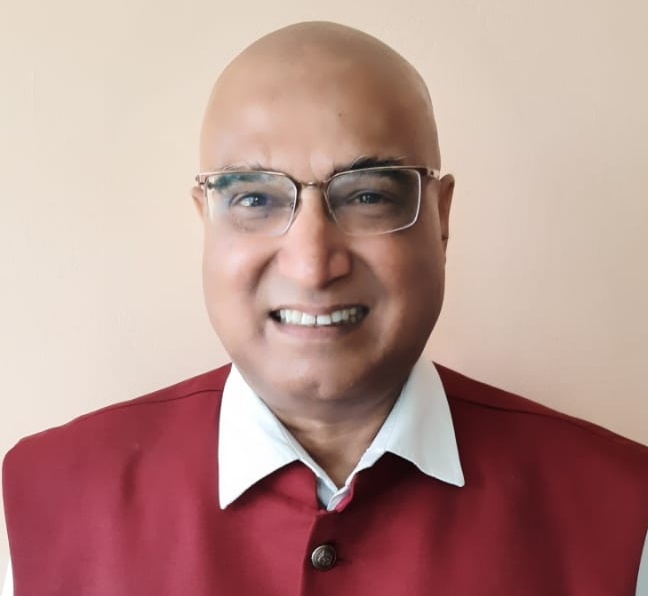 Dr. M. M. Goel
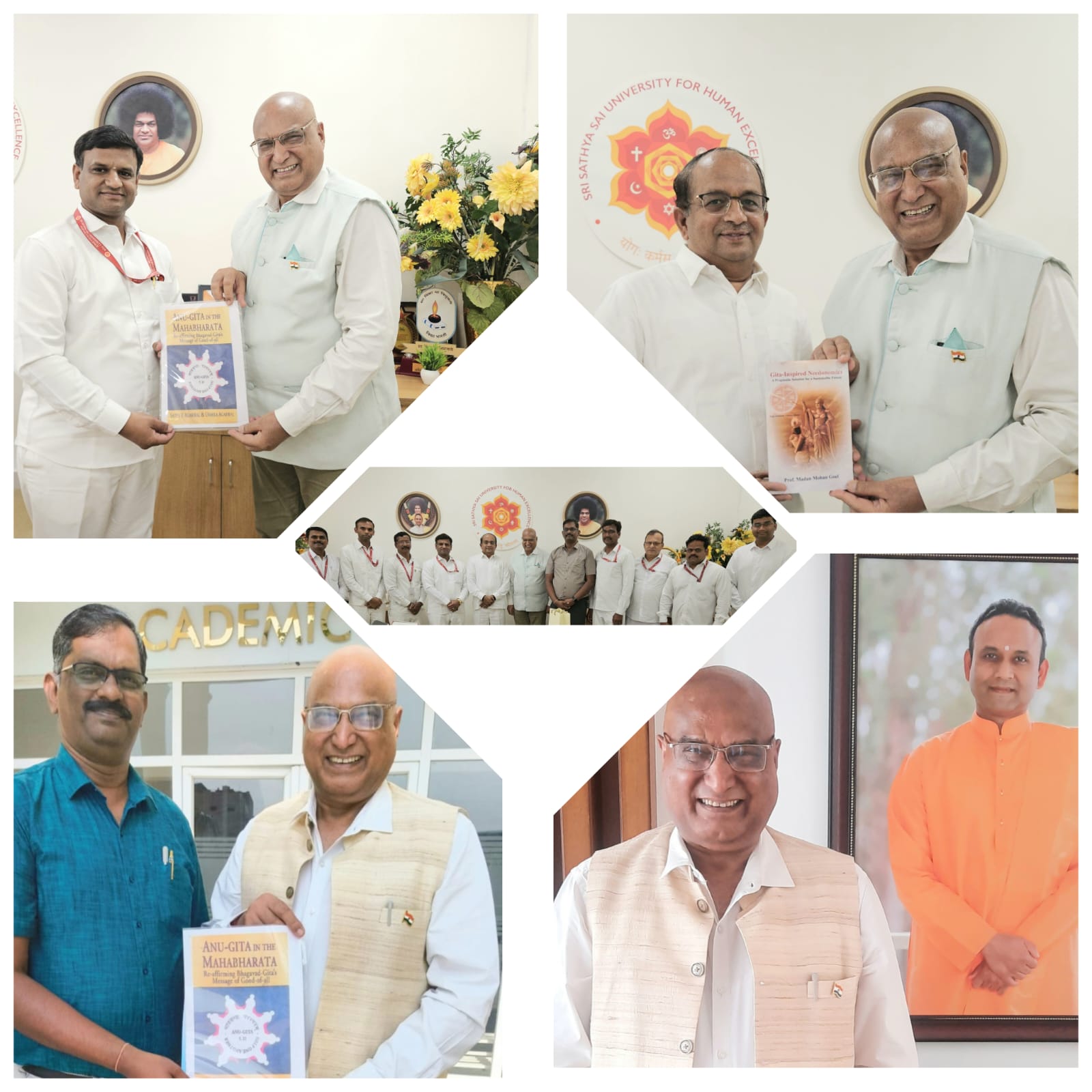
Sathya Sai Grama ,Muddenahali (Chikkaballapur) : Prof. Madan Mohan Goel, Propounder Needonomics School of Thought, former Vice-Chancellor, and superannuated Professor of Kurukshetra University, delivered a thought-provoking lecture to the faculty and students of Economics at the Department of Humanities and Social Sciences, Sri Sathya Sai University for Human Excellence (SSUHE). His address focused on the theme “Gita-Inspired Needonomics for Viksit Bharat.”
The session began with a welcome address by Dr. Yadava Raghu, Head of the Department, who also introduced Prof.M.M.Goel to the audience, highlighting his contributions to economic thought and policy discourse. Prof. Bhanumurthy N.R ,Director Madras School of Economics also spoke on the occasion. Prof. Srikanta Murthy K., Vice-Chancellor, conveyed his heartfelt gratitude, and Registrar Prof. Hanumanth expressed his delight at welcoming the scholars to the campus.
Expressing his gratitude , Prof. Goel described the University Chancellor, Sri Madhusudan Sai , as a living embodiment of ‘Jivan-mukti’—one who, in accordance with the ‘Anu-Gita’, could be considered superior even to recipients of the ‘Padma Shri’ by virtue of his deeds.
In his address, Prof. Goel emphasized that as India approaches the centenary of its independence in 2047, the nation stands at a critical juncture in its developmental journey. He noted that the vision of Viksit Bharat extends beyond achieving high economic growth; it aspires to create a prosperous, inclusive, sustainable, and value-based society where every citizen lives with dignity.
Critically examining conventional economic paradigms that encourage unchecked consumption, Prof. Goel underscored the relevance of the Needonomics framework. He explained that Needonomics draws a clear distinction between “needs” and “greed,” advocating an economic system that prioritizes essential human requirements while fostering ethical values, social harmony, and ecological balance.
He identified several key challenges on the path to a Viksit Bharat, including persistent inequality, unemployment and skill gaps, environmental degradation, and the erosion of moral values in public life. To effectively address these issues, he called for a coordinated and holistic approach that combines inclusive economic policies, value-based education, sustainable consumption practices, and the strengthening of local economies.
Prof. Goel further stressed the importance of ethical leadership, transparent governance, and active citizen participation in reinforcing democratic institutions and ensuring efficient policy implementation. He introduced the concept of “street-smart governance,” characterized as Simple, Moral, Action-oriented, Responsive, and Transparent, as a practical framework for effective administration.
Concluding his address, Prof. Goel remarked that the journey toward Viksit Bharat@2047 is a collective national mission. It demands responsible lifestyles, shared commitment, and value-driven development. Integrating the principles of Needonomics into public policy and everyday practice, he asserted, can enable India to emerge as a prosperous nation rooted in social justice, environmental sustainability, and human well-being.
Dr. Manju M K,Dr. Sanganagouda Patil, Yogesh Baba, Kailash B. Datir,Prof. Anandan ,Murali Krishna K, Manisha were present on the occasion.