


The impunity with which we pollute our coastal areas and oceans is criminal. India builds and operates less than 1% of global shipping
 KRC TIMES Desk
Vice Admiral Biswajit Dasgupta (retd)
India has the geography of a maritime power. What it lacks is something more fundamental: a maritime mindset. A country can be described as a maritime nation only when its people ‘think maritime.’ We sometimes claim that India is a maritime nation. This statement is borne out of abject ignorance.
Having oceans on three sides and being situated in the centre of the Indian Ocean bestows a huge maritime character to its landmass. However, that is different from being a maritime nation. A country can be described as a maritime nation only when its people ‘think maritime’. That is nowhere near happening soon.
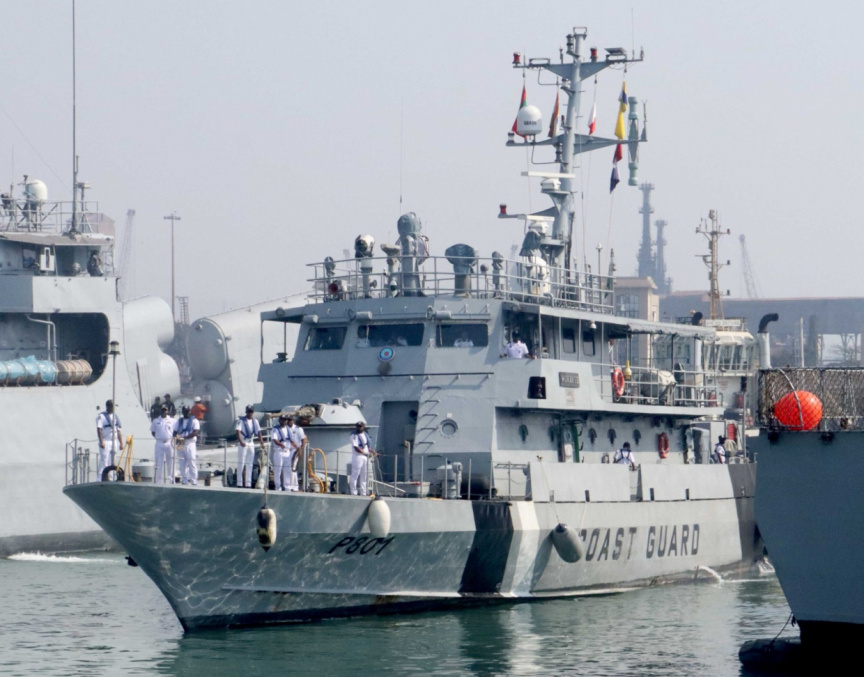
The man on the street or in the village does not know the difference between the Indian Navy and the merchant marine. Neither do many understand the difference between the Indian Navy and the Coast Guard. Recently, a leading newspaper’s headline betrayed its lack of ability to differentiate between a warship and a scientific research vessel.
I would not be surprised if some worthies cannot spot the difference between a Commodore and a komodo. There is hardly any maritime sport or adventure ecosystem in a country with a coastline of over 11,000 kilometres. We have never been anywhere close to a podium finish in any Olympic maritime sport.
The impunity with which we pollute our coastal areas and oceans is criminal. India builds and operates less than 1% of global shipping. The list is endless. To be fair to the leadership of the country over the past two decades or thereabouts, there have been several initiatives in maritime outreach, thanks mostly to the initiative of the Indian Navy.
The Indian Navy’s leadership has always taken upon itself the responsibility of sensitising the political leadership and civilian bureaucracy about affairs maritime. They must be singularly credited for the partial recovery from India’s sea blindness. This recovery, however, has been slow and inadequate.
Other than the Indian Navy, which has made impressive strides within its domain, be that in operations, ship design, indigenisation, training or logistics, every other aspect of maritime development and security have been well below par.
The Coast Guard too, has done reasonably well. That too was possible because it was carried by the Indian Navy on its shoulders from the time the Coast Guard was established, till about a decade ago, when it had its first home-grown director general, quite unlike the other Central Armed Police Forces that are led and officered at the senior level largely by the IPS.
Every other area of maritime development and security languished for years, quite obviously because they were not accorded national priority. In this backdrop, the recent initiatives in the ports, shipping and shipbuilding led development of the maritime sector are laudable.
Some forward-looking measures have also been put into motion in the fisheries sector, which bode well for the country.Beyond that, precious little has happened and whatever is being done is half-hearted, too little and too late. There are multifarious aspects of maritime development and security ranging from maritime defence in times of conflict at one end to maritime tourism, history and culture at the other end.
This is an area of immense possibilities in every aspect, from economic benefit, diplomatic dividends, scientific research, technology development and adventure, just to mention a few.Just as an aside, someone told me, tongue-in-cheek, that eating pani puris on Mumbai’s Chowpatty beach is the only maritime adventure that Indians indulge in.
We may laugh at this seemingly flippant quip but it is quite telling, if one cares to understand its import. There is nobody to blame for this state of affairs but ourselves as a nation. How can we expect people to be maritime conscious if we do not create opportunities for successive generations to learn about the seas, generate an interest, take a liking and finally choose a maritime vocation or interest that lasts a lifetime and gets passed on to the next generation?
How will it happen if we do not create jobs in the sector or not actively encourage maritime tourism, sport and adventure?
Can we seriously expect maritime awareness or knowledge to develop in our youth when nothing of it is taught in school syllabi? Universities that run undergraduate or postgraduate programmes, that too, in very narrow disciplines of maritime studies, can be counted on two hands.
India needs its people to understand the seas and prepare to join the maritime ecosystem in its varied dimensions. This cannot happen without a cogent plan for which high national priority is accorded and apex level guidance is provided through a governance structure that has cross-ministerial authority. We can wax eloquent about the blue economy and launch major projects like the Galathea Bay and build new shipyards, but where will the human resource come from if we do not educate, train and skill?
The maritime domain is a specialist arena but its management at the apex level has been left to generalists who have no understanding or connection with the oceans; and the possibilities they hold for our future well-being. The start point is awareness and education. Our academic fraternity will do well to engage the services of the handful of professionals that are available and willing to help in this regard.
This, if done correctly, will truly be a nation-building effort.The understanding of the maritime domain, its sustainable deveopment as well as providing it robust security are key to realising our national potential in the coming decades.India missed the Industrial Revolution and has been slow on development of critical technologies such as semiconductors.
The Maritime Revolution is upon us.If we continue in this manner, it will slip by from under our noses. That will be extremely unfortunate.
Don’t say you were not warned! Vice Admiral Biswajit Dasgupta (retd) is a former commander-in-chief of the Indian Navy’s Eastern Naval Command.