The participation of people from all sections of society may be regarded as a significant sign of growing linguistic consciousness
 KRC TIMES Barak Valley Bureau
Pradip Dutta Roy
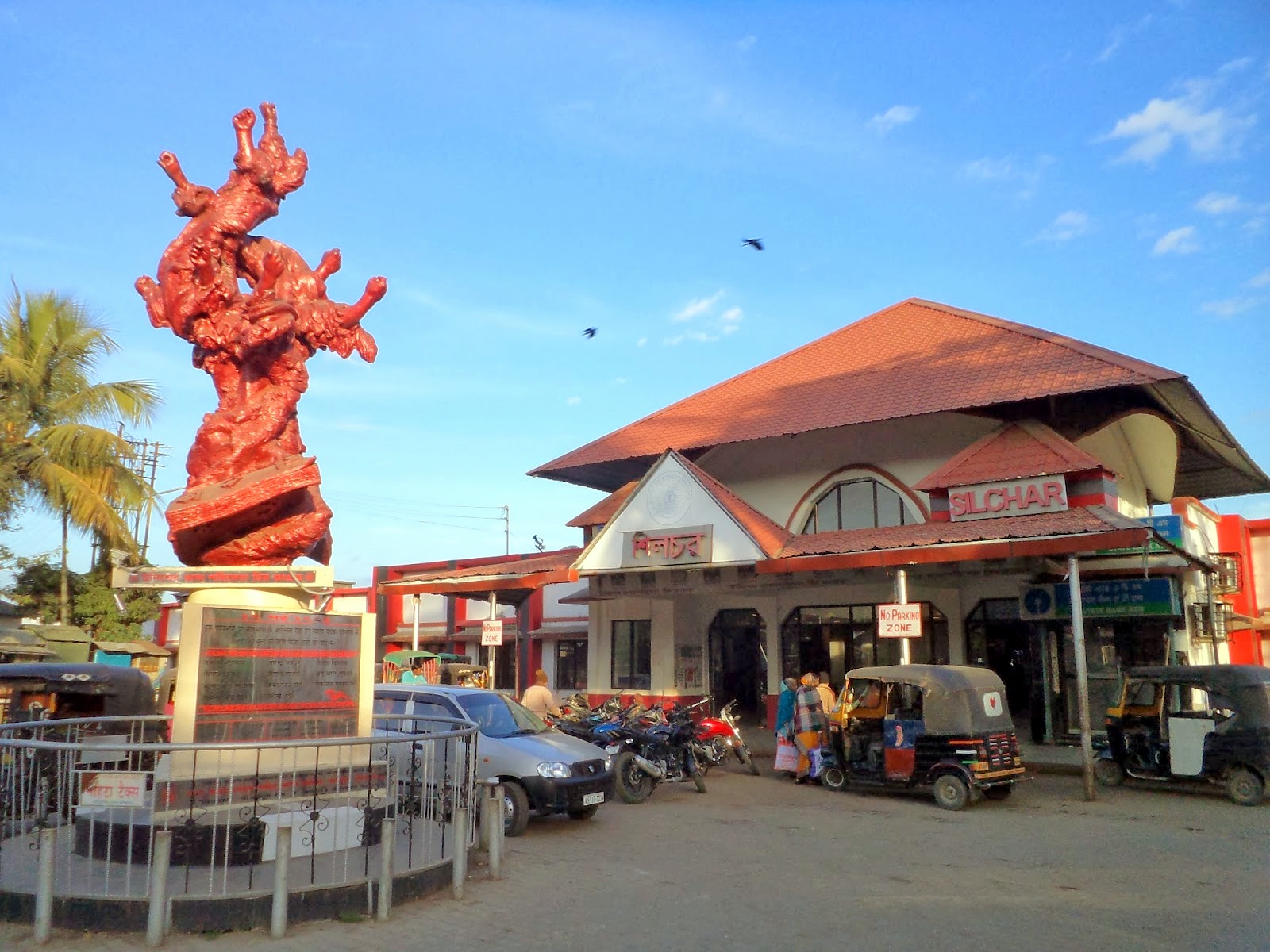
This year’s observance of Language Martyrs’ Day on May 19 witnessed an unprecedented public turnout, which can be considered a positive sign. Breaking all previous records, the programs this year saw massive gatherings. Such a huge crowd had never before been seen at Tarapur Railway Station, the cremation ground, and Gandhi Bagh.
As part of the commemoration, a “Path Chola of Nineteen” event was organized on May 17 by the Combined Cultural Forum. Again, on May 19, a grand procession was held in which a large number of people participated.
The participation of people from all sections of society may be regarded as a significant sign of growing linguistic consciousness. Public representatives, students, youths, and socially aware individuals from various walks of life marched together in the procession.
To make the grand march of May 19 successful, a meeting was organized under the initiative of Nikhil Pal, secretary of Rupam Cultural Organization, where various social organizations were invited. At the meeting, it was unanimously decided to organize a massive rally on May 19.
Educational institutions were also urged to join the procession, and a positive response to this appeal was clearly visible. Countless people took part. This year’s observance of Language Martyrs’ Day can therefore be called truly successful.
The success was not limited only to these three places. Small-scale programs were also organized in different localities wherever memorials dedicated to the language martyrs exist, and those events too witnessed remarkable public participation. To spread awareness about Language Martyrs’ Day, some voluntary organizations also visited educational institutions and organized awareness meetings. This too had an impact on this year’s events.

In the 1980s, such large gatherings during Language Martyrs’ Day observances were not seen. Only a handful of familiar faces used to gather in the morning at the railway station and cremation ground, and later at Gandhi Bagh in the afternoon, to pay tribute to the language martyrs.
Among them were a few members of the administration, some public representatives, volunteers, and language-loving citizens. In simple terms, the same familiar faces were seen organizing the event every year. Representatives of a few cultural organizations would also attend. The number of students was extremely small.
However, during the Golden Jubilee year of the language movement, the May 19 Celebration Committee took the initiative to organize a massive rally. That year, apart from the huge procession, a separate stage was set up at Gandhi Bagh for programs, and a drawing competition was organized inside Gandhi Bhavan. The day-long event, with participation from people of different sections of society, brought a new dimension to the observance.
To make the event successful, the then School Inspector Jalal Uddin Mazumdar played a positive role by encouraging every school principal to ensure student participation in the observance of Language Martyrs’ Day. From that year onward, attendance gradually began to increase.
In the following years, organizations such as the Combined Cultural Forum and other voluntary groups launched extensive awareness campaigns to make the observance more successful. As a result, public participation increased steadily every year.
Last year, an organization called Baraker Awaj created a major impact through its active involvement. A grand march was organized around Language Martyrs’ Day. Activities such as alpana art in front of Gandhi Bagh, cultural programs at Gandhi Bagh in the afternoon, blood donation camps, and day-long cultural programs on the railway station stage attracted increasing public participation. Language lovers from Kolkata and Bangladesh also travel every year to attend these events.

The obstacles that once prevented the events of May 19 from receiving proper publicity are gradually disappearing. People from other states are now becoming aware of May 19, and even central leaders are informed about it today.
Although awareness about May 19 has increased, the Assam government has still not responded positively to the proposal to rename Silchar Railway Station as “Language Martyrs’ Station.” Even though the Union Home Ministry and the Railway Ministry approved the renaming proposal, it remains stalled solely due to the reluctance of the Assam government.
Last year, Chief Minister Himanta Biswa Sarma strongly stated that the state government had already issued the NOC. However, there is actually no issue involving an NOC in this matter. In 2015, the Centre had written to the Assam government asking it to approve the spelling of the proposed name “Bhasha Shahid Station Silchar” and send it back to the Centre. But the Assam government has not responded to that letter till date. Therefore, it is natural for questions to arise regarding the government’s sincerity.
Although the demand to rename Silchar Railway Station after the language martyrs is a long-standing one, various attempts are allegedly being made to prevent its implementation. Last year, a person named Mukteshwar Kamprai, associated with the Dimasa Writers’ Forum, reportedly described the activists of the 1961 language movement as Bangladeshis and raised objections to the station renaming issue.
Perhaps that person is unaware that the 1961 language movement saw active participation not only from Bengalis, but also from Manipuris, Dimasas, tea garden communities, and other indigenous groups. This movement was not merely about protecting the Bengali language; it was a movement for the protection of mother tongues.
The naming of the station as Language Martyrs’ Station does not involve any issue of gain or loss for any specific linguistic community. Since the Dimasas themselves supported the 1961 movement, it is unlikely that people from that community would object to it.
Renaming Silchar Railway Station after the language martyrs would not benefit or harm any linguistic group. Rather, it would serve as a fitting tribute to the eleven innocent people who sacrificed their lives while fighting for the protection of their mother tongue.
To support the demand for renaming Silchar Railway Station, Assam Sahitya Sabha president Basanta Kumar Goswami wrote a letter to the Chief Minister last year. Even after receiving the letter, the state government did not take any action. This year too, referring to the previous letter, he wrote again, but no response has been received.

Although the ruling party unofficially recognizes Language Martyrs’ Day, it maintains a mysterious silence regarding the renaming of the railway station. It is suspected that the language martyrs have not yet been officially recognized by the government. If the railway station were renamed after them, it would indirectly amount to official recognition of the language martyrs. That appears to be the problem.
According to state government records, the language martyrs are still reportedly listed as ordinary miscreants. This was clearly stated last year during a question-and-answer session in the Assam Legislative Assembly by then minister Chandra Mohan Patowary. If the language martyrs are officially recognized, these records would also have to be changed, and compensation would have to be provided to the families of the martyrs.
Following the police firing at Silchar Railway Station during the language movement on May 19, the Mehrotra Commission was formed to investigate the incident. However, the report of the commission has still not been made public.
Every year demands are raised for the publication of the report, but the state government continues to ignore them. If the contents of the report were revealed, perhaps a path toward resolving the issue could be found. It is suspected that the report strongly supports recognition of the language martyrs, and that is why successive governments have kept the matter suppressed for years.

Reports have emerged that Language Martyrs’ Day was also observed in places such as Dhaka, Kolkata, New Delhi, Bengaluru, and London. Conscious citizens in those places recognized the significance of the day and observed it accordingly. Through this, more and more people are gradually learning about and understanding the importance of the day.
Writers, artists, cultural activists, and even film directors from West Bengal, Bangladesh, and various Indian states regularly come to Silchar to participate in the May 19 events. After returning to their own places, they spread awareness about May 19, enabling even more people to learn about Language Martyrs’ Day.
Across different parts of the Barak Valley, various organizations organized programs to observe the occasion. Not only on May 19 itself, but also on May 20 and 21, events were arranged around the occasion. Through cultural programs, awareness meetings, and marches, the significance of the day was presented before the common people. Participation from ordinary citizens in these events is increasing day by day.
Those who once believed that organizing these observances was solely the responsibility of literary and cultural organizations are now themselves coming forward to play leading roles. The message conveyed to the nation through these small local observances is extremely valuable. Every nation treasures its mother tongue above all else. A person who truly respects their own mother tongue will naturally respect the mother tongues of others as well.
Therefore, not only Bengalis, but people from other communities too are participating in these Language Martyrs’ Day observances and expressing their moral support. Across the Barak Valley, the day creates an atmosphere of solidarity. In today’s times, that spirit of unity is perhaps the most valuable aspect of all.
It may be hoped that in the coming years the observance of this day will become even more vibrant. As awareness about the significance of the day spreads among the younger generation, public participation in the observance will continue to increase.
(The opinions expressed are solely those of the author. The author is a former student leader and an advocate at the Gauhati High Court.)