


A Silent Sentinel of History in Sreemanga
 Sangram Datta
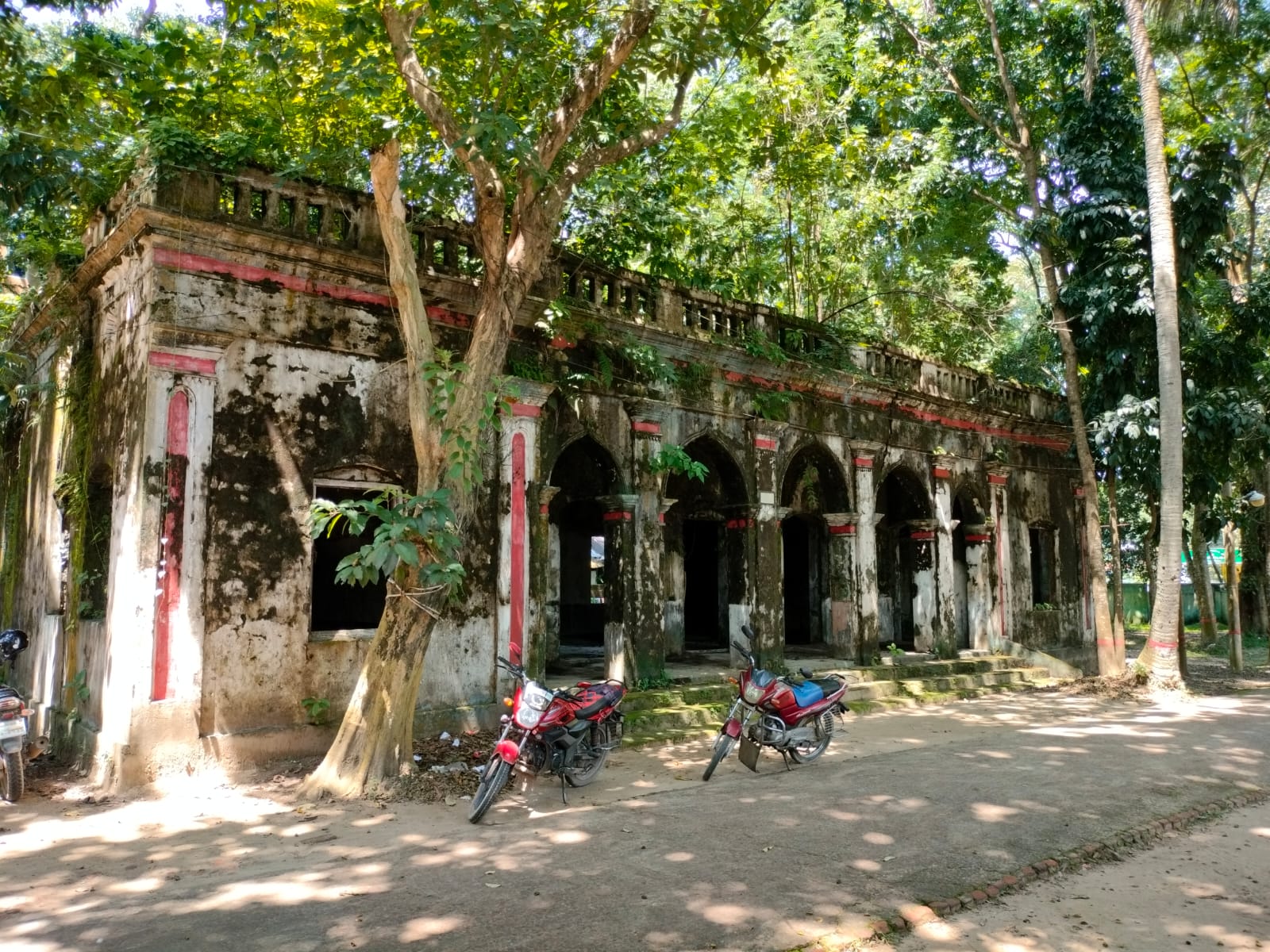
Amid the bustle of Habiganj Road in Sreemangal, Bangladesh, stands a crumbling yet dignified relic of the past—the Kachari House of the Tripura Maharajas. More than just an old structure, this centuries-old building is a valuable record of the administrative, political, and cultural history of the Sylhet region.
In the late nineteenth century, following the devastating earthquake along the Dauki Fault, the Tripura royal family took steps to reorganize their administrative operations in the area. As part of that effort, during the reign of Maharaja Bir Chandra Manikya Debbarma Bahadur, this Kachari House was constructed on approximately 1.75 acres of land in the heart of Sreemangal. Its primary purpose was to collect land revenue from tenants and oversee local administrative affairs.
Later, under Maharaja (King) Birendra Kishore Manikya Bahadur, the building developed into a full administrative center. At that time, large areas including Sreemangal, Kamalganj, Bhanugach, and Shamshernagar were under the jurisdiction of the Tripura royal family.
Historically, the authority of the Manikya rulers extended beyond present-day Tripura’s hill regions into vast parts of Sylhet—an account supported by Achyut Charan Choudhury’s Srihatter Itibritta and Kailash Chandra Singha’s Rajmala.
The partition of India in 1947 marked a turning point. The government of Pakistan took over the property, and over time it came to be used for official administrative purposes. Today, the building serves as the office of the Assistant Commissioner (Land) in Sreemangal, although much of its original structure has been left neglected.

Architecturally, the single-storey building is distinctive. Measuring approximately thirty feet in width and twenty feet in length, it contains three rooms, eight doors, and nine windows. With walls nearly a foot thick, lime-surki masonry, and fine ornamental detailing, the structure reflects a graceful blend of British colonial and local architectural styles. Traces of its craftsmanship are still visible in the decorative features of the walls.
However, time has taken a heavy toll. Large cracks have spread across the walls, the roof shows visible decay, and moss-covered surfaces tell a story of long neglect. In some areas, the building is partially damaged; in others, it stands on the verge of collapse.
Once alive with the activity of revenue collection—when crowds gathered and the premises were full of movement—the Kachari House now stands in silence. Those vibrant days exist only in memory.
Experts believe the site is not only a symbol of the Tripura royal administration but also an important link between colonial and indigenous systems of governance in the Sylhet region. They emphasize the urgent need to recognize it as an archaeological heritage site and to take proper steps for its preservation.
The question remains: will this structure—once the administrative heart of a vast region—disappear into the passage of time, or will it regain its rightful status through timely conservation?
For now, the Kachari House of Sreemangal stands quietly—bearing witness to history, and waiting to be preserved.