


Why the U.S. Risks Winning Battles but Losing Strategy
 KRC TIMES Desk
Col (Dr.) Ashwani Kumar, MiD, VSM (Retd.)
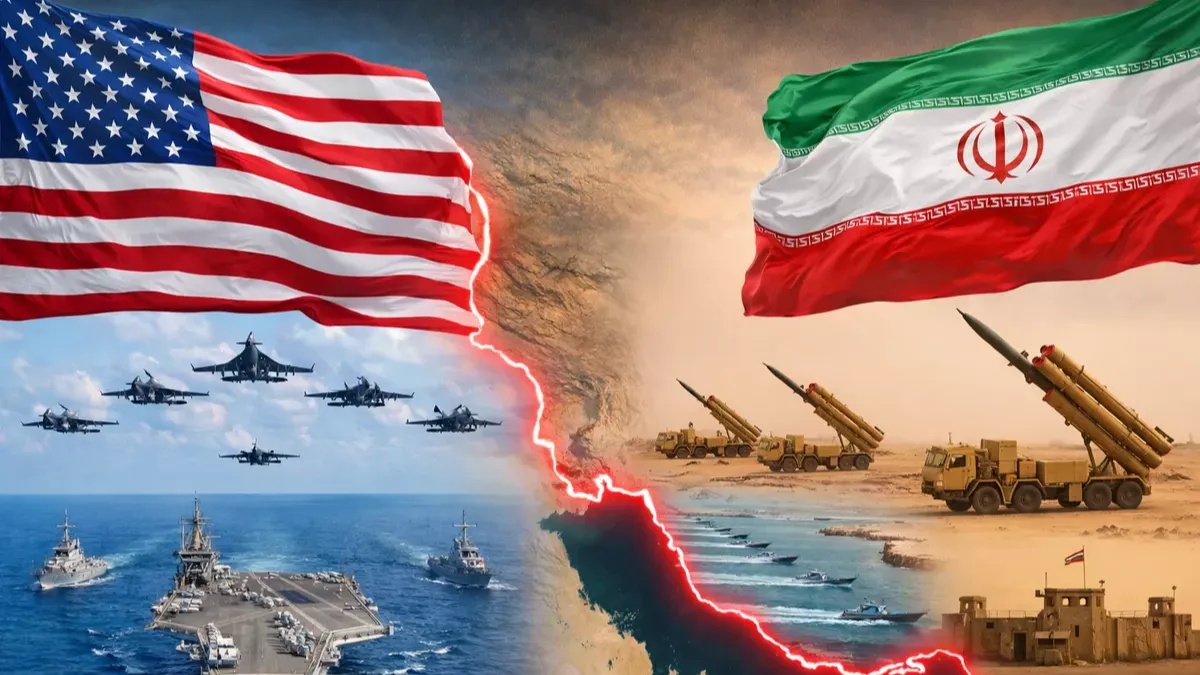
Wars are often measured in victories but judged in endings. The United States today stands at a familiar crossroads tactically dominant, technologically unmatched, yet strategically uncertain. As tensions deepen across the Middle East, particularly involving Iran and Israel, the question is no longer whether America can win battles. It is whether it knows how this war ends.
History offers a cautionary lens. From Vietnam to Iraq, and later Afghanistan, the United States has repeatedly demonstrated its ability to achieve rapid battlefield success. Yet, time and again, these victories have struggled to translate into lasting strategic outcomes. The pattern is not of defeat, but of incomplete victory where military strength outpaces political clarity.
The Illusion of Tactical Success.
Modern American warfare excels in precision. Advanced drones, satellite intelligence, cyber capabilities, and rapid deployment forces have redefined combat. Targets can be identified, tracked, and neutralized with remarkable efficiency.
Yet, tactical success creates a dangerous illusion that the accumulation of victories will eventually produce a strategic outcome. It rarely does.
Destroying infrastructure, eliminating key figures, or disrupting networks may weaken an adversary. But these actions do not necessarily resolve the underlying conflict. Instead, they often reshape it, pushing adversaries to adapt, disperse, and endure.
Victory in modern warfare is no longer about destruction, it is about direction. The Missing Piece: A Clear Endgame. At the heart of the current conflict lies a fundamental question:What does success look like? Is it regime change?
Is it deterrence? Is it containment?
Without a clearly defined political objective, military operations risk becoming self-perpetuating. Each success invites another action, each strike invites retaliation. The conflict expands, but resolution remains elusive. This is the essence of a war without endgame, a campaign driven by capability rather than clarity.
Iran and the Strategy of Endurance.
Iran represents a uniquely complex challenge. Unlike conventional adversaries, it does not rely solely on direct confrontation. Its strategy is built on asymmetry, patience, and regional influence.
It avoids decisive engagements, leverages proxy networks, and extends conflict across multiple domains. In such a framework, survival itself becomes a form of victory. The longer the conflict continues, the more pressure shifts onto the stronger power.
The Expanding Battlefield.
What makes the current scenario more dangerous is the expansion of conflict beyond conventional boundaries. The battlefield is no longer confined to a single geography.
Maritime tensions threaten global energy flows. Drone and missile exchanges blur frontlines. Proxy actors widen the scope of engagement. Each escalation adds complexity, and each response creates new uncertainties.
The Second Chokepoint: A Global Multiplier.
Beyond the Strait of Hormuz, strategic attention must also turn to the Bab el-Mandeb, the southern gateway to the Red Sea where the shadow of the Iran Israel conflict is rapidly lengthening.
While Hormuz represents the artery of Gulf energy exports, Bab el-Mandeb serves as the critical bridge linking these supplies to Europe via the Suez Canal. The involvement, or even the threat of involvement, of Iran backed Houthi forces in Yemen transforms this narrow passage into a second pressure point.
Disruption here would not merely complement instability in Hormuz, it would multiply its impact, creating a “dual chokepoint crisis” for global trade. Shipping routes are already being reconsidered, costs are rising, and energy markets remain sensitive.
If both corridors come under sustained threat, the conflict would transcend regional boundaries reshaping global supply chains, inflating oil prices, and turning a regional war into a wider economic confrontation.
The Cost of Time.
Time is the most underestimated factor in modern warfare. Military campaigns are designed for efficiency, but conflicts unfold over duration. As time extends, economic costs rise, political consensus weakens, and public support fluctuates. Adversaries do not need to win militarily they need to outlast politically.
The Risk Ahead.

If the United States continues on a path of tactical engagement without strategic clarity, it risks entering a familiar cycle, initial dominance, gradual entanglement, rising costs, and uncertain conclusions. A modern strategic failure will not resemble a dramatic defeat. It will emerge as prolonged involvement without resolution.
India and the Wider World: Watching Closely.
For India, the stakes are immediate. Energy flows, trade routes, and economic stability are directly tied to these choke point. Any prolonged disruption in Hormuz and Bab el-Mandeb would raise fuel prices, increase inflationary pressures, and strain economic planning. This makes the conflict not just regional but global in consequence.
To conclude power Needs Purpose. The United States remains the most powerful military force in the world. But power, in itself, is not a strategy. Without clarity of purpose, even dominance risks becoming directionless.
Wars are not won by how they begin but by how they end.
Author’s Note.
In the evolving nature of warfare, endurance often outweighs dominance. The United States has the power to strike, but the challenge lies in defining an achievable endgame.
If that clarity remains absent, the risk is not defeat but a prolonged conflict without resolution, where victories accumulate, yet strategy remains elusive. Views expressed are personal.