


The history of Zakiganj, therefore, is not merely the story of the liberation of a border upazila or a particular locality
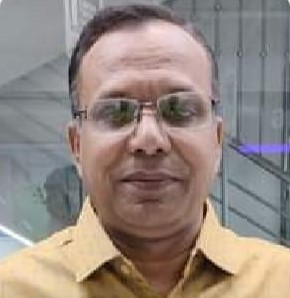 Sangram Datta
The history of a locality sometimes becomes a reflection of the history of an entire nation. Certain places do not merely preserve memories of their people, rivers, or settlements; they carry the legacy of a nation’s struggle, sacrifice, bravery, and dream of freedom. Zakiganj, a border town in Sylhet, holds such a distinguished place in the history of Bangladesh’s Liberation War.
At dawn on November 21, 1971, Zakiganj was liberated from the occupation of the Pakistani forces, earning its place in history as the first locality in Bangladesh to be freed from enemy occupation. Beyond this military victory, the establishment of civilian administrative activities in the liberated territory also made Zakiganj an important witness to the early journey of the independent state of Bangladesh.
The history of Zakiganj, therefore, is not merely the story of the liberation of a border upazila or a particular locality. It is the story of a nation’s yearning for independence, the resistance of ordinary people, the dedication of young patriots, the blood and suffering of countless individuals, and the emergence of the administrative foundations of an independent country. The courage and sacrifice demonstrated by the people of Zakiganj during the turbulent days of 1971 deserve due recognition in Bangladesh’s national history.
Situated on the banks of the Kushiyara River, Zakiganj is an important border locality in the northeastern corner of Bangladesh. Across the river lies Karimganj in India’s Assam state, with the waters of the Kushiyara separating the two territories. Located approximately 91 kilometres from Sylhet city, Zakiganj was part of Karimganj Police Station in undivided India before the Partition of 1947. Following Partition, it became part of East Pakistan.
Because of its geographical position, Zakiganj developed a close military and humanitarian connection with Karimganj during the Liberation War. On one side stood the occupying Pakistani forces; on the other, across the border, freedom fighters received training and the Indian allied forces prepared for military operations. Together, these circumstances transformed Zakiganj into an important battlefield of the Liberation War.
On the night of March 25, 1971, Pakistani occupation forces, armed with modern weapons, launched a brutal assault on the unarmed Bengali population. Under the name of Operation Searchlight, one of the most horrific massacres in history began in Dhaka and spread to different parts of the country. News of these atrocities quickly reached even the remotest regions. Students, young people, and political activists in Zakiganj were deeply angered by the brutality and began preparing to resist the Pakistani regime.
The Pakistani flag was burned, and the flag of independent Bangladesh, bearing the map of the country, was raised. Efforts were initiated to collect weapons from the police station and organise training and resistance activities. Among those who played leading roles in organising the local freedom movement were Awami League leader Md. Abdul Latif M.C.A., Abdul Aziz (Kutula Mia), Nichhar Ali Mukhtar, Bali Mia, Nuruddin, Chhatra League leaders Mahtab Ahmed, Fayzur Rahman, and Ahmed Al Kabir.
Md. Akram Ali, a leader of the Matia faction of the Bangladesh Students’ Union, affiliated with the NAP (Muzzafar), and then vice-president of Sylhet M.C. College, also played an important role in organising the struggle alongside Abdul Baich. Badrul Haque Badai, a leader of the Menon faction of the Students’ Union, initially joined as a supporter of the freedom fighters. Their organisational contributions demonstrate that the Liberation War in Zakiganj was not confined to armed resistance; it was also driven by political awareness, student participation, and the collective preparation of ordinary people.
However, amid these preparations for resistance, a Pakistani military jeep carrying eight to ten soldiers entered Zakiganj on April 18, 1971. Their arrival emboldened local anti-liberation elements. Some people welcomed the Pakistani forces with slogans such as “Pakistan Zindabad” and “Muslim League Zindabad.” Among those who came forward to receive them were Mahmudur Rahman, Atikur Rahman (Atai Mia), Shafiqul Haque (Sofai Mia), Ashhab Uddin Ahmed, Tabarak Hossain, and Harunur Rashid, among others. With their cooperation, Section 144 was imposed in Zakiganj town.
One of the most heartbreaking examples of the brutality of the occupation was the killing of ten-year-old Farid. He was too young to understand even the meaning of Section 144. Perhaps he had simply stepped outside his home that day for some ordinary necessity. When Pakistani soldiers spotted him at the intersection of Zakiganj Bazar, they shot and killed him mercilessly.
Farid became the first martyr of Zakiganj. The soil of this locality was stained with the blood of a child. His death was not merely an irreparable loss for one family; it marked the beginning of a horrifying chapter of Pakistani military brutality in Zakiganj. The sacrifice of ordinary people like Farid reminds us that the cost of the Liberation War cannot be measured by military victories alone. It also encompasses the lives, dreams, and tears of innocent people.
Following this, Pakistani soldiers began conducting raids in different villages. They set fire to the homes of prominent local figures, looted property, and carried out widespread destruction. Among those whose houses were attacked were Abdur Rahim Sarpanch, Anwar Hossain (Sonaullah), Nichhar Ali Mukhtar, Fayzur Rahman, Akram Ali, Tabarak Ali, Balai Mia, and Mostakim Haider, among others.
With the assistance of Pakistani forces, anti-liberation elements participated in looting the property of ordinary people. Numerous women were subjected to abuse and torture. During this period, Al-Badr, Razakar, Assam Peace Committee, and the notorious Khunti Bahini were formed in Zakiganj.
These groups actively assisted Pakistani soldiers in carrying out massacres and atrocities. The local Razakar force was led by Commander Harunur Rashid. The names of several collaborators, including Razakar Kutu, Panki, and Mosta, remain associated with anti-liberation activities. Mosta was also known as “Mosta the Executioner.” Acting on the instructions of the Pakistani forces, he participated in killing freedom fighters and Bengali civilians.
Despite the killings, oppression, and occupation, the people’s desire for independence never diminished. On the contrary, the more intense the oppression became, the stronger their determination to resist grew. Inspired by patriotism, young people chose the path of armed struggle. More than 400 students and young men from Zakiganj crossed the Kushiyara River into India and joined the Mukti Bahini, the Bangladesh Liberation Force. There, they received military training and prepared to fight the Pakistani forces inside the country.
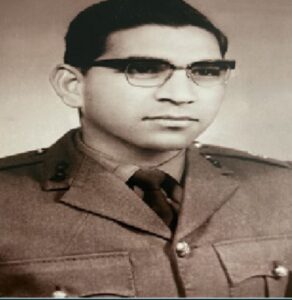
Meanwhile, thousands of men and women crossed the border into India to escape the killings and persecution of the Pakistani military. On one side were refugees facing lives of uncertainty; on the other were young freedom fighters preparing for armed resistance. These two parallel experiences further expanded the struggle for independence in Zakiganj.
This history reminds us that the Liberation War was not fought only by those who carried weapons. Refugees forced to abandon their homes, ordinary people who provided shelter, and everyone who supported the freedom fighters were also part of the struggle for independence.
One of the most painful reminders of the Liberation War in Zakiganj is the abandoned house of Satish Paul, located near Moskhondor Canal on the eastern outskirts of the town. The Pakistani occupation forces turned this house into a killing ground. At the abandoned residence of Anwar Hossain (Sonaullah), a member of the Zakiganj Union Parishad, in Pirer Chak, the Pakistani forces established a military camp. Pakistani Army officer Captain Basharat was stationed at the local Dak Bungalow. Military operations in different areas were directed from there.
From April 19 to November 20, 1971, for more than seven months, countless Bengalis were taken to the killing ground at Satish Paul’s house and brutally murdered. According to locally collected information, approximately 100 people were killed there. On a single day, at the same time, 12 people from Loharmahal village were murdered at this site. Anyone suspected by the Pakistani forces and their Razakar collaborators of supporting the Liberation War or assisting the Mukti Bahini was brought there and killed.
The identities of all those who were martyred at this killing ground have not yet been recovered. However, among those whose names have been preserved through local accounts are Rahman Ali of Pirer Chak, Habibur Rahman of Keshri, Nurai Mia of Shahidabad, the father of Mutalib EPR of Ilakj, Abdul Wahab of Kapna, Kuti Mia of Khechua, Nabakumar Bairagi of Beu, Brajendranath, Samiranath, Mirzan Ali of Loharmahal, Nilambar Ali, Chhatoi Mia, Cherag Ali, Ilash Ali, Achhai Mia, Shanai Mia, Hayat Ali, Abdur Rahman, Nur Uddin, Akaddas Ali, Abdul Jalil, Motsim Ali of Senapatir Chak, Kala Mia of Anandapur, and Abdur Rahim Sarpanch.
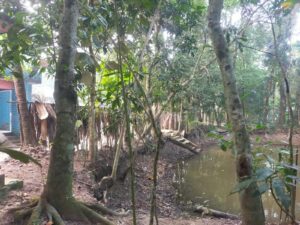
These names are not merely entries on a list. Behind every name lies a family, a life, a dream, and an unfinished story. The identities of many victims may have disappeared in the passage of time, but their sacrifices must never be erased from the history of Zakiganj’s Liberation War. The history of a nation’s independence becomes complete only when the sacrifices of unknown people who gave their lives for freedom receive the recognition they deserve. Preserving and bringing attention to the killing ground at Satish Paul’s house is therefore not merely a local responsibility; it is a national responsibility.
After taking control of Zakiganj, Pakistani soldiers conducted operations in Chargram and several other areas. Looting, arson, violence against women, and killings made ordinary people’s lives unbearable. Yet even amid these terrifying circumstances, the freedom fighters remained committed to their mission. With the support of local residents and military training across the border, their resistance became increasingly organised.
During this period, freedom fighters conducted between 10 and 15 operations in the Zakiganj area and brought substantial quantities of weapons and ammunition under their control. These operations gradually weakened the positions of the Pakistani forces. The courage of the freedom fighters, the support of local residents, and military preparations across the border combined to create the conditions for Zakiganj’s final liberation.
The final phase of the Liberation War in Zakiganj is closely connected with the military preparations in Karimganj, across the Kushiyara River, in India’s Assam state. In November 1971, Pakistani forces were positioned on one side of the river, while Indian troops prepared for military action on the other. Both banks were gripped by the tension of an impending battle.
In November 1971, Major Chaman Lal Sharma was serving as Battery Commander of the Indian Army’s 99 Mountain Regiment, deployed in Karimganj, Assam. To monitor the movements of Pakistani troops and prepare for a possible confrontation, the Indian Army established a military base at Deulitila in Karimganj. Across the border, Pakistani soldiers maintained their positions in Zakiganj.
At that time, Karimganj had the atmosphere of a military zone. Army patrol vehicles frequently moved through the streets. Military equipment, including armoured vehicles, was stationed at various government schools and colleges. Areas such as Shambhu Sagar Park near the statue of Rabindranath Tagore, Char Bazar, Daspatti, and Steamer Ghat witnessed visible military activity and control by the Indian Army.
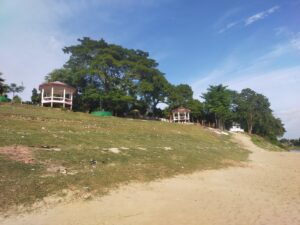
In preparation for the operation in Zakiganj, Major Chaman Lal and his fellow officers established contact and developed good relations with several influential residents of Karimganj. Information and local knowledge provided by residents helped them identify safe routes into Bangladesh, the locations of Pakistani bunkers, available weapons, and military positions. These details played an important role in preparing the plan for the attack on Zakiganj, with Major Chaman Lal making a significant contribution.
The Indian Army units deployed in Karimganj operated under the overall operational command of IV Corps, headquartered in Agartala. The corps was commanded by Lieutenant General Sagat Singh. Information about the geographical features on both sides of the border, river-crossing routes, and Pakistani defensive positions proved particularly valuable in planning the joint operation.
Finally, the historic moment arrived. At dawn on November 21, 1971, a joint operation by the Indian allied forces and the Bangladesh Mukti Bahini began with the objective of liberating Zakiganj from enemy occupation. It was believed that the Pakistani soldiers stationed in Zakiganj would be occupied with Eid celebrations that day. This assumption was considered a potential tactical advantage in planning the operation. The principal objective was to break the Pakistani defensive positions through simultaneous attacks from multiple directions.
Major Chaman Lal Sharma, Battery Commander of the Indian Army’s 99 Mountain Regiment, played a significant role in planning and leading the operation. In the first phase, soldiers from Delta Company crossed the Kushiyara River and secured the border areas adjacent to the river. Subsequently, soldiers from Charlie and Echo Companies, led by Major M. M. Kapoor, crossed the river alongside BSF personnel and established roadblocks at strategic locations. Meanwhile, Alpha and Bravo Companies, under Major B. B. L. Narang, took up positions at their designated Forming Up Place (FUP).
After advancing to a position approximately 800 yards from Zakiganj, soldiers of Delta Company, together with other platoons, divided into several groups and launched coordinated attacks from different directions. This carefully planned multi-pronged assault placed the Pakistani forces under intense pressure. The joint forces successfully advanced into Zakiganj.
In addition to Major Chaman Lal’s 99 Mountain Regiment, the operation involved the 64 Cavalry, 9 Guards, Border Security Force (BSF), and a company of the East Bengal Regiment. After approximately three and a half hours of intense fighting, the Pakistani forces were forced to retreat from Zakiganj. As they fled, they abandoned substantial quantities of weapons and ammunition.
Indian Army and Mukti Bahini personnel entered Zakiganj through Alamsid, Loharmahal, and Zakiganj Customs Ghat. The coordinated attacks from different directions shattered the Pakistani defensive positions. Pakistani soldiers and Razakars scattered and began fleeing towards Atgram. Some were killed, while others were captured by the joint forces.
The seven-month-long Pakistani occupation finally came to an end. The flag of independent Bangladesh began flying over Zakiganj. The people erupted in joy at their liberation. The dawn of November 21 was therefore not merely the memory of a military victory; it was the culmination of a long wait, bloodshed, suffering, and struggle for freedom.
Yet this victory came at a tremendous cost. Three brave members of the Indian forces sacrificed their lives during the operation to liberate Zakiganj. Major Chaman Lal Sharma of the 99 Mountain Regiment and Guardsman Deen Nath Yadav of the 9 Guards Battalion were wounded by enemy fire and eventually succumbed to their injuries. Border Security Force Sub-Inspector Bharat Singh Gurung also laid down his life during the operation.
Major Chaman Lal played an exceptionally important role in the operation. His courage, military foresight, communication with local residents, and leadership on the battlefield made a significant contribution to the liberation of Zakiganj. Because of his sacrifice, the people of Karimganj came to remember him as the “Saviour of Karimganj.” Deen Nath Yadav and Bharat Singh Gurung also earned the respect and affection of local residents.
Major Chaman Lal was a dedicated and courageous military officer. By sacrificing his life in the line of duty, he demonstrated unwavering commitment to his country and upheld the proud traditions of the Indian Army. He was survived by his wife, Mrs. Rajbir Chaman Lal, and son, Manish Kumar.
The sacrifice of these three soldiers from another country while fighting for the independence of Bangladesh gives our Liberation War a deeper humanitarian significance. Their sacrifice demonstrates that the struggle of 1971 was not merely a fight for the independence of a particular territory; it was also a collective struggle by people who stood for humanity, justice, and freedom. Their memories deserve equal respect from the people of Bangladesh.

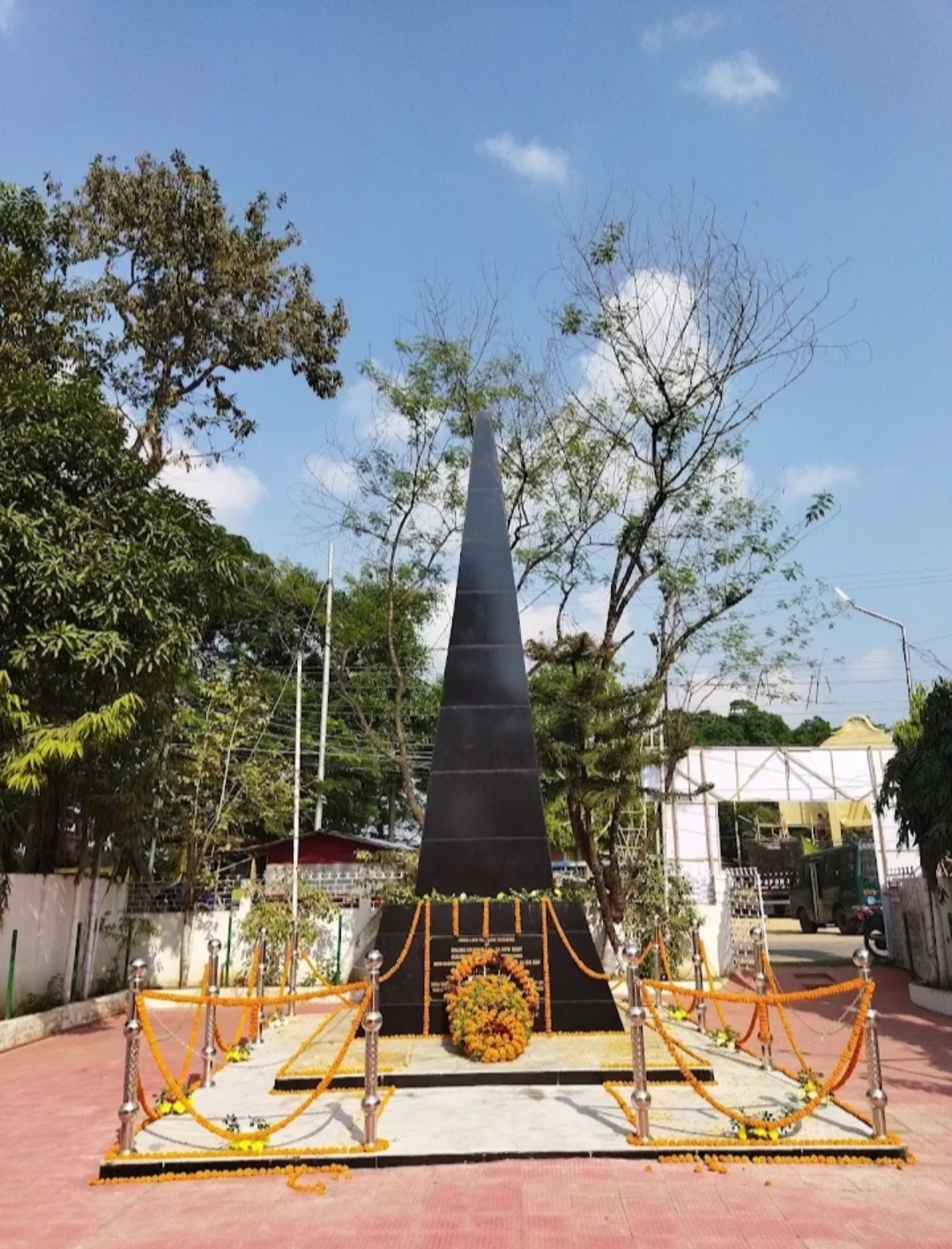
The memory of their sacrifice is preserved at the 1971 War Memorial, located beside Dak Bungalow Road in present-day Sribhumi, formerly Karimganj, in Assam, India. Built in honour of Major Chaman Lal and his fallen comrades, this memorial is not merely a tribute to three Indian soldiers. It is also an important historical testament to the Liberation War fought along the Zakiganj border.
According to local historical accounts, on November 23, 1971, volunteers from the Karimganj Youth Corps and Nari Shakti Sangha collected blood-soaked soil from the battlefield and preserved it in front of the then Dak Bungalow. Their initiative marked the beginning of efforts to preserve the memory of the fallen soldiers. Initially, the site was protected with a bamboo fence, but a permanent memorial was constructed there in later years.
Even today, the memorial recalls the bloody battle of November 21. For the people of Zakiganj and Karimganj, standing on opposite banks of the Kushiyara, it represents a remarkable legacy of cooperation, courage, and sacrifice during the Liberation War. Although an international border separates the two countries, the struggle of 1971 has bound the histories of these two neighbouring communities together.
The significance of Zakiganj’s liberation was not limited to the freeing of a locality from enemy occupation. An initiative was also undertaken to establish the civilian administration of independent Bangladesh in this liberated territory, making Zakiganj even more important in the history of the Liberation War. After freeing a territory from enemy control, restoring normal civilian life, reopening educational institutions, establishing administrative order, and ensuring public safety were essential steps in demonstrating the existence of an independent state.
The Mujibnagar Government began working towards restoring normal administrative and civilian life in liberated areas. As part of this initiative, efforts were made to reopen Zakiganj Government High School on November 30, 1971. A total of eight teachers, including Md. Akram Ali, were appointed to conduct educational activities at the school.
An inaugural ceremony was organised on the school premises. Lieutenant General Jagjit Singh Aurora, Commander of the Indian Eastern Command, attended as the chief guest. In his speech, he declared Zakiganj the first liberated territory of Bangladesh. The historic establishment of the civilian administration of independent Bangladesh in this locality also received special importance during the event.
Among the other distinguished guests were Dewan Farid Gazi, Chairman of the Mujibnagar Government’s Civil Administration Council for Northeast Zone-1; Abdur Rahim M.N.A.; Abdul Latif M.C.A.; and Major C. R. Dutta, Commander of Sector 4, along with other prominent figures of the Liberation War.
The entire programme was conducted by veteran freedom fighter Md. Akram Ali, one of the newly appointed assistant teachers. Daud Haider Qureshi, then administrator of Shalutikar Airport (now Sylhet M.A.G. Osmani International Airport), was appointed as the administrator of Zakiganj. Veteran freedom fighter Enam Ahmed Chowdhury, Ahmed Al Kabir, Masuk Uddin Ahmed, and Khalil Uddin Ahmed also played important roles in maintaining peace and order and conducting administrative activities in the newly liberated locality.
This civilian administration continued its activities in Zakiganj until December 16, 1971, when the entire country was finally liberated from Pakistani occupation.
These events make Zakiganj’s historical significance even more evident. Within just a few days of the military victory on November 21, initiatives were taken to reopen the school, appoint teachers and an administrator, and operate civilian administrative activities. In other words, Zakiganj was not merely a battlefield in the struggle for independence; it was also an important centre for putting the administrative and state structures of independent Bangladesh into practice in a liberated territory.
Establishing an independent state requires more than freeing its territory from enemy occupation. It also requires functioning administration, education, public safety, and the restoration of normal social life. The initiatives undertaken in Zakiganj during the Liberation War provided an important early example of the practical experience of governing an independent Bangladesh. For this reason, the historical significance of Zakiganj cannot be fully understood if its story is confined only to military victory.
This chapter of Zakiganj’s history deserves greater attention in our national narrative. Its identity as the first locality liberated from enemy occupation is significant, but the establishment of civilian administration in the liberated territory is equally important. Yet this administrative initiative receives comparatively little attention in many national discussions of the Liberation War. More research, preservation of historical documents, and sustained media coverage are necessary to address this gap.
The history of Zakiganj carries the contributions of countless individuals. Some organised resistance, some fought with weapons in their hands, some crossed the Kushiyara to receive military training, some endured the hardships of life as refugees, while others helped establish administration and educational activities in the liberated territory. It was their collective contributions that made the history of Zakiganj’s Liberation War so rich and significant.
The martyrdom of ten-year-old Farid, the memory of countless victims killed at the Satish Paul house killing ground, the courage of more than 400 young men who crossed the Kushiyara to receive training in India, the suffering of thousands of refugees, the operations conducted by freedom fighters, and the sacrifices of members of the Indian allied forces—all these experiences together form a unique chapter in Bangladesh’s history of independence.

Preserving this history is not simply about remembering the past. It is also a responsibility to convey the true value of independence to future generations. In particular, the killing ground at Satish Paul’s house, the memory of Farid as the first child martyr, the liberation of Zakiganj on November 21, and the establishment of civilian administration in the liberated territory must be properly preserved and brought to public attention. At the same time, initiatives should be taken to recover the identities of the martyrs, document the memories of freedom fighters, collect testimonies from local eyewitnesses, and prepare a comprehensive historical record.
The shared history of Zakiganj and Karimganj, on opposite banks of the Kushiyara River, should also be presented to the younger generation. On one bank stood the occupation and brutality of the Pakistani forces; on the other was the military preparation for liberation. The Kushiyara, flowing between the two localities, remains a silent witness to their fear, suffering, courage, and longing for freedom. The war memorial in Karimganj is another important reminder of this shared history.
For the preparation of this feature report, the necessary information, historical accounts, and overall assistance were provided by Mostak Ahmed, a former politician and municipal commissioner of Zakiganj town. His information and cooperation were particularly helpful in highlighting many important events, personalities, and historical landmarks associated with the Liberation War in Zakiganj.
Those bloody days of 1971 have now become part of history. But for the people of Zakiganj, they are more than memories of the past; they are a source of pride, identity, and an invaluable legacy of independence. The history of a locality whose soil was stained with the blood of martyrs, whose young people crossed the border to receive military training for freedom, and where the combined operations of the allied forces and the Mukti Bahini brought the first victory of liberation is inseparable from the national history of Bangladesh.
Standing on the banks of the Kushiyara, Zakiganj is therefore much more than a border upazila. It is a glorious memorial ground of Bangladesh’s Liberation War, a remarkable testament to the courage of those who fought for independence, and an important chapter in the early establishment of civilian administration in the independent state of Bangladesh.
The dawn of November 21, 1971, was not merely a sunrise of liberation for the people of Zakiganj; it was a shining milestone in Bangladesh’s journey towards victory. The history of Zakiganj, where the flag of liberation first flew over a liberated locality and where administrative activities of the independent state began to take shape, deserves to be presented with due honour at the national level.
Because the history of independence is not merely a source of pride; it is also a reminder of our responsibility. The glorious story of Zakiganj must therefore not only be remembered but also preserved—not merely celebrated as a victory of the past but passed on to future generations. The more we learn about and engage with the history of our independence, the deeper our sense of responsibility towards that history will become.