

Second state in India after Uttarakhand to implement UCC
 KRC TIMES National Bureau
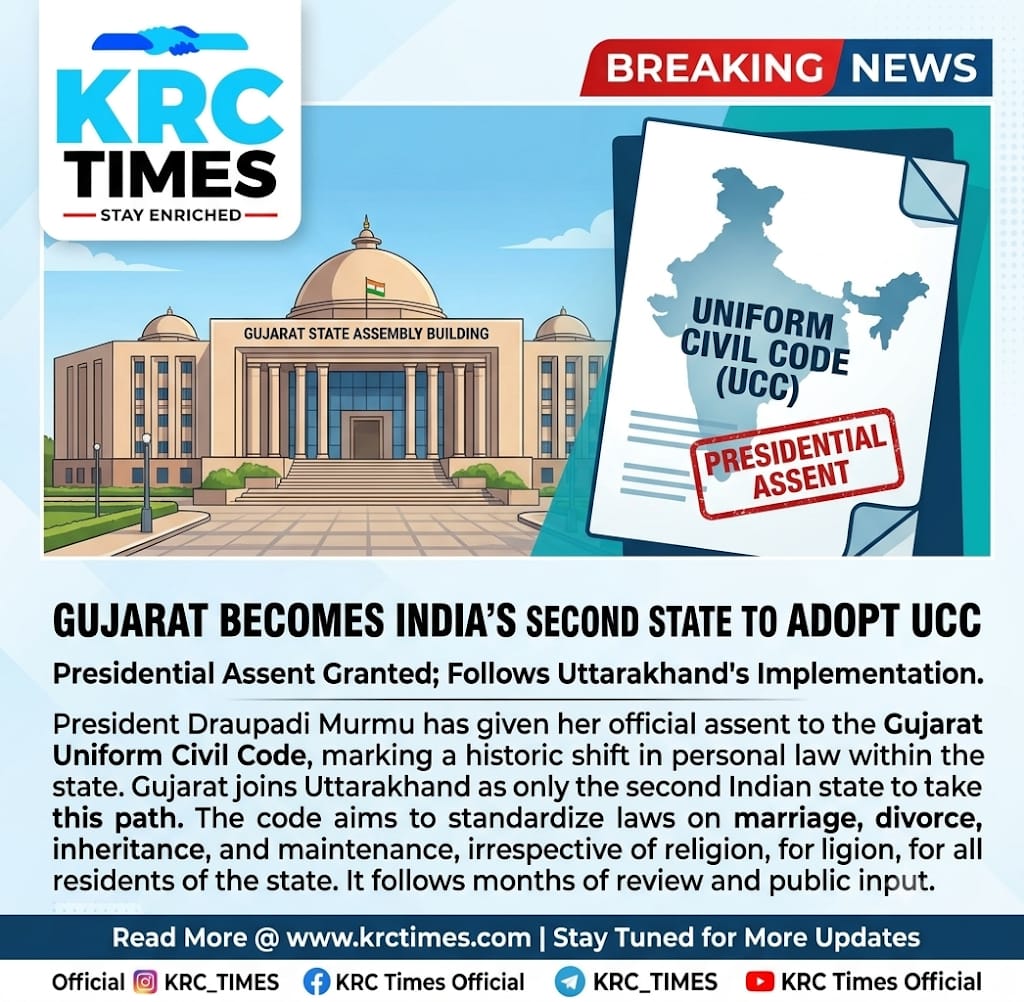
The Gujarat Uniform Civil Code (UCC) Bill, 2026 was notified as Gujarat Act No. 15 of 2026 in the official gazette following Presidential assent. Drafted based on recommendations by a committee headed by retired Supreme Court Justice Ranjana Prakash Desai, the legislation establishes a common legal framework governing marriage, divorce, succession, and cohabitation across all religious communities in Gujarat.
Scope, Jurisdiction & Exemptions
- Territorial & Personal Reach: Applies to all individuals residing in Gujarat, as well as registered residents of the state living outside its territorial boundaries.
- Tribal Exemption: Explicitly exempts Scheduled Tribes (STs) and communities whose customary and traditional rights are constitutionally protected.
Marriage & Divorce Regulations
- Total Ban on Polygamy: Bigamy and polygamy are prohibited regardless of religious personal laws. A valid marriage requires that neither party has a living spouse at the time of solemnization.
- Standard Marriageable Age: Fixes the legal age of marriage at 21 years for men and 18 years for women, effectively criminalising child marriage.
- Mandatory Marriage Registration: All marriages solemnised within the state must be registered within 60 days. Non-registration attracts a fine of up to ₹10,000.
- Uniform Divorce Grounds: Replaces extra-judicial and unilateral divorce practices with standardised, court-administered procedures, ensuring equal legal standing for men and women during the dissolution of marriage.
Succession & Property Rights

- Gender Parity in Inheritance: Grants sons and daughters equal rights to ancestral and parental property.
- Abolition of Discriminatory Codes: Eliminates gender-based disparities historically embedded in personal laws concerning testamentary and intestate succession.
Mandatory Live-in Relationship Framework
- Compulsory Registration: Resident couples entering a live-in relationship are required to submit a statement of cohabitation to the local registrar. The law also outlines a formal procedure for registering the termination of such relationships.
- Penalties for Non-Compliance: Failure to register after being served a statutory notice can lead to conviction with imprisonment of up to 6 months, a fine up to ₹25,000, or both.
- Consent & Protection of Minors: Obtaining consent for a live-in relationship through coercion, force, or fraud carries a prison term of up to 5 years. Cohabitation involving minors is prohibited and punishable under the POCSO Act.
- Maintenance & Children’s Rights:
- A woman deserted by her live-in partner has the legal right to claim maintenance through the competent court.
- Children born from live-in relationships are deemed legitimate under the law, with both partners sharing equal parental liability and the children retaining full inheritance rights.
Implementation Status
While the legislation has been gazetted, the Act will formally take effect once the state government frames, reviews, and notifies the underlying procedural rules and administrative registries.