Drone-based study tracks over 36,000 vehicles and nearly nine million vehicle positions, offering insights for smarter traffic management and congestion control
 KRC TIMES Assam Bureau
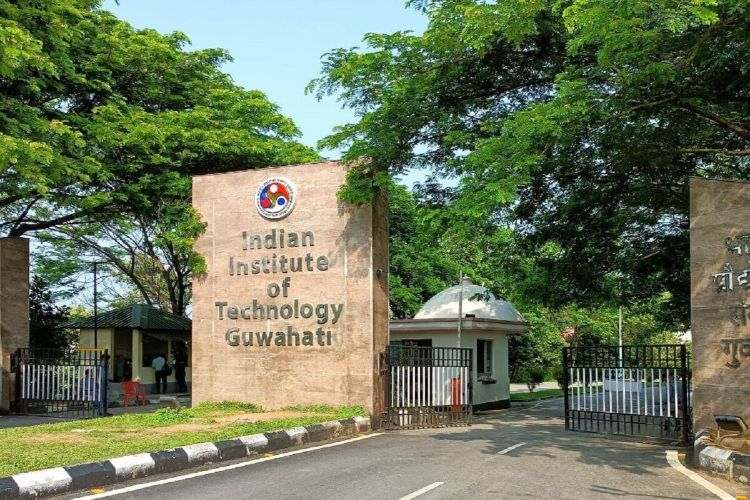
Guwahati : Researchers at the Indian Institute of Technology (IIT) Guwahati have developed new mathematical and machine learning models to predict traffic movement under India’s complex road conditions, a development that could help urban planners improve traffic management and tackle congestion.
The research, based on high-resolution drone footage collected from a busy multi-lane highway near Delhi, examined how vehicle speed and the distance between vehicles change with variations in traffic density.
Led by Professor Akhilesh K Maurya of the Department of Civil Engineering, the research team tracked more than 36,000 vehicles and nearly nine million individual vehicle positions to understand traffic behaviour under different road conditions.
The researchers used the extensive dataset to develop mathematical and machine learning models capable of predicting vehicle speeds and traffic patterns. The findings could contribute to more efficient traffic signal systems, intelligent transportation networks and improved congestion management.
The study sought to address the limitations of conventional traffic models, many of which were developed using road conditions and driving patterns that differ considerably from those found in India.
For the research, the team collected daytime drone footage from an eight-lane divided highway with wide paved shoulders on the outskirts of Delhi. The aerial monitoring enabled researchers to observe large numbers of vehicles and track their movements with high spatial and temporal precision.
Analysis revealed distinct changes in vehicle behaviour as traffic density increased. On relatively empty roads, vehicles maintained larger gaps from one another. As traffic became moderately heavy, these gaps narrowed and vehicles moved closer together.

However, under extremely heavy traffic conditions, the gaps increased again as vehicles approached congestion and movement became increasingly restricted. Professor Maurya said traffic patterns in India were significantly different from those in countries where many conventional traffic models had originally been developed. He stressed the need for models based on actual Indian road conditions and driving behaviour.
He also highlighted the advantages of drone-based monitoring, which allows researchers to observe traffic across extended road sections and capture vehicle movements in considerable detail.
The study found that nearly 3,000 vehicles passed a fixed point in each lane under full traffic flow before congestion began. During traffic jams, when vehicles came to a standstill, traffic density reached nearly 900 vehicles per kilometre across the entire road width.
Based on these observations, the researchers evaluated six mathematical models and trained two machine learning models to estimate traffic speeds. Given the unpredictable nature of Indian traffic, the team designed the models to predict a range of possible vehicle speeds rather than relying on a single estimate. This approach is intended to account for variations in vehicle behaviour and the mixed nature of traffic on Indian roads.
The researchers said further data collection across different cities, road categories and traffic conditions would help improve the accuracy and wider applicability of the models.
The findings could have several practical applications, including urban traffic digital twins, adaptive traffic signal management, road-capacity assessment and traffic simulation. The models may also support the evaluation of connected and automated mobility systems under Indian traffic conditions.
The research has been published in the International Journal of Intelligent Transportation Systems Research. The paper was co-authored by Professor Maurya and his research scholars Shekhar Singh and Surya H Ravikumar. The study highlights the potential of combining drone-based surveillance, mathematical modelling and machine learning to develop traffic management solutions better suited to India’s diverse and often unpredictable road environment.