

PM said India and Japan have also taken several important decisions in the field of energy security
 KRC TIMES National Bureau
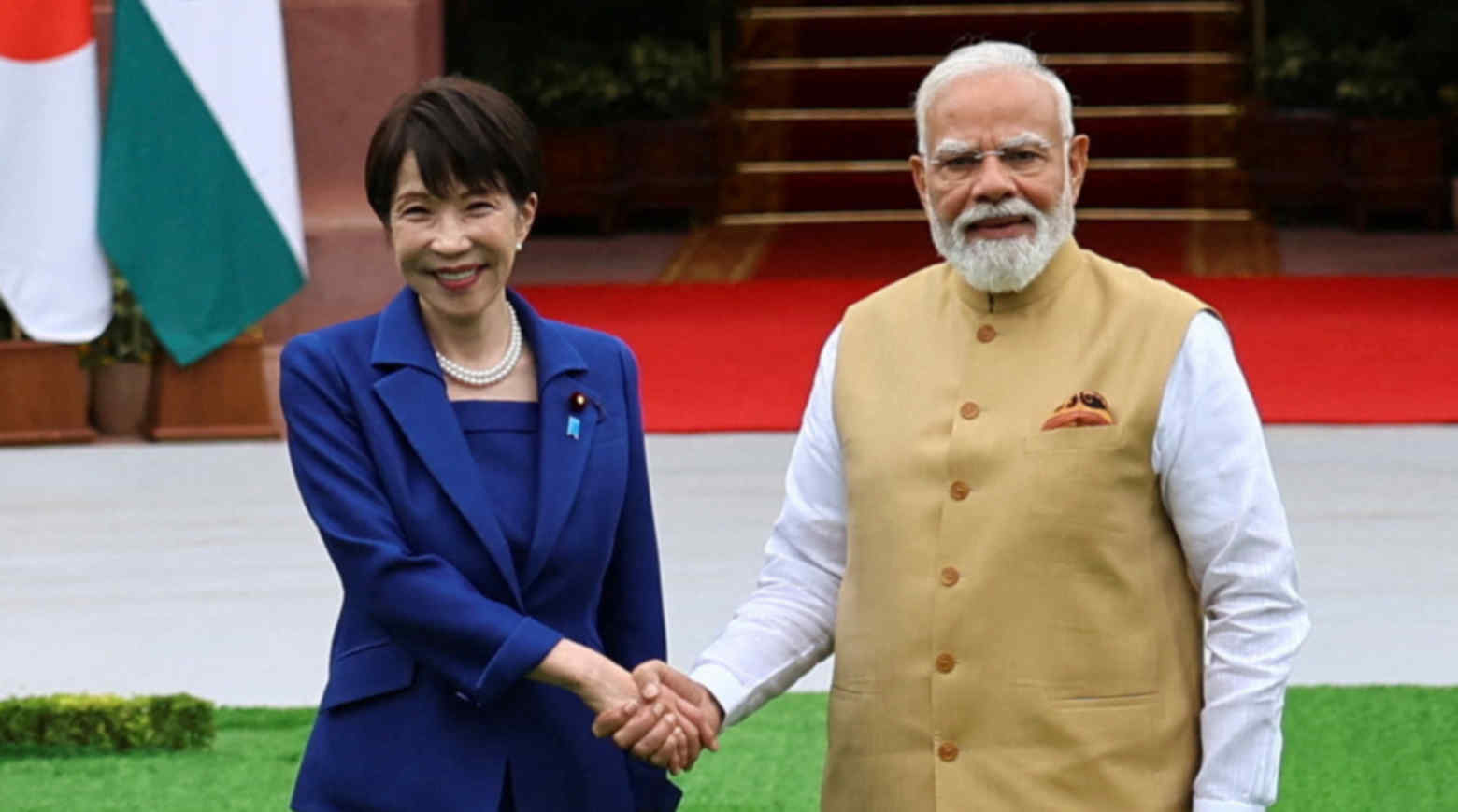
NEW DELHI | With an emphasis on economic cooperation and technology partnerships, Prime Minister Narendra Modi on Thursday held summit talks with Japanese counterpart, Sanae Takaichi, focusing on resilient semiconductor supply chains and critical technologies.
Following the talks at the Hyderabad House, the two sides unveiled a raft of initiatives, including an economic partnership framework and a defence pact to co-develop military hardware. The two sides also rolled out measures to solidify their cooperation in key sectors such as energy and critical technology.
Speaking to the media after the talks, PM Modi addressed the Japanese prime minister as his “younger sister.”
“Your Excellency, and ‘meri chhoti behen’ (my younger sister) Prime Minister Takaichi, delegates of the two countries, members of the media, Namaskar! Konnichiwa,” Modi said as he began his address.
Konnichiwa is a Japanese word used when greeting someone.
“I am delighted to welcome Prime Minister Takaichi on her first visit to India for the India-Japan Annual Summit. She is also Japan’s first female Prime Minister, and a visionary and popular leader. Furthermore, she hails from Japan’s Nara Prefecture, a very important centre of shared Buddhist heritage of India and Japan,” Modi said.
The Indian prime minister ended his speech using both Hindi (‘bahut bahut dhanyawad’) and Japanese (‘arigatou gozaimasu’) words for expressing thanks. In her address in Japanese, which was simultaneously translated in English, Takaichi acknowledged Modi’s remarks describing her as his “younger sister”.
“The small meeting before and the big meeting… we confirmed that we are on the same page to develop this relationship as brother and sister,” she said. The Japanese prime minister further said she and Modi in their talks, agreed to “deepen strategic cooperation” between the two countries to achieve the common goals they have set.

Send your resume:
biswa@jigyasu.co.in
krcfoundation@gmail.com
“I would like to express my heartfelt gratitude to Prime Minister Modi and the people of India for your warm hospitality on the occasion of my visit to your country,” she said in her address at the joint press meet.
Modi in his address to media also said, “We are delighted that next year we will celebrate the 75th anniversary of India-Japan diplomatic relations. On this important occasion, we will deepen connection through cooperation in culture, tourism and the creative economy.”
In a statement issued after the talks, PM Modi said, “The economies of India and Japan are complementary. From cultural values to modern technology, there is a similarity in our thinking and approach as well.”
“And above all, the foundation of our relations rests on unbreakable mutual trust,” he said, reflecting the growing congruence in ties between the two countries. Modi said the two sides have prepared a joint roadmap for economic security.
“Through this, we will strengthen supply chain resilience in strategic areas such as semiconductors, quantum, and advanced materials,” he said. The prime minister said India and Japan have also taken several important decisions in the field of energy security.
“Through the India-Japan bio-gas initiative, we will set up one thousand bio-gas and organic fertiliser plants in India. This will give new strength to sustainability, prosperity, and rural livelihoods in India’s villages,” he said.
Ahead of the meeting, the Ministry of External Affairs (MEA) described the India-Japan partnership as one “built on trust” and rooted in shared values. “Taking forward a partnership anchored in trust, shared values and strategic convergence,” External Affairs Ministry spokesperson Randhir Jaiswal said on social media.

The Japanese prime minister is on a three-day visit to India. She was accorded a warm ceremonial welcome at the forecourt of the Rashtrapati Bhavan in Delhi on Thursday morning. There has been an upswing in India-Japan ties.
The relationship was elevated to a Special Strategic and Global Partnership in 2014.As the two countries approach the 75th anniversary of the establishment of diplomatic relations in 2027, cooperation continues to deepen across a wide range of sectors, including trade and investment, economic security, defence and security, science and technology, culture, and people-to-people ties.
The bilateral framework now comprises over 70 dialogue mechanisms. PM Modi visited Japan for the 15th Annual Summit in Tokyo in August last year. The annual summit remains the flagship platform driving the strategic agenda of the partnership.
The Japanese prime minister had posted on X photos of her arrival, soon after landing in Delhi. Sharing her post, Modi wrote, “A very warm welcome to India, Prime Minister Sanae Takaichi.
“We are delighted to host you on your first visit to India, and I look forward to our wide-ranging discussions tomorrow that will further deepen the India-Japan Special Strategic and Global Partnership. Through our joint efforts, we will continue to advance peace, stability and prosperity in the Indo-Pacific and beyond. @takaichi_sanae.”
Jaiswal on Wednesday said the visit marks an “important step” in taking forward the Special Strategic and Global Partnership between India and Japan.
“The Summit will provide an opportunity for both sides to review and strengthen the full spectrum of bilateral cooperation as well as exchange views on regional and global issues of mutual interest,” the MEA earlier said.