


This means a complete communication exchange between NASA and the spacecraft now takes roughly two days
 KRC TIMES Desk
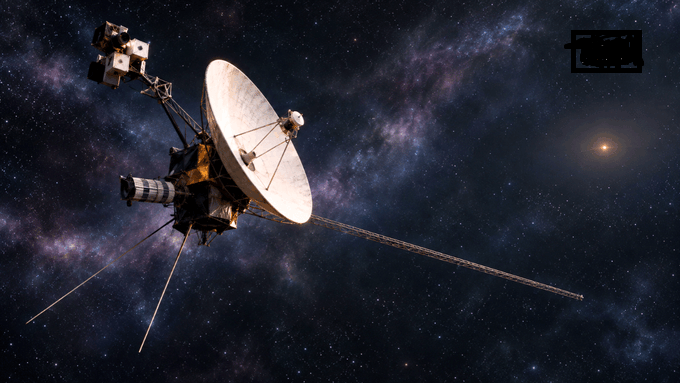
Launched in 1977, the spacecraft is now 25.9 billion kilometres away, with radio signals taking 24 hours to reach it. NASA’s Voyager 1 has achieved a historic milestone by becoming the first human-made object to reach a distance of one light-day from Earth.
The spacecraft crossed the milestone at 5:16:07 am EST on Wednesday, November 18, travelling approximately 16.1 billion miles (25.9 billion kilometres) from Earth.

At this distance, radio signals sent from Earth take around 24 hours to reach Voyager 1. Similarly, a response from the spacecraft takes another 24 hours to return. This means a complete communication exchange between NASA and the spacecraft now takes roughly two days.
Launched on September 5, 1977, Voyager 1 initially explored the outer planets of the solar system. It flew past Jupiter in 1979 and Saturn in 1980 before continuing its journey towards interstellar space.
On August 25, 2012, Voyager 1 crossed the heliopause, the outer boundary of the Sun’s protective heliosphere, becoming the first spacecraft to enter interstellar space.
Despite travelling for nearly five decades, Voyager 1 remains in contact with NASA through the agency’s Deep Space Network. The spacecraft continues to transmit scientific data, offering valuable information about the region beyond the Sun’s influence.
The one-light-day milestone marks another remarkable achievement in human space exploration, highlighting how far humanity’s technological reach has extended beyond Earth.