


Authorities launched emergency relief and rescue measures immediately after the incident
 KRC TIMES NE Desk
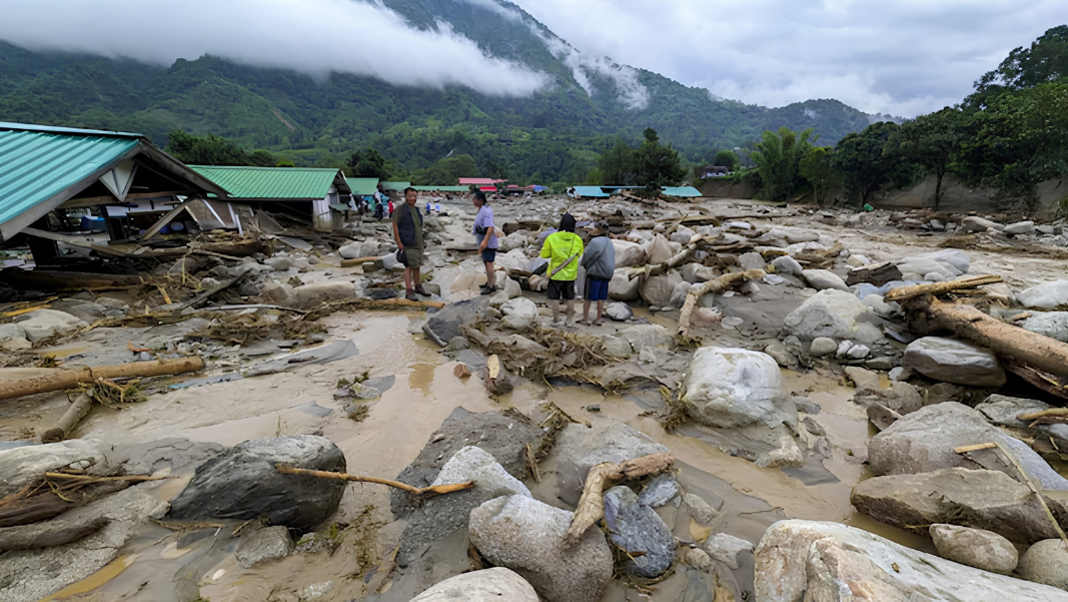
ITANAGAR | The North Eastern Electric Power Corporation (NEEPCO) has stated that the flash flood which devastated the residential colony of the Panyor Lower Hydroelectric Power Station in Arunachal Pradesh’s Keyi Panyor district was triggered by intense localised rainfall and had no connection with the operation of the project’s reservoir or powerhouse.
In a press release issued on June 26, the public sector undertaking said the disaster struck the project colony at around 6:30 am on June 24 following several hours of exceptionally heavy rainfall over a limited catchment area surrounding the hydropower station.
According to NEEPCO, rainfall began at approximately 3:00 am, causing two small streams flowing near the administrative complex and dam site colony to swell rapidly and overflow. The sudden surge of water swept away 24 residential buildings and caused extensive damage to several other structures within the colony.
The flash flood claimed one life, while four people remain missing. Search and rescue operations are continuing with the involvement of the district administration, the State Disaster Response Force (SDRF), and the Indian Air Force.

Authorities launched emergency relief and rescue measures immediately after the incident. The Arunachal Pradesh government, in coordination with NEEPCO, has been assisting affected families and facilitating medical evacuation, including the airlifting of injured persons from the disaster-hit area.
NEEPCO said preliminary findings indicate that the flood was caused by highly localised heavy rainfall rather than any sudden increase in river discharge from upstream areas.
The corporation noted that its Early Warning System (EWS), which monitors rainfall patterns and reservoir inflows, did not register any abnormal rainfall levels across the broader catchment area or unusual inflows into the reservoir during the period leading up to the incident.
Based on the initial assessment, the company concluded that the flooding originated from overflowing local streams and not from reservoir releases or hydropower operations.
The PSU also clarified that no downstream regions were affected by the incident and reiterated that the flash flood was unrelated to the functioning of either the reservoir or the powerhouse.
The clarification comes amid concerns and speculation regarding the possible role of hydropower infrastructure in the disaster. NEEPCO maintained that all project operations remained normal and that the tragedy was the result of an extreme weather event concentrated over a small geographical area.
Meanwhile, rescue teams continue efforts to locate the missing persons as authorities assess the full extent of damage caused by the flash flood.
‘