

Officials said the achievement represents the largest and quickest expansion of natural rubber cultivation undertaken in the country within such a short period
 KRC TIMES Assam Bureau
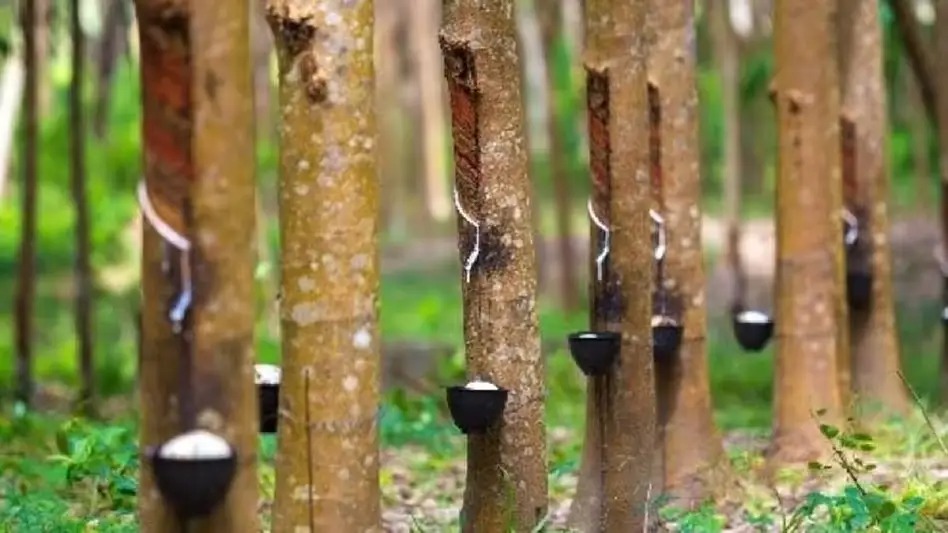
Guwahati | The Northeast has witnessed the fastest expansion of natural rubber cultivation in India in recent years, with 1.79 lakh hectares of new plantations established across the region under the Project INROAD initiative over the past five years.
Launched in 2021-22, the Indian Natural Rubber Operations for Assisted Development (INROAD) programme has facilitated the development of 1,79,376 hectares of new rubber plantations across 113 districts in the Northeast, bringing it close to its target of 2 lakh hectares.
Officials said the achievement represents the largest and quickest expansion of natural rubber cultivation undertaken in the country within such a short period.
The initiative is being implemented by the Rubber Board of India with financial support from leading tyre manufacturers Apollo Tyres, CEAT, JK Tyre and MRF, making it a unique public-private partnership aimed at strengthening India’s natural rubber sector.

Project INROAD Chairman Mohan Kurian said the programme has achieved nearly 90 per cent of its plantation target despite facing disruptions during its initial phase due to the COVID-19 pandemic.
Apart from increasing the area under cultivation, the project has focused on improving the livelihoods of small and marginal farmers, many of whom own less than one hectare of land. More than two lakh farmers have benefited through access to new plantations, quality planting materials and technical assistance.
To support the expansion, the project distributed over 8.3 crore high-quality rubber planting materials during the last five years. More than 200 nurseries were also established across the Northeast to provide improved, high-yielding rubber clones suited to the region’s agro-climatic conditions.
With a substantial number of plantations now entering the productive phase, the project is shifting its focus towards enhancing productivity, quality and value addition through the INROAD Skilling and Production Efficiency Enhancement Drive (iSPEED).
Under the next phase, authorities plan to establish model smokehouses, upgrade rubber processing infrastructure and conduct extensive training programmes to help growers improve product quality and secure better market returns.
Officials said the initiative is expected to further consolidate the Northeast’s position as an emerging hub for natural rubber production, while contributing to higher rural incomes, greater self-reliance in domestic rubber supply and reduced dependence on imports.
The project is also being seen as a significant step towards integrating smallholder farmers into India’s growing rubber value chain and unlocking new economic opportunities across the region.