


Court upholds Foreigners Tribunal order declaring Darrang woman a foreigner; says documentary evidence failed to establish citizenship and parental lineage
 KRC TIMES Assam Bureau
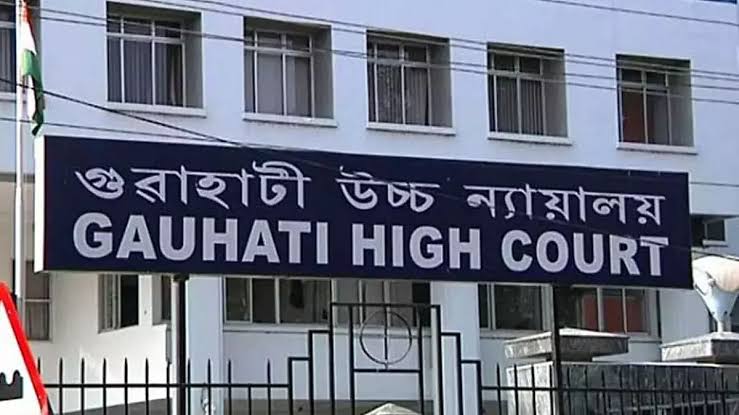
Guwahati | A PAN card or a voter identity card cannot, by itself, establish Indian citizenship or prove family lineage, the Gauhati High Court has ruled, emphasising that the underlying records supporting the issuance of such documents must also be produced and verified.
The court made the observation while dismissing a writ petition filed by Kulchan Begum, a resident of Assam’s Darrang district, challenging a 2018 order of the Foreigners Tribunal in Mangaldai that had declared her a foreigner who entered India after March 25, 1971.
A division bench comprising Justice Kalyan Rai Surana and Justice Susmita Phukan Khaund upheld the Tribunal’s opinion in its judgment dated November 5, holding that the documents submitted by Begum were insufficient to establish either her Indian citizenship or her claimed relationship with her parents.
“The PAN card and EPIC exhibited by the petitioner are not proof of citizenship,” the court observed, adding that such documents could not be accepted as evidence unless the records forming the basis of their issuance were also proved.
Begum had claimed that she was born on April 25, 1977, and brought up in Luitpar, Kharghuli, in Guwahati. She identified Sabed Ali and Jaheda Khatun as her grandparents, claiming that their names appeared in the 1966 and 1970 electoral rolls of Nosotra village in the then Kamrup district. She identified their son, Abu Chand Mohammad, as her father.
To support her citizenship claim, she submitted the 1966 and 1970 electoral rolls, her father’s PAN card and voter identity card, her own Electoral Photo Identity Card (EPIC), a family ration card, the 2018 electoral roll and an acknowledgement receipt for her application to the National Register of Citizens (NRC).

She also argued that her father was an Indian citizen whose name featured in electoral records. According to her submission, he had contested the 2009 Lok Sabha election from Barpeta and the 2011 Assam Assembly election from Baghbar. He had also served as an elected councillor of the Guwahati Municipal Corporation in 2013.
However, the High Court held that her father’s electoral credentials and political participation could not, by themselves, establish her claimed relationship with him. The bench also identified inconsistencies in the family history presented by the petitioner and the ages recorded in electoral rolls. It noted that her claimed father’s name first appeared in the 1997 electoral roll, where his age was recorded as 50.
The court further observed that there was no documentary evidence to establish the continuous residence of her claimed grandparents and father in Assam between 1970 and 1997. It also found that the family linkage documents, including the ration card and electoral records, failed to adequately establish her relationship with the persons she identified as her parents.
The bench rejected the certificate issued by an Area Sabha representative, observing that its author had not appeared to prove the document. On the NRC application acknowledgement receipt, the court held that it could not be treated as proof of citizenship, as the final draft of the NRC had not been updated when the Foreigners Tribunal delivered its opinion.
“None of the exhibited documents helps the petitioner discharge her burden under Section 9 of the Foreigners Act, 1946 to prove that she is a citizen of India and the daughter of Indian parents,” the judgment stated.
The case against Begum was originally registered in 2000 under the erstwhile Illegal Migrants (Determination by Tribunals) Act, 1983. It was subsequently transferred to the Foreigners Tribunal system after the Supreme Court struck down the legislation in 2005.
With the dismissal of her writ petition, the High Court upheld the Foreigners Tribunal’s decision. It also recalled and revoked the interim bail granted to Begum on April 18, 2022.