Speakers from different walks of life highlight difficulties faced by litigants; memorandum submitted to Chief Justice of India through district administration
 KRC TIMES Barak Valley Bureau
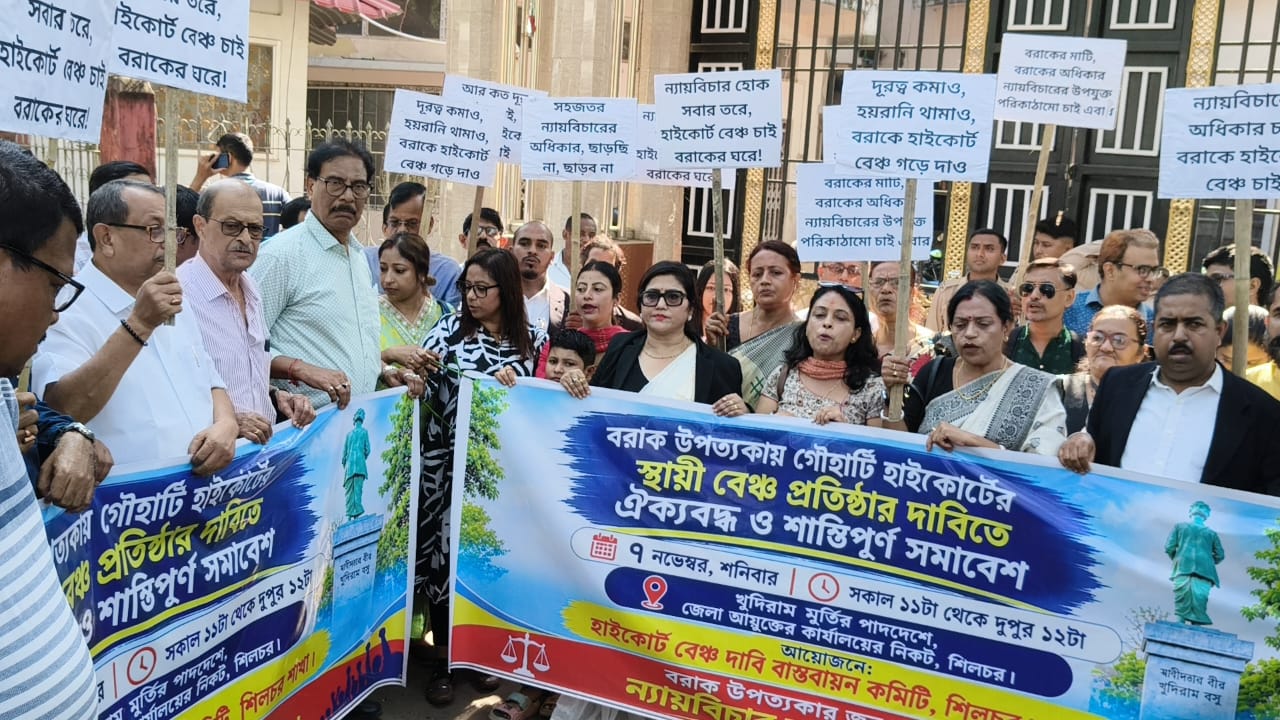
SILCHAR: More than 200 people from different walks of life gathered in Silchar on Saturday to renew the long-standing demand for the establishment of a permanent bench of the Gauhati High Court in the Barak Valley. The peaceful public meeting and subsequent rally brought together members of the legal fraternity, journalists, writers, social activists, former public representatives, academicians, students and representatives of various organisations, reflecting growing public support for the demand.
Organised by the Cachar District Unit of the High Court Bench Demand Implementation Committee, the programme was held from 11 am to 12 noon at the foot of the statue of Shaheed Khudiram Bose, near the Cachar District Commissioner’s office. Participants stressed that the demand, which dates back to 1972, should no longer remain unresolved and called upon the concerned authorities to take concrete steps towards establishing a permanent High Court bench in the region.
The speakers demanded that a permanent bench of the Gauhati High Court be established at any suitable location in the Barak Valley to serve the people of Cachar, Sribhumi and Hailakandi districts, as well as neighbouring Dima Hasao. They maintained that the demand was rooted in the geographical realities of the region and the difficulties faced by thousands of people who have to travel to Guwahati for matters requiring the attention of the High Court.
Highlighting the historical background of the movement, speakers pointed out that the Silchar District Bar Association had adopted its first formal resolution in support of the demand on April 19, 1972. Since then, the issue has been raised at different levels and through various platforms. However, despite the passage of more than five decades, the demand has yet to receive a favourable outcome.
Referring to the prolonged delay, speakers said the people of the Barak Valley continued to face considerable difficulties in accessing higher judicial services. Travelling from Silchar and other parts of the region to Guwahati involves considerable expenditure on transportation, accommodation, food and other necessities. Such expenses often become an additional burden for litigants, particularly those belonging to economically weaker sections.
They observed that attending court proceedings in Guwahati can require people to spend several days away from their homes and workplaces. Apart from the financial burden, the long journey also causes inconvenience to elderly people, families and those who have to attend repeated hearings. According to the speakers, a permanent bench in the Barak Valley would help reduce these difficulties and bring judicial services closer to the people.
Those who addressed the gathering included poet and journalist Atin Das, social activist Pradip Dutta Roy, Samayik Prasanga editor Taimur Raja Chowdhury, former MLA Nihar Ranjan Das, Barak Banga representative Gautam Prasad Dutta, social worker Prasenjit Deb, Dipak Kumar Deb, Subrata Bhattacharjee, Arundhati Gupta, Nikhil Paul, Samar Bijoy Chakraborty, Rasaraj Das, Sonali Banik, Tuhina Sharma, Dr Bibhas Deb, Dhruba Kumar Saha and Kasturi Home Choudhury.
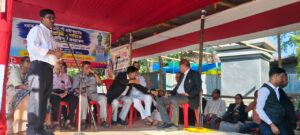
Students also took part in the discussion and placed their views on the importance of ensuring easier access to justice. Snehangshu Bhattacharjee of Arun Kumar Chanda College and Nadia Hasan of Ramanuj Gupta Junior College addressed the gathering. Journalist Sudip Singh and several others also spoke on the occasion.
In their respective speeches, the participants highlighted the importance of decentralising judicial services and ensuring that access to the higher judiciary does not become difficult because of geographical distance or financial limitations. They said the demand should be viewed from the perspective of the common people rather than as an issue concerning only lawyers or any particular organisation.
The speakers also drew attention to the geographical position of the Barak Valley and its distance from the state capital. They argued that the region has distinct practical requirements and that the establishment of a permanent High Court bench would help address the difficulties faced by litigants from the southern part of Assam.
Several speakers emphasised that access to justice is an important aspect of a democratic society and that people should not have to bear excessive financial and physical hardship while pursuing legal remedies. They said the demand for a permanent bench was closely linked to regional equality, public convenience and the broader objective of making the justice delivery system more accessible.
The participation of students and young people was another notable feature of the programme. Their presence, speakers observed, reflected the growing awareness among the younger generation about issues concerning the region’s development, constitutional rights and access to justice. They maintained that the demand had gradually moved beyond the legal fraternity and had become an important concern for the wider civil society.
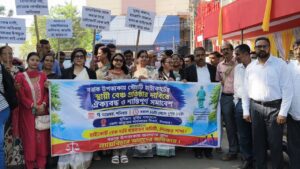
Following the public meeting, participants took out a peaceful rally from the venue towards the Cachar District Commissioner’s office. Carrying the demand forward through slogans, the rally sought to draw the attention of the district administration and the concerned authorities to the long-pending issue.
Upon reaching the district administrative office, representatives of the High Court Bench Demand Implementation Committee, Cachar District Unit, submitted a memorandum addressed to the Chief Justice of India. Additional District Commissioner Arunabha Chakraborty received the memorandum on behalf of the district administration.
The memorandum reiterated the demand for the establishment of a permanent bench of the Gauhati High Court at any suitable location in the Barak Valley. It also referred to the historical background of the movement, beginning with the resolution adopted by the Silchar District Bar Association in 1972, and highlighted the geographical challenges and financial difficulties faced by litigants from the region.

The committee urged the authorities to consider the demand in the larger public interest and take appropriate steps to ensure that people from the Barak Valley and neighbouring areas could access higher judicial services without having to undertake long and expensive journeys to Guwahati.
The memorandum was submitted to the district administration for onward transmission to the Chief Justice of India through the Chief Justice of the Gauhati High Court. The committee also decided to send a copy of the memorandum directly to the concerned authorities by post to ensure that the demand reached the appropriate level.
The organisers stated that the objective of the meeting and rally was to raise the issue through peaceful, democratic and constitutional means. They clarified that the programme was not intended to create any confrontation but to draw attention to a long-standing public demand that had remained unresolved for more than half a century.
They further maintained that the establishment of a permanent High Court bench in the Barak Valley would be an important step towards reducing regional disparities in access to judicial services. Besides saving time and money, it would provide considerable relief to litigants who currently face difficulties in travelling to Guwahati for court-related matters.
The public meeting once again brought the demand into focus, with participation from different sections of society indicating that the issue has gradually become a collective concern of the people of the Barak Valley. Participants expressed hope that the concerned authorities would give due consideration to the demand and initiate necessary steps to end the 54-year-long wait for a permanent High Court bench in the region.