

The MP said incessant rainfall, overflowing rivers and cloudbursts have triggered a series of disasters across multiple districts, with fresh areas continuing to be affected
 KRC TIMES NE Desk
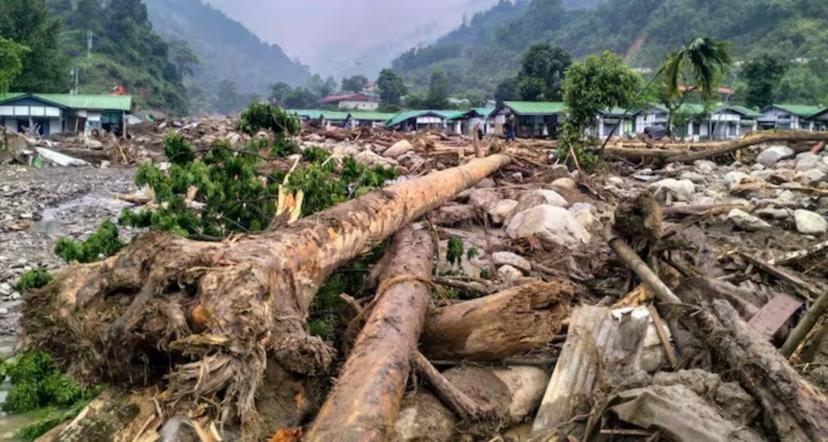
Itanagar | Rajya Sabha MP from Arunachal Pradesh Tai Tagak has said that the ongoing floods and related disasters have affected more than one lakh families across 28 districts of the state, damaging nearly 85,000 hectares of agricultural land and causing widespread destruction to roads, bridges and other infrastructure.
Addressing the media on Tuesday, Tagak urged the Centre to announce a special relief package for the flood-hit frontier state, describing the scale of devastation as unprecedented and beyond the state’s capacity to handle on its own.
“The situation is extremely serious and the magnitude of destruction is unprecedented. Arunachal Pradesh requires immediate support for relief, restoration and long-term reconstruction,” he said.
The MP said incessant rainfall, overflowing rivers and cloudbursts have triggered a series of disasters across multiple districts, with fresh areas continuing to be affected. He noted that damaged roads, washed-away bridges and landslide debris have severely disrupted connectivity, making it difficult for rescue and relief teams to access several remote villages.
Tagak expressed concern over the risk of disease outbreaks in affected areas due to prolonged waterlogging and unsanitary conditions, urging health authorities to remain on high alert and ensure timely medical assistance to vulnerable communities.
According to him, critical infrastructure, including strategic roads, bridges and culverts, has suffered extensive damage in districts such as Anjaw, Tawang and Lower Siang. Communication links have also been cut off in several interior regions, including Nilling Circle in Upper Subansiri district and Parsi Parlo town in Kurung Kumey district, which was recently hit by a cloudburst.
Highlighting Arunachal Pradesh’s strategic importance along India’s international border, Tagak stressed the need for urgent restoration of road connectivity and the construction of temporary bridges to reconnect isolated towns and border areas.

Send your resume:
biswa@jigyasu.co.in
krcfoundation@gmail.com
He said the Ministry of Defence and the Border Roads Organisation (BRO) are currently assessing damage to strategic routes across the state.
The MP informed that an inter-ministerial central team has already visited Arunachal Pradesh to assess the extent of losses. However, he said several remote villages could not be reached because damaged infrastructure had rendered them inaccessible.
Tagak also commended district administrations, government officials and personnel of the State Disaster Response Force (SDRF) for carrying out rescue and relief operations under challenging conditions in districts including Lower Dibang Valley, Keyi Panyor and East Siang.
Apart from damage to agriculture, he said the floods have severely affected livestock, fisheries and local markets, impacting livelihoods across large parts of the state. While detailed assessments are still underway, preliminary estimates suggest that more than one lakh families have been affected by the disaster.
Describing Arunachal Pradesh as a revenue-deficit and predominantly agriculture-dependent state, Tagak said coping with a disaster of such magnitude without substantial Central assistance would be extremely difficult.
He appealed to the Union government to sanction a special flood relief package and urged citizens across the country to extend support to affected communities.
The Rajya Sabha MP also revealed that he had contributed Rs 19 lakh from his personal resources towards relief efforts in Keyi Panyor and Lower Siang districts. He said the contribution was made because he had only recently been elected and was yet to complete the formalities required for accessing funds under the Members of Parliament Local Area Development Scheme (MPLADS).
The appeal comes as Arunachal Pradesh continues to battle one of its worst flood seasons in recent years, with widespread damage to infrastructure, agriculture and livelihoods posing major challenges for relief and rehabilitation efforts across the state.