


Reflections on Leadership, Command and National Responsibility.
 KRC TIMES Desk
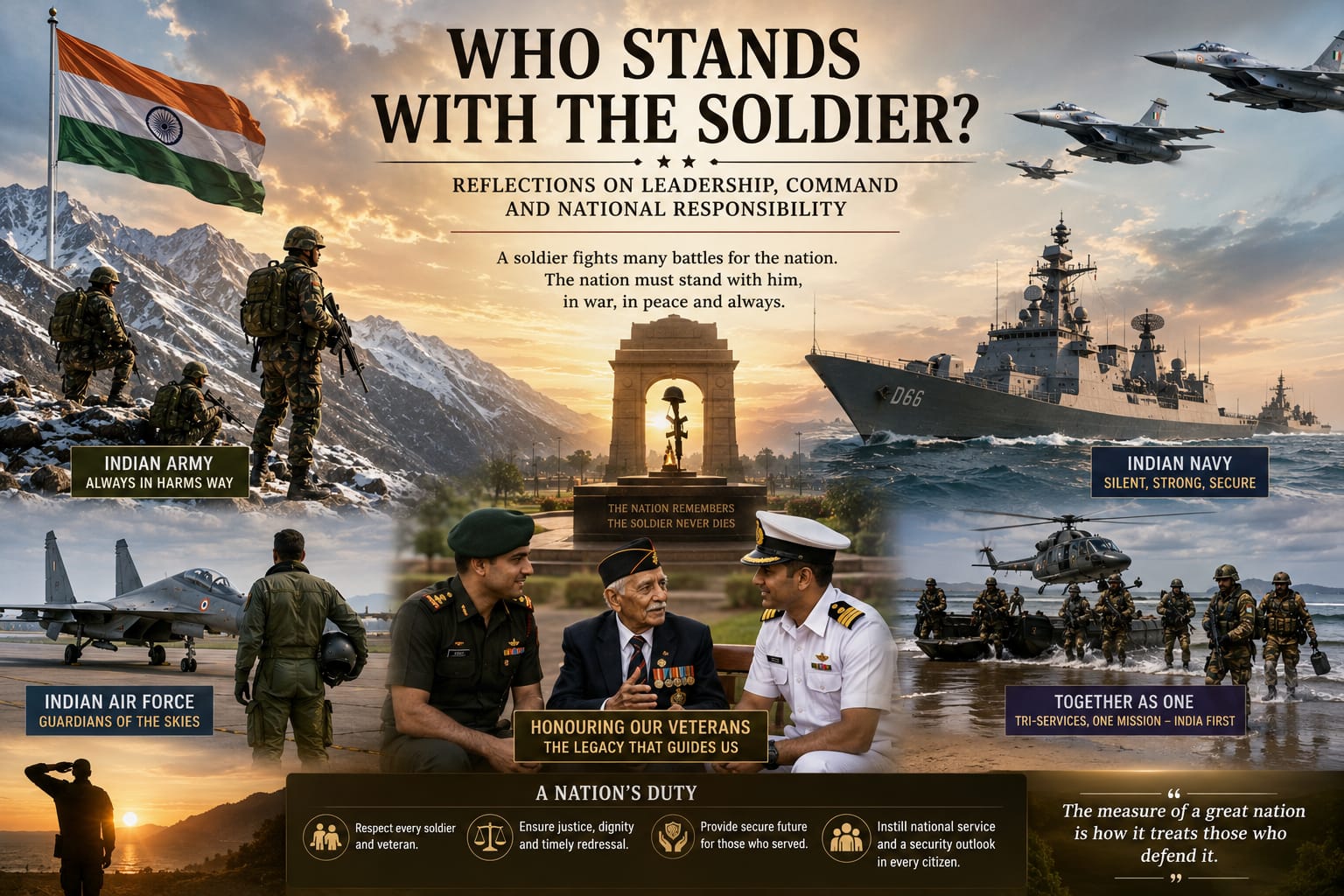
Colonel (Dr.) Ashwani Kumar, MiD, VSM (Retd.)
A nation can survive many crises, but it cannot remain secure if it loses the faith of its armed forces.
For generations, the Indian soldier has stood as the ultimate symbol of courage, sacrifice and selfless service. He has guarded the nation’s frontiers in the icy heights of Siachen, the dense jungles of the North-East, the deserts of Rajasthan and the troubled valleys of Jammu and Kashmir, may be high sea or sky. He has fought wars, countered insurgencies, responded to natural disasters and, whenever called upon, laid down his life without hesitation.
Yet an uncomfortable question confronts us today is:
Who stands with the soldier when he returns from the battlefield? Who stands with him when he faces injustice, uncertainty or neglect?
The answer to this question has implications far beyond the welfare of soldiers and veterans. It strikes at the very foundations of national security and the relationship between the nation and those who defend it.
A soldier willingly accepts hardship and danger because he believes that the country values his sacrifice and that his family, honour and dignity will always be protected. The moment this faith begins to weaken, the consequences extend beyond the military establishment and affect the morale and resilience of the nation itself. Today, there is an increasing feeling among many serving and retired soldiers that this sacred bond is under strain.
Recent incidents involving serving and retired military personnel have deeply disturbed the military community. Veterans frequently cite examples of delayed justice, bureaucratic indifference and inadequate attention to their concerns. Whether all these perceptions are entirely correct or not is secondary. In matters of morale and trust, perception itself becomes reality. A nation that ignores the sentiments of its soldiers risks weakening one of the strongest pillars of its security.
The Soldier’s Growing Isolation.
The soldier of today faces challenges that previous generations could scarcely have imagined. He serves in difficult operational areas, often separated from his family for long periods. He lives in an age of instant communication, social media scrutiny and growing societal expectations.
Every operational action is analysed and debated. During my younger days when I was posted in Sri Lanka during Operation Pawan (IPKF), our only connection with home was through letters that often took ten to fifteen days to reach us. We waited eagerly for every letter, as it carried the love and reassurance of our families. Today, technology has changed military life completely.
Mobile phones and video calls have brought families much closer. Yet, despite these advances, a soldier’s need for emotional support, understanding and the assurance that the nation stands with him remains unchanged. His family worries about his future, his children’s education and his financial security after retirement, particularly in the context of rising living costs, changing family structures and the profound financial and demographic changes taking place in society. These concerns inevitably weigh upon the mind of the soldier and his family.
Among the many concerns voiced by veterans today is the painful experience of some retired soldiers who, after spending the prime of their lives defending the nation, have found themselves fighting lonely battles to protect their own homes and lands. In one such case, three brothers, all veterans of the Armed Forces, have spent years seeking justice after allegedly losing their property in disputed land acquisition proceedings.
Their grievance is not merely about land or compensation; it is about the feeling of helplessness when those who once protected the nation’s borders are left to navigate complex legal and administrative processes with little institutional support. Their approach to everyone in the hierarchy is yet to get justice. For many veterans, such experiences reinforce the perception that while the nation remembers its soldiers in times of war, it often forgets them when they seek justice in times of peace.
Many veterans also feel that their issues do not receive the priority they deserve. They often speak of prolonged legal battles, administrative delays and a growing disconnect between society and those who have spent the best years of their lives in uniform.

The soldier’s loneliness today is not merely physical. It is increasingly institutional and psychological.The concern is not simply about pensions, welfare or administrative grievances. It is about dignity, respect and the reassuring belief that the nation values those who dedicated their lives to its defence.
The Changing Meaning of Command.
The Indian Army’s greatest strength has never been its weapons or numbers. Its greatest strength has always been its leadership and traditions. For generations, officers were taught that command was not a privilege to be enjoyed but a sacred responsibility to be shouldered.
The immortal words inscribed in Chitwood Hall continue to inspire generations of officers:
“The safety, honour and welfare of your country come first, always and every time. The honour, welfare and comfort of the men you command come next. Your own ease, comfort and safety come last, always and every time.”
Similarly, this has always emphasised leadership by example, character, integrity and selfless service. These are not mere words engraved on stone. They are the moral foundation of military leadership.
Yet many veterans today express concern that there is an increasing difference between holding command and commanding soldiers. Command is conferred by appointment. Leadership is earned through personal examples, sacrifice and the confidence of one’s men.
A commander is remembered not for the rank he wore or the office he held, but for the lives he influenced and the trust he inspired.
The Challenge of Careerism.
There is a growing perception within sections of the military fraternity that increases attention to career progression and post-retirement opportunities risks overshadowing the traditional ethos of command.
The Army’s pyramid narrows sharply at higher ranks. There are fewer appointments and many more aspirants. Such competition naturally creates career anxieties.

Every officer has responsibilities towards his family and future. It is entirely understandable that senior officers think about life after retirement. However, an important institutional question deserves honest reflection:
When officers begin planning their post-retirement careers while still in uniform, does it inadvertently affect the ethos of selfless service and command?
This is not a criticism of individuals. It is a question that every great military institution must periodically ask itself.
The Indian Army has never suffered from a shortage of brave men. Its enduring strength has been its ethos the conviction that mission comes first, the welfare of men comes next and personal interests come last. The distinction between command and careerism must never become blurred.
The Agniveer Debate.
The introduction of the Agnipath scheme has opened an important national debate regarding the future character of the Indian military. The scheme seeks to create a younger profile for the armed forces and reduce long-term financial liabilities. These objectives are understandable and deserve consideration.
At the same time, concerns have also been expressed regarding the long term implications of a short service model. A young soldier who knows from the very beginning that his military career may end after only a few years will naturally think about his future employment and financial security. This is not his fault. It is human nature.
The Indian soldier has traditionally fought with the belief that the Army is not merely a job but a lifelong profession and a way of life. The long-term impact of the Agniveer model on unit cohesion, regimental traditions and combat motivation can only be fully assessed over time and therefore merits continuous review and objective study.
Similarly, the nation may need to revisit whether every soldier who serves the colours should be assured of a dignified and secure post-service settlement, including appropriate pensionary or social security arrangements.
The future role and scale of short-service models should remain under periodic review to ensure that operational effectiveness, leadership continuity and institutional ethos are not inadvertently affected.
A National Responsibility.
Respect for soldiers cannot be confined to ceremonial speeches on national days or patriotic slogans. It must be reflected in public behaviour, administrative responsiveness and national policy. The welfare of soldiers and veterans should never be viewed merely as a financial burden. It is an investment in national security.

A soldier fights fearlessly because he believes that the nation stands firmly behind him and that his sacrifices and acts of valour will never be forgotten. If this belief weakens, it affects not only morale but also the sacred bond between the soldier and the nation.
The Need for National Service.
Perhaps the time has come for India to seriously debate introducing some form of compulsory national service or military orientation for young citizens.
Many countries have adopted such models with positive results. Exposure to military life instils discipline, national integration, physical fitness and a deeper appreciation of the sacrifices made by the armed forces. A society that understands military life respects its soldiers more deeply.
Likewise, those who occupy positions of great public responsibility should receive structured orientation in national security and military affairs so that decisions affecting the armed forces are informed by a better understanding of military realities.
National security cannot remain the concern of soldiers alone; it must become a shared national responsibility.
Will the Nation Wake Up?
The bugle call is clear.
Will the nation recognise the growing sense of isolation among its soldiers and veterans? Will we preserve the sacred ethos of command that placed country first, men next and self last? Will we ensure that future generations of soldiers continue to serve with complete faith that the nation stands firmly behind them?
Or will this sacred bond slowly weaken through neglect and indifference until it suffers a natural and irreversible decline? The answers to these questions will determine not only the future of the soldier but also the future strength of the Republic itself.
The issue before us is not merely one of pensions, promotions or post-retirement employment. It is about trust. A soldier can endure hardship, separation and even death, but no soldier should ever feel that the nation he swore to defend has forgotten him.
India’s soldiers have never demanded privileges. They have only sought dignity, fairness and the assurance that their sacrifices will never be forgotten. The true test of a developed and civilised India will not lie merely in its economic growth or technological achievements. It will be measured by whether every serving soldier and every veteran can say with pride and confidence:
“My nation stands with me, just as I stood for my nation.” For a nation can survive without many things, but it cannot remain secure if it loses the faith of its soldiers.
The bugle call of history is therefore unmistakable: Honour the soldier. Stand by the veteran. Preserve the dignity of the uniform. For a nation that respects its defenders ultimately safeguards its own future.
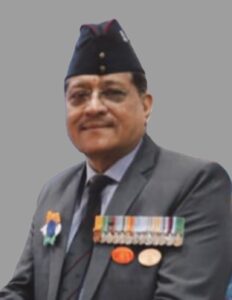
Author’s Note.
The views expressed in this article arise from over four decades of experience in uniform and public service. Having served in operational, intelligence and instructional appointments in the Indian Army, including in Jammu and Kashmir, the North-East and Sri Lanka, and later in the Cabinet Secretariat and the Bureau of Police Research and Development, I have witnessed first-hand the extraordinary courage, professionalism and sacrifices of India’s soldiers.
This article is not intended as a criticism of any individual, institution or policy. It is a sincere appeal for introspection and national dialogue on issues concerning military leadership, the changing nature of command, the welfare of soldiers and veterans, and the sacred bond of trust between the nation and those who defend it.
The strength of the Indian Armed Forces has never rested solely on weapons or technology. It has rested on the character of its soldiers, the quality of its leadership and the unwavering belief that the nation stands firmly behind them. Preserving this bond is not merely the responsibility of the armed forces or the government, it is a collective national duty.
If this article encourages even a small measure of reflection on how India treats its soldiers and veterans, it will have served its purpose.