


Annaul Ritual Of Failure
 KRC TIMES Desk
Poonam I Kaushish
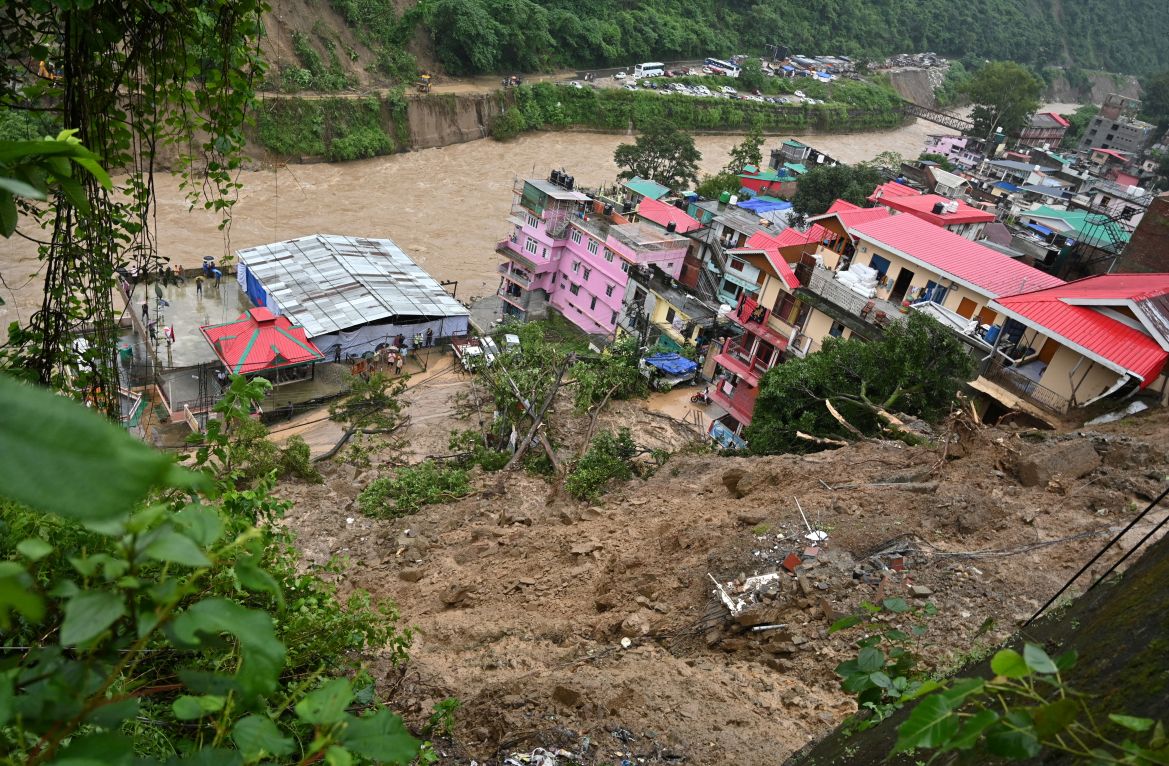
Every year, the script is identical. Monsoon unpacks its bags across States and India surrenders! Roads morph into rivers, potholes into craters, underpasses into swimming pools, choked drains, stinking sewage streams seep into houses, people sink in manholes, airports and railway stations struggle to cope, bridges collapse, landslides bury villages and our ‘world class’ cities are floating museums of administrative paralysis, stripping away the façade of development. An annual ritual of failure.
Every year the script is identical, only the actors change their costume, nothing else. Alas, as people grapple with rainwater calamity our netas cursorily go through their customary political circus. All lament deaths, parrot grief and vouch help to people.
Babudom analyses the causes and its aftermath over official lunches in air-conditioned rooms. Their ideas and remedies as drained as an overflowing drain. Everyone is satisfied that they have done their bit, promising “lessons will be learnt,” A phrase that is the official anthem of bureaucratic failure.
Questionably, does anyone really care? Given that monsoon arrives year after year leaving behind crumbling cities. No. Why does the Government only react after lakhs are rendered homeless and property worth crores is lost? Who is responsible? Who will be held accountable for Administration’s ineptitude? And which head will roll? None.
Moreover, why do politicians feel that merely sanctioning monies will solve the problem? Little do they realize that, neither the Central Disaster Management Authority nor State Disaster Boards implement any project properly. Leaders, who ignore experts who in turn, blame it on lessons not learnt by successive Administrations. A creeping paralysis of ‘sab chalta hai!’
Primarily because the aam aadmi translates into sterile statistics to be manipulated at will. Standing mute testimony to a callous and selfish polity and Administration bereft of cure and consolation. Everything kaam chalo! All cursing the Government. All forgetting rain, is a most unforgiving and reliable auditor of governance.
Worse, it’s a tell-tale of total apathy of insensitive Administrations at the Centre and States that don’t spare even ecologically sensitive zones to satiate their greed, thereby making them more vulnerable to climate change. In 2022 cracks in Uttarakhand Joshimath and flooding of Bengaluru’s elite tech parks have not taught us any lesson.
Scandalously, new flyovers remain louder priorities than more drain works or sewage treatment plants. A new study by Intergovernmental Panel on Climate Change has found mountains globally, including Himalayas, are now seeing more rainfall where it has mostly snowed in the past. Besides, there is mismatch between haste in commissioning projects in the ecologically fragile zone which has rung alarm bells among glaciologists.
Undeniably, the country doesn’t have a monsoon problem. It has a governance problem. For months civic agencies issue glossy presentations claiming “monsoon readiness.” Drains have been de-silted, pumps serviced, emergency teams deployed and vulnerable spots identified. Then Heaven open and the same vulnerable spots dutifully drown. Apparently, only rain is surprised.
The tragedy? We have normalised failure. Flooded roads are shrugged off as seasonal inconvenience. Bridges collapsing barely raise eyebrows. Water logging that would trigger political crises in many countries is accepted here as an unavoidable act of God. It isn’t. It is an act of neglect. By the time the skies clear, so does the urgency for reform. And by the time the next monsoon arrives, little has changed except the scale of the damage.
Leaders conveniently blame climate change. True, rainfall is becoming more erratic and floods are more frequent. But climate change did not encroach upon wetlands, make lakes vanish beneath concrete and block natural waterways with unplanned development. It did not choke storm-water drains with garbage. It did not approve illegal construction on floodplains. It did not build roads that disintegrate after the first decent shower. Those were entirely human achievements.
Perhaps the most troubling feature of India’s monsoon crisis is the absence of accountability. Infrastructure repeatedly fails, yet meaningful consequences are rare. Committees are formed, reports are written and promises are renewed, but systemic reform remains elusive. The emphasis remains on rescue after disaster rather than prevention before it.
Succinctly, monsoon is neither friend nor foe. It is a natural phenomenon that has sustained the country for millennia. The enemy is complacency and shoddy planning. It is not simply heavy rainfall but decades of inadequate urban planning, neglected infrastructure and weak enforcement. Alongside, the comfortable belief that public memory will evaporate faster than the floodwater.

Whether it becomes a blessing or a disaster depends largely on how political will prioritise resilience over short-term expediency. Until India replaces short-term political optics with long-term resilience, competence replaces complacency and accountability replaces excuses, the first drops of rain will continue to wash away not just roads, but the illusion that India’s infrastructure is ready for the future.
An annual reminder that development is measured not by grand announcements, but by whether a nation can withstand the very rains on which its future depends. True, India has demonstrated its capacity to build world-class highways, airports and digital infrastructure. It possesses the engineering expertise, financial resources, and technological capability to manage its monsoon far better than it does today.
What is lacking is sustained political commitment, coordinated urban planning, rigorous enforcement of building regulations and maintenance of public infrastructure throughout the year — not just in the weeks before the rains arrive. Surely, it can apply the same ambition to climate-resilient cities, modern drainage systems, restored wetlands, stricter building standards and scientific urban planning. What is needed is political determination.
The real challenge lies in sustained political commitment to adapting to a changing climate while addressing long-standing governance and infrastructure deficits. Time India shifts from crisis management to disaster prevention, else the annual cycle of flooded cities, damaged roads and lost lives will continue to define monsoon more than the life-giving rains themselves.
The writing is on the wall. The measure of a nation’s progress is not how it responds to predictable disasters, but whether it prevents them in the first place. Our polity needs to pull up their bootstraps and focus on long-term not short-term planning. One needs neither a bleeding heart nor blindness to know what should be done.
For if we still elect to do nothing about monsoon mayhem it only holds out promises of more misery, more wrenching news and more cries. Life, after all, is not collating numbers, but flesh and blood with beating hearts. Can we just let them bleed? Bringing to mind words from an old comic: We have seen the enemy and it is us. (INFA)