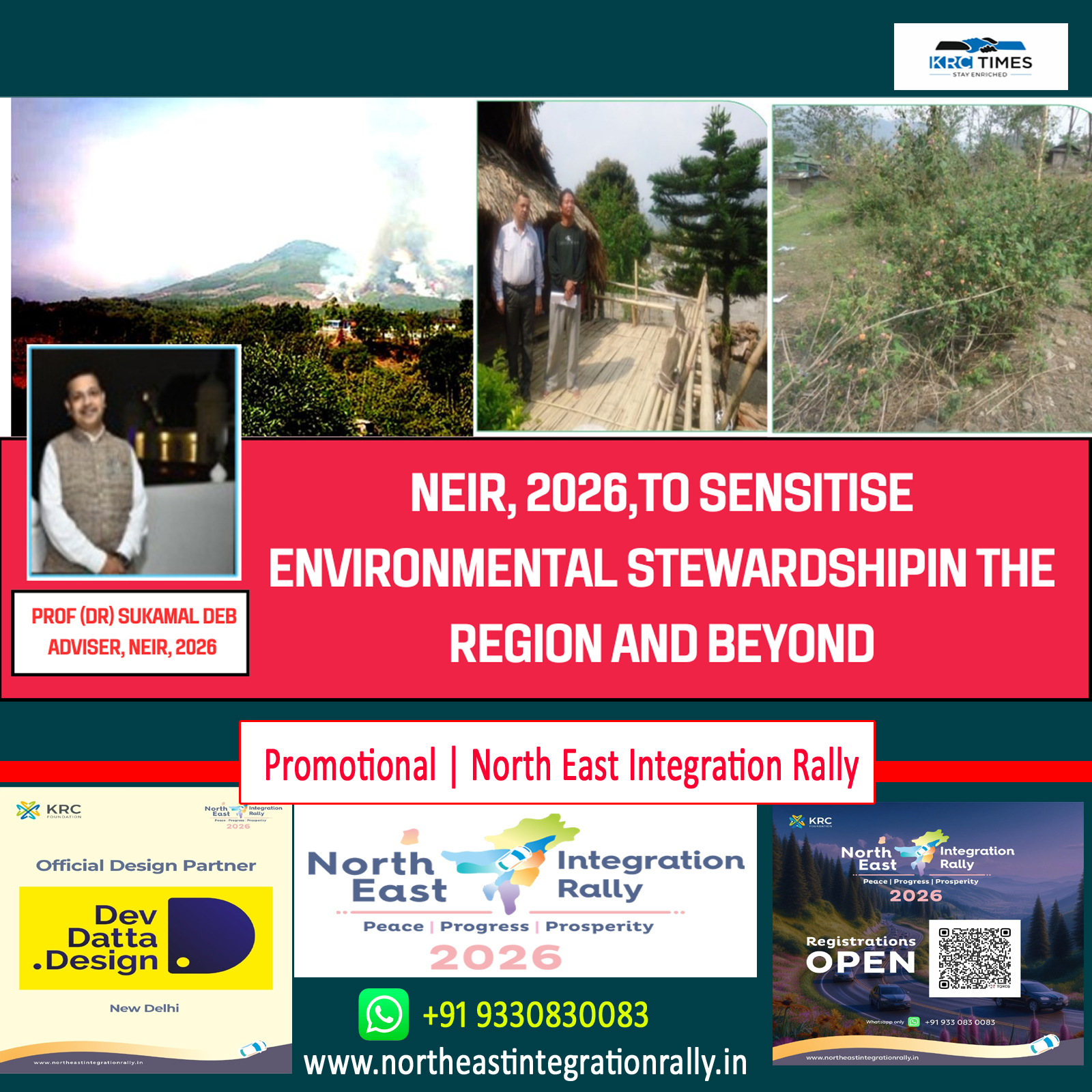


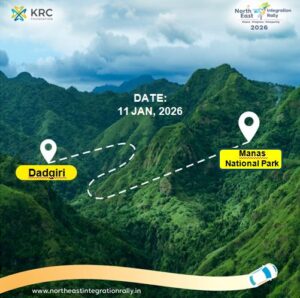
The NEIR-2026 will hold its programmes at the historic Manas National Park on January 11
 North East Integration Rally

The NEIR-2026 will hold its programmes at the historic Manas National Park on January 11. Manas National Park doesn’t announce itself with spectacle. It reveals itself slowly, the way real wilderness does. You enter expecting a forest, a safari, maybe a few animals. What you discover instead is a landscape with its own pulse, shaped by floods, grasslands, tribal memory, and a history of resilience that most parks never have to carry.
A Forest Born From a River
Manas sits at the foothills of the Himalayas, where Assam meets Bhutan. The river that gives the park its name flows straight down from the mountains, cold and restless, cutting through gravel beds and grass plains until it reaches the forest depths. You feel the river before you see it. The air turns lighter. The sound shifts from birdcalls to a rushing, steady hum.
That river is the park’s lifeline. Every monsoon it rearranges the land. Banks collapse. New sandbars appear. Grasslands regenerate. This constant reshaping keeps the ecosystem alive. Predators depend on it. Herbivores depend on it. The forest guards depend on it. And in a strange way, the river teaches you that nothing in Manas stays static.
A Wilderness With Layers, Not Postcards
The first thing you notice once you’re inside is the diversity of the landscape. Tall elephant grass. Warm forests. Sal patches. Clearings that look like untouched meadows. Streams that vanish into bamboo thickets. It’s not a showpiece forest. It’s a functional one.
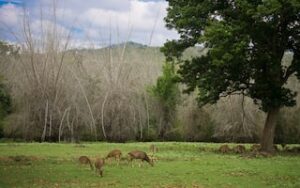
If you’ve been to Kaziranga or other famous parks, Manas feels different. Less choreographed. Less crowded. More unpredictable. You don’t sit on a jeep expecting to be handed a tiger sighting. You watch the road ahead with quiet curiosity, knowing anything may appear: a herd of elephants, a wild buffalo, a golden langur leaping between trees, or a sudden flash of a clouded leopard if you’re impossibly lucky.
The animals here aren’t props. They behave as if the forest belongs entirely to them—and it does.
The Species That Define Its Soul
Manas is not just another protected area. It’s one of the rare places on Earth where so many endangered species still hold on.
The golden langur—one of the most striking primates in South Asia—moves through the canopy with an elegance that makes you stop whatever you’re doing. The pygmy hog, the smallest and most threatened wild pig in the world, survives here after being wiped out from almost everywhere else.
The Bengal tiger and the Indian leopard share overlapping territories. The wild water buffalo—massive, powerful, and far more impressive than the domesticated cousins you see on the plains—commands the grasslands with quiet authority.
Then there are the birds. Hundreds of species. Raptors circling overhead. Hornbills crossing the sky like slow, beating shadows. Small forest birds flicking between branches with bursts of colour you can miss if you blink.
Manas is a refuge for all of them, and they repay the place by showing you what a functioning ecosystem looks like.
A Park That Survived More Than Poachers
Manas carries scars most parks don’t talk about. It lived through decades of conflict, political agitation, and instability in the Bodoland region. For years, insurgent groups operated in and around the park. Tourism collapsed. Poaching surged. Forest camps were abandoned. Manas lost animals, infrastructure, and reputation.
What this really means is that the park’s revival is not an accident. It’s a deliberate, sustained effort by forest guards, local communities, conservationists, and the Bodo people who consider this land part of their identity.
Walk into one of the forest camps and you’ll meet guards who have spent years protecting the place through every kind of threat. They know the elephants by behaviour. They know where the buffalo herds wander. They know which grass patches grow after floods. This isn’t just their job. It’s a duty they carry on their shoulders.
A Landscape That Depends on Its Communities
To understand Manas, you have to look beyond its core forest. The villages surrounding the park are as important as the wildlife inside it. Bodo, Adivasi, Assamese, Nepali, and Rajbongshi communities live around the edges, shaping and being shaped by the forest.
Many of them work as guides, guards, or conservation volunteers. Some participate in community tourism. Some help monitor wildlife. Their relationship with the park isn’t ornamental. It’s economic, cultural, and deeply personal. They’ve seen the forest in its worst days. They’ve helped rebuild it. They know that if Manas thrives, the region thrives.
That connection is what gives the park its resilience. Conservation here is not a top-down command. It’s a shared responsibility.
A Different Kind of Safari
A safari in Manas doesn’t overwhelm you with activity. It works in rhythm. You move through sun-warmed tracks, scanning the edges of the grasslands for signs of movement. The silence isn’t empty. It’s alive with insects, distant calls, rustling branches, and the anticipation that something—anything—might emerge.
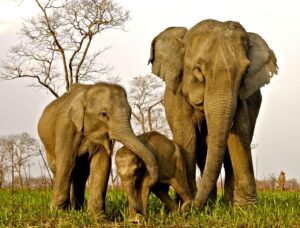
Elephants appear without warning. A herd steps out of the grass, pauses, and stares at you with calm authority. A mother shields her calf. A young tusker predicts your next move. They decide how long you stay, not the other way around.
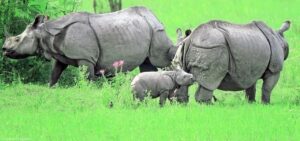
If you get lucky, you might see a rhino grazing, its armour catching the late afternoon light. Or a tiger’s tracks on soft mud, sharp and recent enough to make you realise how close you came without knowing.
But even without a single large sighting, Manas gives you something many bigger parks fail to: a feeling of raw, unscripted wilderness.
The River at Sunset
If you want to understand why Manas stays with people long after they leave, take a walk near the river at dusk. The light turns gold. The water glows. Birds settle. Elephants sometimes come down to drink. The temperature dips just enough to remind you that the mountains aren’t far.

It’s a quiet moment, but the quiet is full of meaning. The river has shaped kingdoms, communities, forests, and species. And in that fading light, you feel yourself becoming part of that story.
Manas National Park is not just a wildlife destination. It’s a living argument for why conservation cannot survive without community, politics, and patience. It’s a place that has lost more than most forests and yet stands strong today because people refused to let it fade.
To understand India’s ecological future, you need to look at places like Manas—where recovery is ongoing, where wilderness is still wild, and where the future depends on balance, not spectacle.
Manas teaches you that forests don’t need perfection. They need protection. And sometimes, they just need time to heal.
Spend a day here, and the park leaves its mark—not with drama, but with depth.