


Researchers say the findings provide a rare glimpse into how early communities adapted to the challenging hill environment and developed sustainable livelihoods
 KRC TIMES Assam Bureau
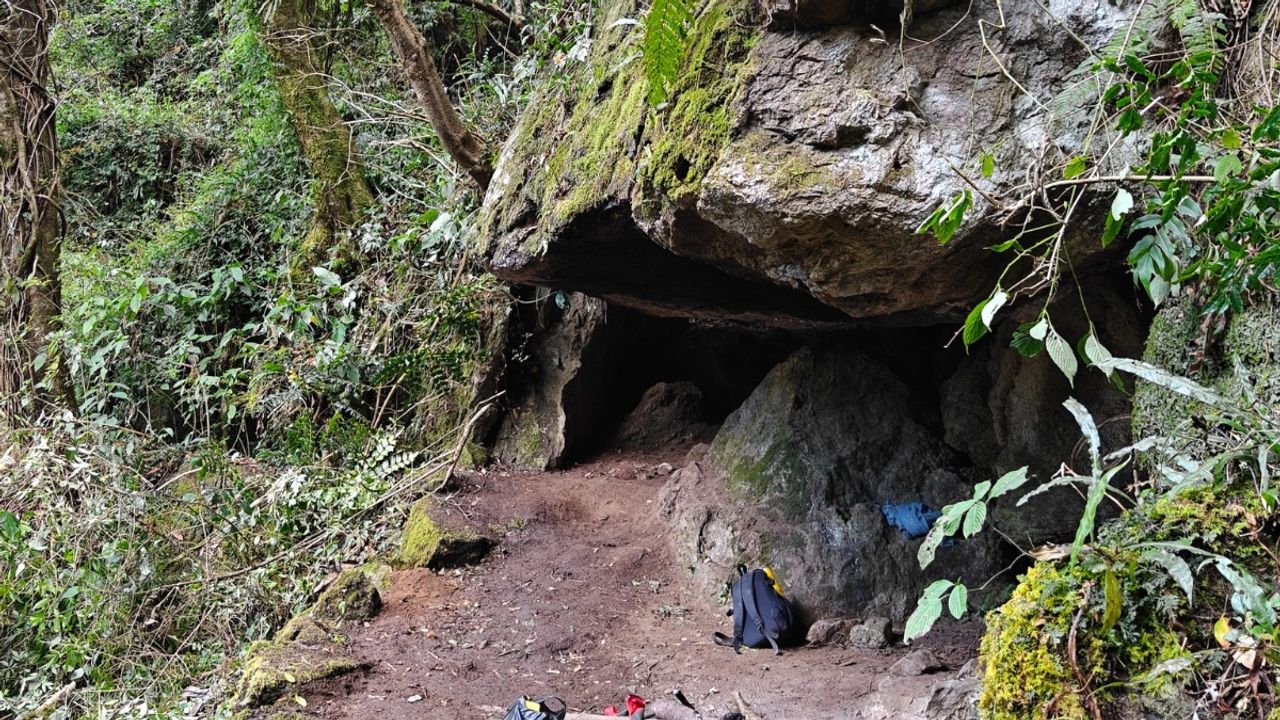
Guwahati | A groundbreaking archaeological expedition in eastern Nagaland has uncovered evidence of human habitation dating back nearly 3,500 years, shedding new light on the prehistoric past of Northeast India and its role in early human migration across Asia.
The discoveries were made in the limestone cave systems of the Naga Hills Ophiolite Belt in present-day Noklak district, where researchers unearthed ancient pottery, stone tools, hearths and carbonised grains, offering rare insights into the lives of some of the region’s earliest inhabitants.
The findings emerged from the first systematic archaeological exploration of the cave systems in Chiphur village, conducted in March by a joint team from the Department of History and Archaeology, Nagaland University, and the Nagaland Department of Art & Culture.
The expedition was led by archaeologist Tiatoshi Jamir and included researchers Heme Lamthaiu, Limasanen Longkumer, Khumeng T., Robinson Huidrom and Victoria Leyri of the University of Delhi.
Working closely with the Chiphur Village Council, the team surveyed the rugged limestone karst landscape and documented five caves and four rockshelters, many of which had never before been examined through scientific archaeological methods.
Excavations at selected sites yielded a rich collection of artefacts, including cord-marked pottery fragments, ground stone tools, ancient hearth remains and charred grains of foxtail millet (Setaria italica) and Job’s tears (Coix species). Researchers also recovered remains of wild animals, indicating that the prehistoric communities relied on a mixed economy combining early agriculture with hunting and foraging.
To determine the age of the sites, samples were subjected to Accelerator Mass Spectrometry (AMS) dating at the Beta Analytic Laboratory in Florida, United States.

Send your resume:
biswa@jigyasu.co.in
krcfoundation@gmail.com
The results revealed that the Leilo Kaa rockshelter was occupied approximately 3,500 years ago, making it one of the oldest scientifically dated habitation sites in Nagaland. Meanwhile, the Kathso Kaa cave showed evidence of occupation around 1,000 years ago, suggesting that these natural shelters continued to be used across different cultural periods, from prehistory into the historical era.
Archaeologists believe the discoveries strengthen the growing body of evidence that Northeast India served as a significant corridor for prehistoric human movement between South Asia and Southeast Asia.
The Naga Hills Ophiolite Belt and the adjoining Naga Metamorphic Complex, which extend towards the Indo-Myanmar frontier, are increasingly being recognised as critical landscapes for understanding the region’s ancient human history and cultural evolution.
Beyond establishing a timeline of human occupation, the discoveries offer valuable clues about prehistoric food systems, agricultural practices, ceramic traditions and stone tool technologies. Researchers say the findings provide a rare glimpse into how early communities adapted to the challenging hill environment and developed sustainable livelihoods.
Experts involved in the project believe that continued archaeological and scientific investigations of Nagaland’s caves and rockshelters could significantly transform current understanding of early settlement patterns, migration routes and the origins of agriculture in Northeast India.
The recovered artefacts are expected to be showcased later this year at a public exhibition jointly organised by the State Museum under the Department of Art & Culture and Nagaland University, offering the public an opportunity to view some of the most significant archaeological discoveries made in the state in recent decades.
The findings mark an important milestone for archaeological research in Northeast India and open a new chapter in the study of the region’s prehistoric heritage.