


The Prime Minister’s warning deserves to be examined beyond partisan politics
 KRC TIMES Desk
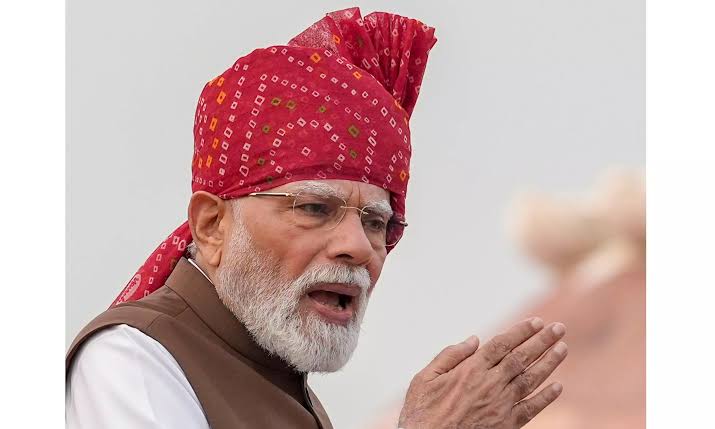
Prime Minister Narendra Modi’s reference to “dimagi Naxals” has triggered a political debate, with Congress leader Jairam Ramesh suggesting that the term was aimed at the entire Opposition. Union Minister Kiren Rijiju, however, sought to clarify that the Prime Minister was referring to a broader ideological phenomenon rather than simply targeting political opponents.
The Prime Minister’s warning deserves to be examined beyond partisan politics. He said that while armed Naxalism had been pushed back from the forests, those subscribing to a “Naxal mentality” were still seeking opportunities to create violence and unrest, influence public discourse and lead society in what he described as the wrong direction. He argued that such elements needed to be identified and isolated while young people were brought into the mainstream.
There is an important distinction here. Armed Naxalism is visible in its methods; an ideological movement is often far less so. The former relies on weapons and organised violence. The latter operates through ideas, narratives and intellectual arguments. That distinction, however, also makes the phrase “dimagi Naxal” problematic if it is used loosely or indiscriminately. In a democracy, disagreement with the government, criticism of policies or advocacy of radical social change cannot by themselves be equated with extremism.
Yet the larger concern behind the Prime Minister’s remarks cannot simply be dismissed. Democracies have every right to question whether violence, anarchy and destruction are ever being romanticised in the name of revolution.

The first warning sign is the intellectual justification of violence. Naxal violence has historically been defended by invoking class struggle and revolutionary necessity. Violence is sometimes presented not as a tragedy but as an instrument of social transformation. That is where democratic debate begins to cross a dangerous line. A constitutional democracy cannot accept the proposition that violence is legitimate merely because the objective is described as revolutionary.
The second danger is the celebration of anarchy. Dr B.R. Ambedkar, while addressing the Constituent Assembly, had emphasised the importance of constitutional methods once democratic institutions had been established. His warning against the “grammar of anarchy” remains relevant. Political and social grievances are legitimate; abandoning constitutional mechanisms in pursuit of them is not.
But there is another dimension to the debate that deserves equal attention: selective standards. Those who loudly defend freedom of expression must also defend it when the expression is inconvenient, unpopular or offensive to their own ideological preferences. Democracy is not strengthened when free speech becomes a principle to be invoked selectively. Nor is dissent meaningful if disagreement within one’s own camp is treated as betrayal.
The same principle applies to patriotism and nationalism. Criticism of nationalism is perfectly legitimate in a free society. But treating patriotism itself as intellectually suspect is no more democratic than imposing patriotism as a compulsory political creed. A mature democracy must be able to accommodate both national pride and criticism of the nation’s policies.
India’s civilisational heritage presents another area where the debate has often become unnecessarily polarised. Admiration for the Ramayana, the Mahabharata, classical Indian philosophy, traditional knowledge, indigenous art or Sanskrit literature does not automatically make a person sectarian. At the same time, rejecting Indian traditions merely because they are Indian is equally narrow-minded. A confident civilisation need not choose between Chanakya and Machiavelli, Kalidasa and Shakespeare, or Indian and Western intellectual traditions. It can learn from all of them.
The real test should therefore not be whether someone prefers Indian or Western literature, supports cultural nationalism or rejects it, or agrees with the government of the day. The test should be whether that person respects democratic institutions, constitutional methods, pluralism and the peaceful resolution of disagreements.
There is also a danger in stretching the concept of “anti-establishment” too far. Every democracy needs an Opposition, a critical media, independent academics, activists and citizens willing to challenge those in power. Criticism of the establishment is not evidence of an anti-national or extremist mentality. Indeed, democracy becomes weaker when every critic is suspected of being an enemy.

Send your resume:
biswa@jigyasu.co.in
krcfoundation@gmail.com
Equally, those who occupy influential positions in academia, media or civil society cannot claim immunity from scrutiny. Intellectual freedom comes with intellectual responsibility. Ideas have consequences, and arguments that glorify political violence, celebrate destruction or undermine constitutional democracy deserve to be challenged.
India’s diversity also needs to be understood carefully. The country is unquestionably a union of extraordinary linguistic, ethnic, cultural and regional identities. Recognising that diversity strengthens the republic. Turning diversity into an argument for permanent fragmentation is a different matter. India’s unity cannot be sustained through uniformity, but neither can its diversity survive if every difference is converted into a political frontier.
The same balanced approach is required while discussing the armed forces. The Army, like every institution in a democracy, can and should be subjected to scrutiny. Allegations of misconduct must be investigated and accountability must be ensured. But portraying the entire institution as inherently oppressive is another matter altogether. Institutions should be criticised for specific actions and policies, not demonised as a class.
Ultimately, the phrase “dimagi Naxal” carries the risk of becoming a political label rather than an analytical category. If it becomes a convenient term for anyone who disagrees with the government, it will do more harm than good. The country has seen enough political labelling to know that such language can quickly become an instrument of exclusion.
The deeper issue, therefore, is not who qualifies as a “dimagi Naxal”. It is whether India is producing citizens who are intellectually rooted in their own civilisation while remaining open to the wider world.
Ananda Coomaraswamy, writing about the westernised Indian of an earlier generation, described a person who knew Shakespeare but was unfamiliar with the Mahabharata, admired Western culture while regarding Indian traditions as backward, and was alienated from his own language and heritage. His description remains provocative because it raises a question that transcends ideology: what happens when education produces cultural alienation rather than intellectual confidence?
A modern Indian need not reject Shakespeare to appreciate Kalidasa, or Machiavelli to understand Chanakya. Nor must a person embrace every aspect of tradition merely because it is ancient. True intellectual freedom lies in the ability to examine one’s own heritage critically without contempt and to engage with foreign ideas without servility.

India’s challenge is not to create a society in which everyone thinks alike. It is to create one in which people can think differently without resorting to violence, intimidation or contempt for constitutional democracy.
That is the line that must be defended.
If “dimagi Naxal” is to have any meaningful place in public discourse, it should refer not to ordinary dissenters, Opposition leaders, academics, journalists or activists, but to an identifiable mindset that rationalises violence, glorifies anarchy, rejects constitutional methods and seeks social fragmentation through ideological means.
And if such a mindset exists, it should be defeated not merely by political rhetoric, but by better education, stronger institutions, honest debate and a deeper confidence in India’s democratic and civilisational foundations.
The greatest danger is not that some Indians may disagree with the establishment. The greater danger is that citizens may become strangers to their own constitutional values, cultural inheritance and national responsibilities.
A self-confident India has room for dissent, disagreement and even radical ideas. What it cannot afford is the romanticisation of violence or the abandonment of constitutional democracy.
That is where the real battle of ideas must be fought.