


The Army has noted that Türkiye and China supplied Pakistan with some of their best drone technology
 KRC TIMES Desk
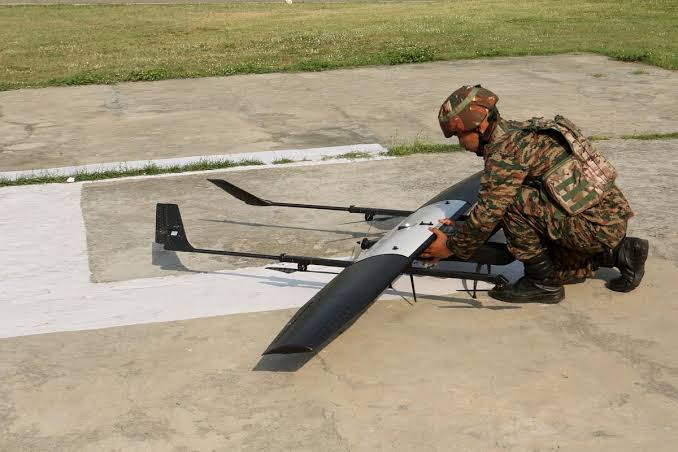
Modern warfare is no longer decided solely by the size of a nation’s fleet of fighter jets or the sophistication of its missiles. Increasingly, it is decided by who can field the greatest number of cheap, expendable, precise machines and who can defend against them. The Indian Army’s decision to begin procuring three distinct classes of drones, announced after a hard look at the lessons of recent conflicts, reflects a sober understanding of this shift.
The evidence from abroad is hard to ignore. The wars of Ukraine-Russia and Iran-USA have repeatedly shown how lethal unmanned systems have become. A drone costing perhaps a thousand dollars can wreck an oil refinery, as Saudi Arabia and other Gulf states have learned to their cost. Warships, including aircraft carriers, once considered the untouchable symbols of naval supremacy, can no longer assume safety from swarms of small, low-flying attackers. When a weapon that costs almost nothing can compel a defender to use interceptors worth many times more, the economics of war are fundamentally altered.
India has experienced this firsthand. During Operation Sindoor in May last year, Pakistan launched hundreds of drones, with estimates ranging from 300 to more than 500, across a front stretching from Ladakh to Sir Creek, targeting dozens of locations. Those intrusions achieved little, chiefly because the armed forces’ anti-drone systems performed effectively. Yet complacency would be foolish. The Army has noted that Türkiye and China supplied Pakistan with some of their best drone technology. Next time, the numbers may be larger and the machines more capable.
The Army’s response is therefore both defensive and offensive. Its plan covers small tactical drones for surveillance and strikes within 10 to 15 kilometres, one-way attack drones with a reach of around 150 kilometres, and high-altitude, long-endurance platforms for surveillance and pinpoint long-range attack. The technology roadmap released in April identifies some 30 types of UAVs and loitering munitions across strike, surveillance, air defence, special roles and logistics.

The Army is also building capacity to operate thousands of drones. The newly raised ‘Baaz’ battalion, under 11 Corps, is dedicated to drone operations on the western front. Every one of the 380 infantry battalions now has a 25-man drone platoon, while artillery and armoured units run their own drones for target location. Drones have ceased to be a niche accessory and have become part of the Army’s structure.
The geography makes the case compelling. India’s borders with Pakistan and China run for thousands of kilometres across mountains, rivers, ravines, deserts and glaciers. Patrolling such terrain on foot is exhausting, hazardous and, in many places, practically impossible. Drones can watch what soldiers cannot reach, day and night, without risking a single life. They can track enemy movements, guide artillery and, if hostilities begin, strike with precision. Long-range variants can threaten airfields, armour and other vital installations deep in hostile territory.
Yet the decisive factor is not the technology itself but the capacity to produce it. Ukraine and Iran have shown that a country with strong in-house manufacturing can inflict heavy damage even on far more powerful adversaries. Dependence on foreign suppliers is a vulnerability, since components can be withheld at the very moment they are needed. Here the signs are encouraging. The Army has signed contracts worth Rs 1,577 crore for 840 domestically built one-way attack drones. Private firms and established industrial houses are aligning themselves with the Army’s requirements. Bulk, domestic production at low cost must remain the guiding principle.
India’s counter-drone ecosystem deserves equal attention. Indigenous systems such as DRDO’s SHIELD programme along with Indrajaal and several other platforms, show that homegrown answers to the drone threat are emerging. Attack and defence must advance together, because a nation that masters one without the other remains exposed. The Indian Army is battle-tested, and its courage is beyond question.
But valour must now be matched by technology suited to a new age of warfare. By investing in drones, raising dedicated units, nurturing domestic industry and strengthening its defences, the political and military leadership has shown that it understands the threats ahead. The nation can take reassurance that the preparation is serious and that the country will be ready for whatever the future brings.

