


The Great Ambassador of Music, Culture and National Integration
 KRC TIMES Desk
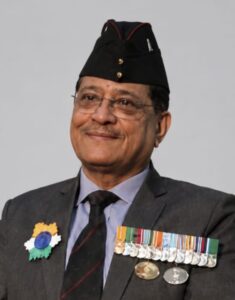
Col (Dr.) Ashwani Kumar, MiD, VSM (Retd.)
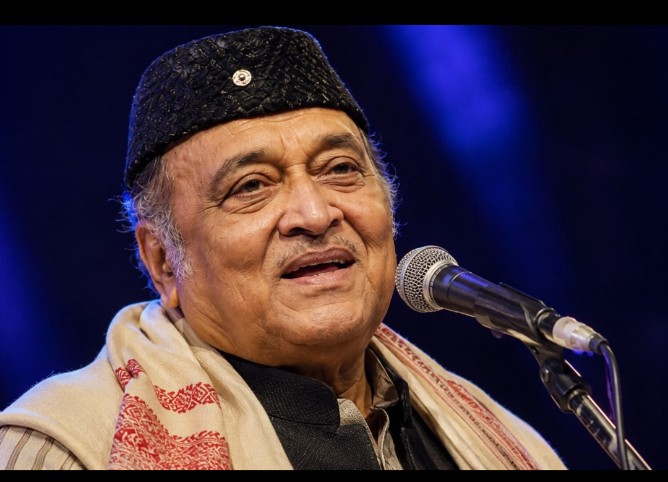
Some artists entertain generations. A few inspire nations. Dr. Bhupen Hazarika belonged to the rare class of visionaries whose music became the conscience of society and whose voice echoed far beyond the boundaries of art.”
A Voice That United Hearts Beyond Borders.
India has produced many legendary singers, but very few have transformed music into a movement for humanity, social justice and national integration. Among them, Dr. Bhupen Hazarika occupies a place of singular distinction. Fondly remembered as the ‘Bard of the Brahmaputra,’ he was not merely Assam’s greatest cultural icon but one of India’s finest ambassadors of music, literature and cinema.
He was a singer, lyricist, composer, poet, filmmaker, writer, philosopher and humanist whose creations transcended language, religion and geography. Through his songs, he introduced the beauty of Assam and the spirit of the Northeast to the rest of India, while reminding the nation that unity is best nurtured not by politics alone but by culture and compassion.
A Childhood Blessed by Music.
Bhupen Hazarika was born on 8 September 1926 in Sadiya, in present day Tinsukia district of Assam. He was the eldest of ten children born to Nilakanta Hazarika and Shantipriya Hazarika. His parents nurtured a deep love for music, literature and Assamese folk traditions, and these early influences shaped the child who would later become the voice of an entire region.

His extraordinary talent appeared at an early age. At just ten years old, he wrote his first song and soon performed as a child artist in one of the earliest Assamese films. Even then, those around him recognised that this young boy possessed an uncommon gift.
Education That Broadened His Vision.
Bhupen Hazarika’s intellectual journey was as remarkable as his musical career. After completing his education in Assam, he earned a Master’s degree in Political Science from Banaras Hindu University. His quest for knowledge later took him to Columbia University in New York, where he obtained a doctorate in Mass Communication.
During his stay in the United States, he came into contact with renowned African-American singer and civil rights activist Paul Robeson. Robeson’s believed that music could become a powerful force for social transformation profoundly influenced Bhupen Hazarika’s thinking. Yet, despite his global exposure, he remained deeply rooted in the traditions of Assam. He returned to India with a larger vision to use music as a bridge between cultures and as a voice for ordinary people.
The Struggle Behind the Legend.
Success did not come easily. Artists from the Northeast often struggled for recognition beyond their own region. Linguistic barriers, geographical isolation and limited opportunities made the journey particularly difficult. Bhupen Hazarika faced these challenges with quiet determination.

Instead of pursuing commercial popularity, he remained committed to meaningful art. His songs reflected the lives of boatmen navigating the Brahmaputra, farmers toiling in the fields, labourers, tribal communities and ordinary citizens whose voices often went unheard.over and above his songs were a motivational factors for soldiers sitting on the post.
Author quite often used to listen his songs while sitting on the isolated post like Tusam and Jessemi area. He believed that music should not merely entertain but educate, inspire and awaken society. This conviction became the defining philosophy of his life.
Music That Spoke the Language of Humanity.
The greatness of Bhupen Hazarika lay not only in his melodious voice but also in the timeless messages carried by his songs. His celebrated Assamese composition “Manuhe Manuhor Babe” is regarded as one of the finest expressions of universal humanism. The very title”Humanity Exists for Humanity” is a profound reminder that compassion, mutual respect and love are the true foundations of civilisation.
Another masterpiece, “Bistirno Parore” (Across the Vast Riverbanks), uses the mighty Brahmaputra as a metaphor to question social inequality, injustice and human suffering. Inspired by global humanitarian ideals yet deeply rooted in Assamese culture, the song continues to inspire listeners across generations.
His unforgettable rendition of “Dil Hoom Hoom Kare” introduced millions of Indians to the emotional depth of his voice and remains one of the most cherished melodies in Indian cinema. Whether singing in Assamese, Hindi, Bengali or other languages, Bhupen Hazarika never lost sight of his central message that every human being deserves dignity, equality and compassion.
Cinema, Literature and Social Awakening.
Bhupen Hazarika’s genius extended far beyond music. He wrote poetry, composed music, directed films, produced documentaries and authored literary works that explored themes of social justice, cultural identity and national integration. His films portrayed the struggles and aspirations of ordinary people with honesty and sensitivity.
Unlike many artists who confined themselves to entertainment, Bhupen Hazarika used cinema and literature to preserve the cultural heritage of Assam while presenting it proudly before the nation and the world. For him, culture was not merely a matter of tradition, it was a means of strengthening democracy, fostering understanding and building a more humane society.
The Cultural Bridge Between the Northeast and India.
Perhaps Bhupen Hazarika’s greatest contribution was his role in emotionally integrating the Northeast with the rest of the country. Long before discussions about connectivity and infrastructure dominated public discourse, he built bridges through music. He did not merely bring Assam to India, he brought India closer to Assam. His songs reminded millions that the Northeast is not a distant frontier but an inseparable part of India’s civilisational heritage.

Through every composition, he celebrated India’s diversity while reinforcing the idea that unity does not require uniformity. It requires mutual respect, empathy and shared purpose.
Awards, National Recognition and an Enduring Legacy.
A nation expresses its gratitude to its great sons through recognition, but in the case of Dr. Bhupen Hazarika, every honour he received merely acknowledged what millions of Indians had already accepted that he was one of the finest cultural ambassadors India had ever produced.
His remarkable contribution earned him numerous prestigious distinctions, including the Padma Shri (1977), the Sangeet Natak Akademi Award (1987), the Dadasaheb Phalke Award (1992), the Padma Bhushan (2001), the Sangeet Natak Akademi Fellowship (2008), the Padma Vibhushan (posthumously in 2012), and finally India’s highest civilian honour, the Bharat Ratna (posthumously in 2019). These awards recognised not merely an accomplished singer, but a visionary who used music as an instrument of social reform, national integration and human dignity.
Beyond awards, his greatest achievement was that he gave the people of the Northeast a national voice. He ensured that the songs of Assam were heard across India and that the rest of the country understood the beauty, diversity and aspirations of the region.
His music carried no barriers of language or religion. It belonged equally to an Assamese villager, a Bengali listener, a Hindi-speaking family, or an Indian living thousands of kilometres away from the Brahmaputra. A Voice that Continues to Inspire till 5 November 2011, India lost one of its greatest cultural icons. Yet great artists never truly leave us. They continue to live through their work.
More than a decade after his passing, Bhupen Hazarika’s songs continue to inspire musicians, students, filmmakers and ordinary citizens. His music is still played at cultural festivals, universities, literary gatherings and national events because its message remains timeless.
In an age often marked by division and intolerance, his songs remind us that compassion is stronger than hatred, dialogue is more powerful than conflict and humanity must always remain above every other identity.
A Soldier’s Personal Tribute.
As a soldier, I had the privilege of serving for many years in Assam and other Northeastern States. My military assignments took me through the valleys of the Brahmaputra, the hills of Nagaland and Manipur, the forests of Arunachal Pradesh and the remote border regions where music often became a silent companion during long and demanding days.
It was during those years that I came to appreciate the extraordinary genius of Dr. Bhupen Hazarika. His songs were not merely musical compositions, they were the voice of the people, echoing the hopes, struggles and indomitable spirit of the Northeast.
Among his many timeless creations, “Manuhe Manuhor Babe” remains closest to my heart. Its central message that humanity exists to serve humanity is perhaps one of the most profound philosophies ever expressed through music. As a soldier entrusted with safeguarding India’s unity and integrity, I found in that song a reminder that compassion and mutual respect are as vital to nation building as courage and sacrifice.
Another unforgettable masterpiece is “Dil Hoom Hoom Kare.” I heard it countless times during my tenure in the Northeast and even today when I am alone and need Sakoon. Every time its haunting melody floated through the air, it seemed to carry with it the mist.covered hills, the mighty Brahmaputra and the quiet dignity of the people who call this beautiful region home. The song speaks of longing, hope and the deep emotions that bind human hearts. Listening to it after long operational days often brought a rare sense of peace and reflection.
Equally moving is “Bistirno Parore,” where the mighty Brahmaputra becomes more than a river, it becomes a silent witness to human suffering, inequality and resilience. Through this remarkable composition, Bhupen Hazarika reminds us that progress has meaning only when it uplifts every section of society.
Even today, whenever I listen to Bhupen Hazarika’s music sitting in a concrete jungle of buildings, I am transported back to those unforgettable years of service in India’s Northeast. His voice remains inseparable from my memories of the region, a voice that united people beyond language, religion and geography.
I have often reflected that
” I guarded India’s frontiers with a rifle in my hands, while Bhupen Hazarika guarded India’s soul with a song on his lips. Both served the same nation, each in his own way.”
Disclaimer:
This article is based on published historical and biographical sources along with the author’s personal experiences during military service in Northeast India. It is intended solely for educational, historical and editorial purposes to honour the life and legacy of Dr. Bhupen Hazarika. Any accompanying image is used only for editorial and commemorative purposes, with due respect to the rights of the respective copyright holder.