


Can Congress Survive?
 Poonam I Kaushish | INFA Service
Poonam I. Kaushish
Politics in New Delhi these days resembles a battlefield. Political parties are busy accusing one another and pointing fingers. Public morality and practical politics appear intertwined in a curious mix, where defections, shifting loyalties, and broken alliances are becoming the new norm. The destination is power, and the route taken matters little.
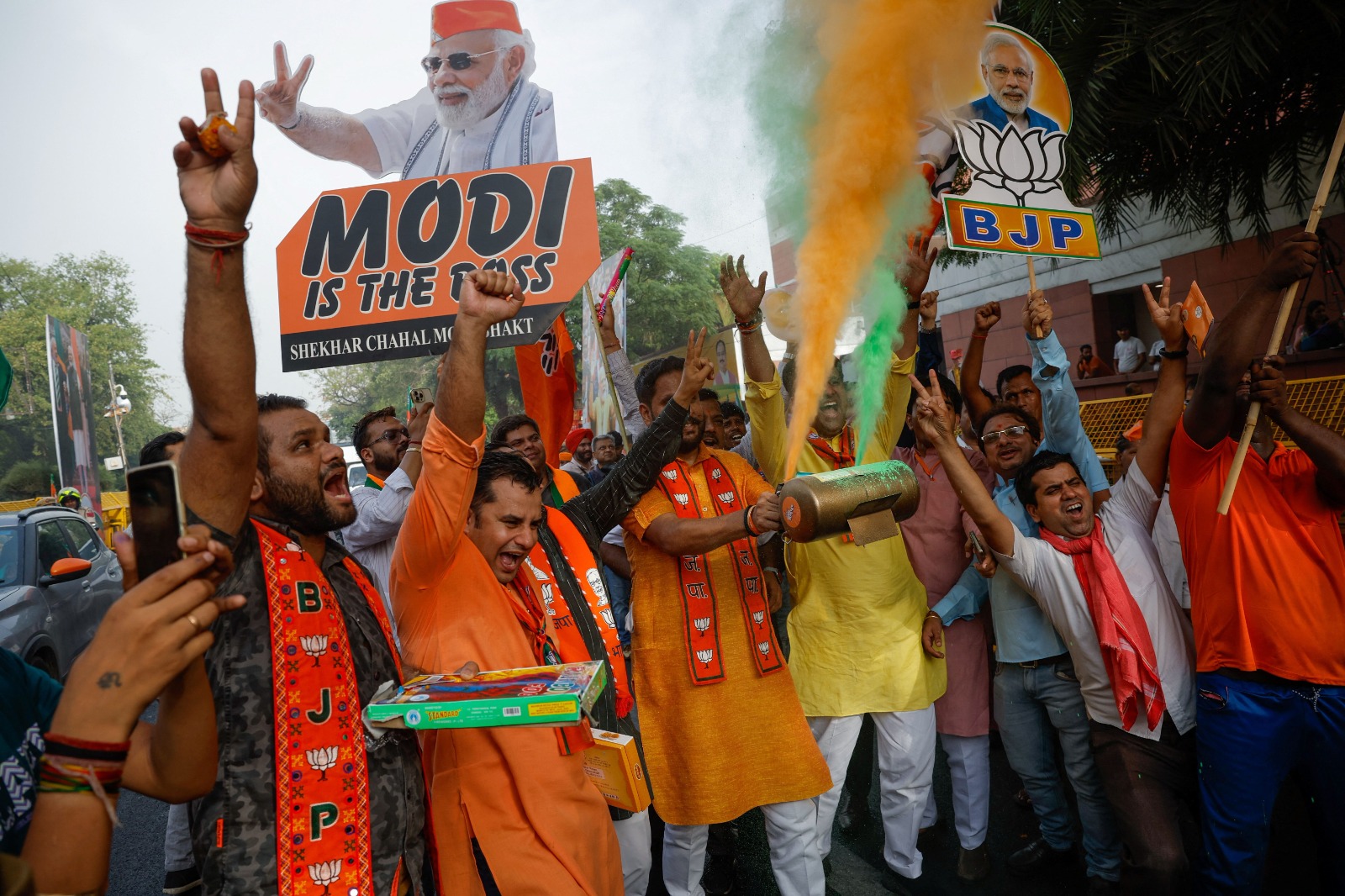
The results of recent Assembly elections and the splits within the Trinamool Congress, Shiv Sena, and Aam Aadmi Party have provided the Bharatiya Janata Party (BJP) with an opportunity to further weaken its principal rival, the Congress. After showing signs of revival in the 2024 Lok Sabha elections, Congress once again finds itself under pressure from the BJP.
The BJP’s long-standing goal of creating a “Congress-free India” remains an important part of its political agenda. Prime Minister Narendra Modi recently described Congress as a “parasitic party,” alleging that it could betray even its allies.
The BJP’s aggressive approach is also linked to its weaker-than-expected performance in the 2024 elections and the difficulties it faced in securing adequate support for the Constitution (131st Amendment) Bill, which sought to link women’s reservation with delimitation. These developments have encouraged the BJP to strengthen its parliamentary position.
As part of this strategy, the BJP appears focused on attracting MPs from dissatisfied regional parties, encouraging divisions within opposition ranks, and politically isolating Congress. Simultaneously, efforts are underway to limit the political acceptability of Rahul Gandhi and weaken Congress’s traditional support base.
However, this task is not easy. Congress remains influential in Karnataka, Kerala, and Telangana, while it enjoys support from allies in Tamil Nadu. It also governs Himachal Pradesh. Nevertheless, the BJP’s strong presence across much of northern and western India continues to pose a major challenge for Congress.
There is little doubt that Congress is in a better position today than it was a decade ago. By winning 99 seats in the 2024 Lok Sabha elections, the party achieved its best performance since 2014. It remains the largest opposition party nationally and the principal pillar of the INDIA alliance. Yet tensions within the alliance have increased, particularly after developments involving the Trinamool Congress and the DMK.
Supporters of Rahul Gandhi argue that under his leadership Congress has regained its political identity and activism. Campaigns such as the Bharat Jodo Yatra helped restore the party’s visibility. They contend that despite constant criticism and social media attacks, Gandhi has remained steadfast in his ideological commitments.

Critics, however, continue to demand leadership change within the party. They argue that Congress must move beyond its excessive dependence on the Gandhi family. According to them, the party’s internal culture remains heavily influenced by nominations and loyalty politics, where dissent is often viewed as disloyalty.
Another major challenge facing Congress is factionalism. Recent developments have highlighted leadership disputes, public disagreements, and organizational weaknesses. In several states, defections and weak party structures have hurt Congress. Relations with allies have also shown signs of strain, as illustrated by disagreements with the DMK.
It is clear that Congress’s future will depend on how effectively it manages internal divisions, maintains opposition unity, expands beyond its traditional strongholds, and presents a coherent ideological and organizational alternative to the BJP.
Merely changing leadership will not solve the party’s problems. Congress must cultivate strong state-level leaders and bring forward new political faces capable of attracting young voters and regional allies. Many analysts believe the party’s challenges are structural: weak grassroots organization, a shortage of influential regional leadership, and an inability to convert anti-incumbency sentiment into votes.
Congress’s ability to challenge the BJP nationally also depends on the strength and unity of regional parties. If regional parties continue to weaken or if their influential leaders join the BJP-led National Democratic Alliance (NDA), Congress could face even greater difficulties. Such developments would fragment opposition votes, weaken local organizational networks, and reinforce the perception of the BJP as the natural center of Indian politics.
The current political landscape is increasingly defined by competition between the BJP and a fragmented opposition. As various parties prioritize state-level interests over a coordinated national strategy, maintaining a united opposition front becomes difficult. This is one reason why the INDIA alliance periodically faces internal tensions.
If regional parties continue to fragment and drift toward the BJP, Congress’s path back to national power will become even more challenging. Ultimately, however, the outcome will depend less on alliance arithmetic and more on how successfully Congress expands and strengthens its own organization.
Debate over Rahul Gandhi’s leadership also continues. Critics argue that his leadership has not yet delivered a decisive national revival for Congress. The party has struggled to expand its voter base in several states and remains heavily dependent on the influence of the Gandhi family.

Send your resume:
biswa@jigyasu.co.in
krcfoundation@gmail.com
History shows that successful political parties periodically renew themselves through leadership changes, organizational reforms, and the emergence of strong regional leaders. Whether Congress develops leadership beyond the Gandhi family remains to be seen, but it is evident that the party needs a broader leadership structure.
If Indian politics were compared to a cricket match, the BJP-led camp is currently batting from a position of strength. Congress has regained some credibility since 2024, but it has not yet convinced voters that it can serve as a credible national alternative to the BJP.
Congress remains relevant and is visibly engaged in a process of revival, but it cannot yet be described as fully rejuvenated. The party must recognize that a healthy political system is built on regular, independent, and fair internal elections. In the long run, dynastic politics can prove damaging to any political party.
The time has come for Congress to engage in serious introspection. The question is not merely what role the Gandhi family should play, but whether Congress can build a leadership structure larger than the family itself. Until it provides a clear answer to that question, the party’s future will remain uncertain.