

Stability and strain in times of war
 KRC TIMES Desk
Lt Gen Bhopinder Singh (Retd)
As Israel once again escalates military action in Lebanon, the country’s distinctive confessional system-often described in political science terms as a form of consociational governance-is being stress-tested in real time for its ability to preserve internal cohesion under extreme external pressure. This system is built on structured power-sharing among Lebanon’s main religious communities (approximately 30-35% Shi’a, 25-30% Sunni, 30-35% Christian, and around 5% Druze), rather than on a purely individual, secular, or party-based model of citizenship.
It emerged from the belief that in a deeply plural society with a history of violent fragmentation, political stability is more likely to be achieved through guaranteed communal representation than through majoritarian democracy.
The foundations of this arrangement lie in the 1943 National Pact, an unwritten agreement reached at the moment of independence, and later restructured and formalised after the civil war by the 1989 Taif Agreement. These two settlements attempted to manage Lebanon’s internal diversity while preventing any single community from dominating the state. Under this system, the presidency is reserved for a Maronite Christian, the premiership for a Sunni Muslim, and the speakership of parliament for a Shi’a Muslim.
Parliamentary representation and senior civil service positions are also distributed along confessional lines, creating a deeply institutionalised balance of sectarian power. While this arrangement was designed as a mechanism for coexistence, it also entrenched religious identity as the primary lens of political life.
Historically, Lebanon’s diversity has often been accompanied by competition and conflict rather than harmony. Communal tensions have periodically escalated into violence, most notably during the civil war from 1975 to 1990, when competing militias fragmented authority and the central state effectively collapsed.
During this period, political loyalty was frequently organised around sectarian armed groups rather than national institutions, and alliances shifted rapidly depending on military necessity and external backing. This fragmentation created opportunities for foreign powers to intervene through local proxies, transforming Lebanon into a theatre of overlapping regional and international rivalries.

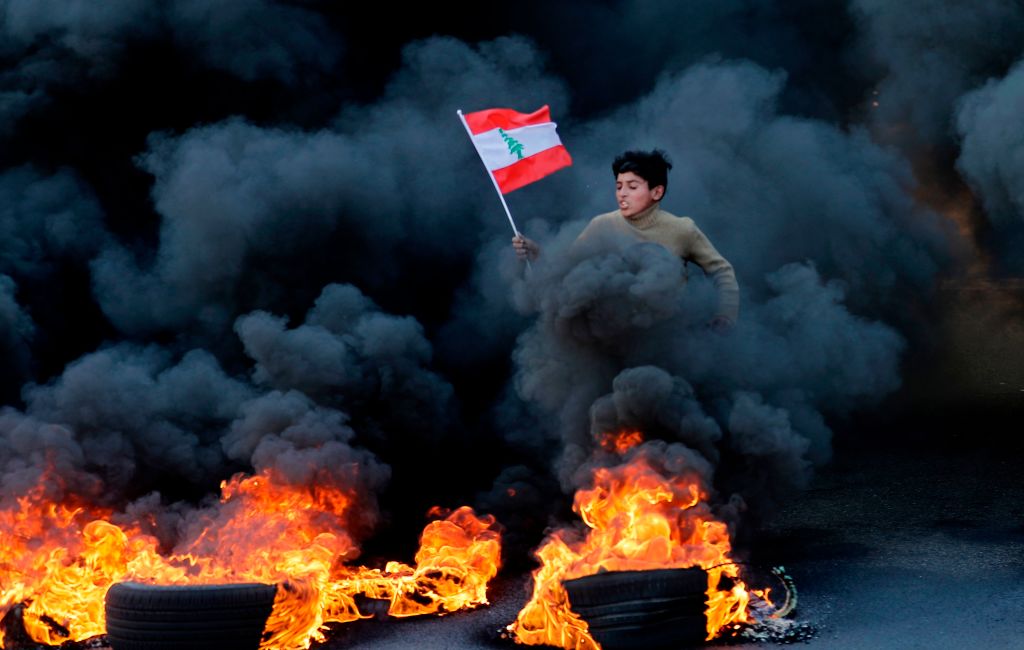
Indeed, Lebanon’s geography has made it particularly vulnerable to external entanglement. Situated at the crossroads of the Israeli-Palestinian and Syrian theatres, it has repeatedly absorbed the spillover effects of regional wars, refugee flows, and cross-border military operations. Over time, Lebanon became less an isolated national arena and more a node within a broader regional system of conflict.
External actors, including Syria, Israel, Iran, the United States, France, and various Arab states, have all at different moments supported or opposed specific Lebanese factions, often deepening internal divisions rather than resolving them.
The historical roots of this external involvement stretch back further. Under Ottoman rule, communal governance structures were already in place, with religious communities granted a degree of autonomy in managing personal status laws and internal affairs. The French Mandate (1920-1943) later reinforced these sectarian identities by institutionalising communal representation while simultaneously expanding the territorial scope of Lebanon through the creation of “Greater Lebanon.”
This expansion increased religious diversity and made sectarian balancing more complex. After independence, Lebanon quickly became enmeshed in Cold War alignments and regional ideological struggles, with domestic factions receiving varying degrees of support from global and regional powers.
During the civil war (1975-1990), these dynamics intensified dramatically. Several Lebanese factions, including the Maronite-dominated Lebanese Forces and the South Lebanon Army, at various points received support from Israel. These relationships were not uniform or ideologically consistent but rather tactical and situational, shaped by the shifting logic of survival and military advantage.
From Israel’s perspective, these alliances served strategic objectives: countering Palestinian armed groups operating in Lebanon, creating a buffer zone in the south to protect its northern frontier, and limiting Syrian influence in Lebanese affairs. In return, allied militias received training, weapons, logistical support, and territorial backing. However, these arrangements were inherently unstable, reflecting the fragmented and transactional nature of wartime politics rather than durable alignments.

Over time, the relative importance of different external actors has shifted significantly. Israel’s role in Lebanon has become more episodic and security-focused rather than structurally embedded in domestic political competition. The Syrian presence, once dominant after the civil war, formally ended with the withdrawal of Syrian forces in 2005.
Palestinian armed factions, which were a major factor in the early stages of the civil war, have also become far less influential militarily within Lebanon, largely confined to refugee camps under tighter Lebanese state control. In contrast, Iran’s influence has grown primarily through its relationship with Hezbollah, which has become the most powerful non-state armed actor in the country.
This evolution raises a recurring and politically sensitive question: why does Lebanon not simply disarm Hezbollah and thereby remove Israel’s primary stated security concern? The answer lies in a complex interplay of internal political fragmentation, security dilemmas, and regional geopolitics.
For many Lebanese actors, the idea of forcibly disarming Hezbollah is seen as potentially more destabilising than maintaining the current arrangement. There is widespread concern that such a move could trigger internal conflict, given Hezbollah’s significant military capabilities and its deep integration into parts of Lebanese society and politics.
Hezbollah’s own rationale for maintaining its armed wing is rooted in its identity as a “resistance” movement formed during the Israeli occupation of southern Lebanon in the early 1980s, an occupation that ended in 2000. This historical experience remains central to its political narrative and legitimacy. The organisation argues that the Lebanese state, due to its institutional weaknesses and limited military capacity, is not able on its own to provide credible deterrence against Israel.
Therefore, Hezbollah maintains that its independent military capability is necessary to defend Lebanese sovereignty and prevent future occupation or large-scale incursions. It also situates itself within a broader regional framework often described as the “axis of resistance,” aligned primarily with Iran, and justifies its continued armament by referencing ongoing border disputes, such as the Shebaa Farms area, as well as periodic escalations along the southern frontier.

Send your resume:
biswa@jigyasu.co.in
krcfoundation@gmail.com
At the societal level, these positions are reinforced by Lebanon’s deeply embedded sectarian identities. Political allegiance is often shaped not only by domestic considerations but also by transnational linkages and perceived external guarantors. Many Shi’a communities maintain strong political and strategic ties to Iran through Hezbollah, while other Lebanese communities often look to Arab Gulf states, Western powers, or alternative regional actors for political, financial, or diplomatic support.
These external relationships are not merely ideological but also reflect historical patterns of patronage and security dependence. As a result, Lebanon’s internal divisions are closely intertwined with broader regional rivalries, making consensus on national security strategy extremely difficult to achieve.
Despite these deep fractures, the confessional system has nonetheless provided Lebanon with a degree of institutional continuity during repeated crises, including the current escalation with Israel. By distributing power among religious communities under the framework consolidated by the Taif Agreement, it has helped prevent any single group from fully capturing the state even during moments of intense political or military pressure.
This has allowed key institutions, including the Lebanese Armed Forces and core civilian ministries, to continue operating even in the face of economic collapse, political paralysis, and external conflict. In this sense, the system functions less as a model of efficient governance and more as a mechanism of crisis management in a deeply divided society.
However, this stability comes at a cost. The same arrangements that help prevent collapse also make it difficult to form unified national policies, particularly in matters of war and peace. The coexistence of a formal state monopoly on force and a powerful non-state armed actor creates an enduring structural tension at the heart of Lebanese sovereignty.
As a result, Lebanon often finds itself simultaneously stable enough to avoid disintegration, yet fragmented enough to struggle with coherent decision-making in moments of external confrontation.
Ultimately, the current crisis with Israel underscores a central paradox of Lebanon’s political system. In a society marked by deep sectarian divisions and a history of violent conflict, consociational power-sharing has functioned as a crucial stabilising framework that prevents domination and preserves institutional continuity.
Yet the same framework also limits the state’s ability to act as a unified strategic actor, particularly in the realm of security policy. Lebanon’s experience thus illustrates both the resilience and the structural constraints of confessional governance: it can help hold a fragile state together under pressure, but it cannot easily resolve the fundamental tensions that define its political order.
(The author is former Lt Governor of Andaman & Nicobar Islands & Puducherry)