


From Tea Garden Sardar to Legislator: Why the Story of Jibon Santal Must Not Be Forgotten
 Sangram Datta
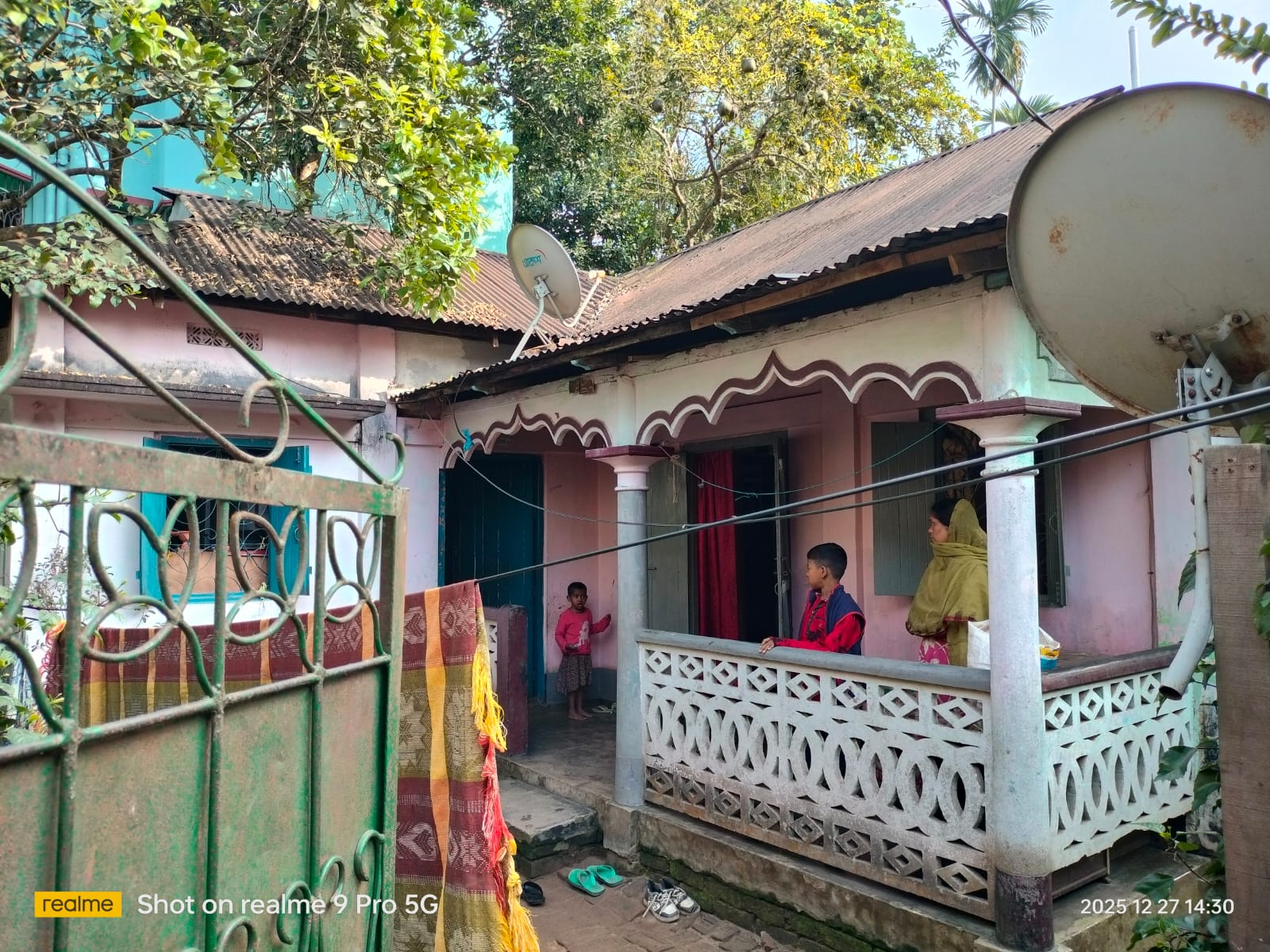
Hidden among the modern buildings of Sreemangal’s Purbasha residential area stands an ageing house that few passers-by would notice. Yet behind its weathered walls lies the story of a man who defied the social barriers of colonial India and became one of the earliest political voices of tea plantation labourers.
That man was Jibon Santal—a tea garden labour sardar, trade union organiser and elected Member of the Assam Provincial Legislative Assembly. His extraordinary journey from the tea estates of Sylhet to the halls of provincial government remains largely absent from Bangladesh’s public memory.
As Bangladesh marks Historic Santal Rebellion Day on 30 June, the names of Sidhu Murmu, Kanhu Murmu, Chand Murmu and Bhairab Murmu are rightly remembered for leading one of the greatest Indigenous uprisings against British colonial rule. Yet the story of Jibon Santal reminds us that the struggle begun in 1855 did not end on the battlefields of the Santal Hul. Its ideals lived on through later generations who continued fighting exploitation, inequality and political exclusion.
The Santal Rebellion, known as the Hul, began on 30 June 1855 in Bhognadih village, now in India’s Jharkhand state. Decades of land dispossession, predatory moneylending, excessive taxation and brutal exploitation had pushed the Santal people to breaking point.
Gathering thousands of followers, Sidhu and Kanhu declared that British authority would no longer be recognised. Within weeks, the rebellion had spread across vast areas of present-day Jharkhand, Bihar and West Bengal. Armed mostly with bows, arrows, axes and spears, tens of thousands of Santals confronted one of the world’s most powerful colonial empires.
The British eventually crushed the uprising with overwhelming military force, killing thousands. Yet the rebellion became one of the earliest large-scale organised resistance movements against colonial rule in the Indian subcontinent. It also forced the British administration to introduce administrative reforms, including the creation of the Santal Parganas, acknowledging—however reluctantly—the depth of Indigenous grievances.

For today’s young people, who will shape tomorrow’s society, the Hul is more than a historical event. It is a reminder that demands for justice, dignity and equality have often come from those with the least power.
Among those who inherited that legacy was Jibon Santal.
Born in Majdihi Tea Estate in present-day Moulvibazar District, he grew up in a family descended from labourers brought by the British from Bihar and the Chotanagpur plateau to work in Assam’s tea plantations. Like countless others, he experienced poverty, discrimination, exhausting working conditions and the constant insecurity that defined plantation life.
Respected by fellow workers, he eventually became the labour sardar of Majdihi Tea Estate. But leadership came at a cost. His willingness to challenge plantation authorities over workers’ rights led to conflict with estate management, and he ultimately lost his position. It did not silence him.
Instead, he dedicated himself to organising tea labourers across the Sylhet region.
Working alongside Indian National Congress leaders Purnendu Kishore Sengupta and Nikunja Bihari Chowdhury, he helped establish the Srihattha Tea Labourer’s Union. Formally founded at Kulaura on 3 June 1948, the union elected Sengupta as its founding president and Jibon Santal as its founding vice-president. The organisation would later become the Bangladesh Tea Labourer’s Union.
The union campaigned for fair wages, healthcare, housing, education and basic human dignity for tea plantation workers—demands that, in many respects, continue to resonate today.
Jibon Santal’s political achievements were equally remarkable.
In the 1946 Assam Provincial Legislative Assembly election, he contested the Sreemangal constituency as a candidate of the Indian National Congress and won. For a man who had begun his working life in a tea estate to enter the colonial legislature was extraordinary in an era when political power remained overwhelmingly concentrated among social elites.
Inside the Assembly, he consistently spoke for tea labourers, Indigenous communities and other marginalised groups whose voices were rarely heard in government.
After the Partition of India, his public service continued. In 1954, he was elected to the East Pakistan Provincial Assembly as a candidate of the United Front, maintaining his commitment to representing working people and neglected communities.
Yet today, the man who helped shape the political history of Bangladesh’s tea labour movement has largely disappeared from public consciousness.
Research shows that even the Bangladesh Tea Labourer’s Union, which traces its institutional origins to the organisation he helped build, possesses only limited information about his life. There are few surviving photographs, almost no preserved personal papers and little documented family history. Even some current union leaders are unable to identify where his descendants now live.
His family continues to reside in the house he built in Sreemangal, but the building stands without official recognition of the history it represents.
This absence reflects a wider failure to preserve the contributions of Indigenous leaders and labour organisers whose work helped shape democratic politics in the region.

Send your resume:
biswa@jigyasu.co.in
krcfoundation@gmail.com
Jibon Santal’s story is not simply one of remarkable personal achievement. It is the story of how people from the most marginalised communities challenged entrenched systems of power and demanded a place within political institutions.
As Bangladesh reflects on the legacy of the 1855 Santal Hul, remembering Jibon Santal means recognising that the struggle for justice did not end with one rebellion. It continued through leaders who transformed resistance into organisation, protest into representation and hope into political action.
Their stories deserve more than annual remembrance. They deserve careful research, institutional recognition and a permanent place in the history of Bangladesh and the wider Indian subcontinent.
Only then can future generations fully understand that history is shaped not only by celebrated national figures, but also by those whose names have quietly faded, even as their contributions continue to echo through the struggles they inspired.

