

The situation is further compounded by thousands of vacant teaching positions, school mergers, and increasing concerns over learning outcomes in public schools
 Jayanta Debnath
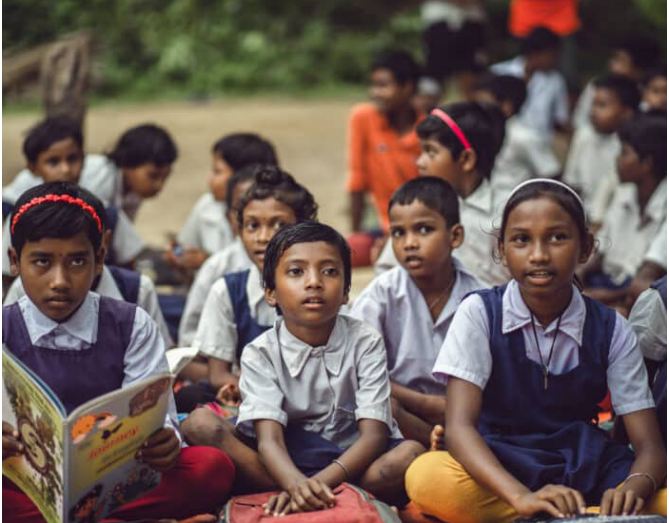
For decades, Northeast state’s has been regarded as one of India’s strongest performers in school education, boasting a high literacy rate, an extensive network of government schools, and one of the country’s best teacher-student ratios. However, a closer examination of recent education data suggests that beneath these achievements lies a growing structural challenge that could reshape the region’s education landscape.
Education experts believe that while the National Education Policy (NEP) 2020 and the revised CBSE curriculum demand significant improvements in digital learning, science laboratories, language education, vocational training, and skill-based infrastructure, most government schools across the Northeast have yet to witness comprehensive infrastructure upgrades to meet these new standards. This gap, they argue, is gradually encouraging more parents to choose private schools over government institutions.
The situation is further compounded by thousands of vacant teaching positions, school mergers, and increasing concerns over learning outcomes in public schools.
According to the latest UDISE+ (Unified District Information System for Education Plus) 2024-25 data, India has approximately 13.61 lakh schools, including 10.13 lakh government schools and around 3.48 lakh private and government-aided institutions.
Tripura currently has 4,943 schools, of which 4,187 are government schools and 756 are private or aided institutions, meaning nearly 85 percent of all schools in the state are government-run—one of the highest proportions in the country.
Across the Northeast, government schools continue to dominate the education system. Assam has 44,741 government schools and around 6,900 private schools. Meghalaya has 7,789 government and about 2,200 private schools. Manipur has 2,952 government and nearly 1,150 private schools. Mizoram has 2,617 government and about 540 private schools. Arunachal Pradesh has 2,558 government and around 420 private schools. Nagaland has 1,936 government and approximately 740 private schools, while Sikkim has 857 government and nearly 340 private schools.
These figures indicate that although public education remains the backbone of school education in the Northeast, the private sector is steadily expanding.
Tripura’s teacher-student ratio remains one of its biggest strengths. On average, there is one teacher for every 18 students, significantly better than the national average of around 24:1. Most schools have access to electricity, separate toilets, and basic infrastructure, while enrolment at the primary level and gender parity continue to outperform national averages.
However, serious concerns persist.
UDISE+ data indicates that around 340 government schools in Tripura continue to function with only a single teacher, serving more than 6,000 students collectively. The problem is particularly severe in remote rural and tribal areas.
The state currently has approximately 6.90 lakh students (690,084) studying across government and private schools.
Data available through NITI Aayog’s National Education Repository shows that Tripura has 37,733 teachers in government schools. Yet the state reportedly continues to face a shortage of nearly 4,000 teaching posts, particularly in science, mathematics and English at the upper primary and secondary levels.
Education officials acknowledge that while a large number of teachers retire every year, recruitment has not kept pace, resulting in widening vacancies and uneven teacher deployment across schools.
Another major development has been Tripura’s large-scale school merger programme, under which more than 300 government schools with low enrolment have been merged with nearby institutions.
The government maintains that the initiative allows better utilisation of teachers and infrastructure while improving educational quality. However, critics argue that the mergers have increased travel distances for children in rural and tribal areas, making access to education more difficult and contributing to declining enrolment in some government schools.
Educationists also point to another growing trend—the increasing migration of students from government schools to private institutions.
Send your resume:
biswa@jigyasu.co.in
krcfoundation@gmail.com
Many middle-class families are opting for private schools in search of English-medium education, improved digital facilities, extracurricular opportunities, and better academic outcomes. Unless government schools receive substantial investments in modern educational infrastructure, this shift is expected to continue.
Recent assessments by NITI Aayog also underline that while access to education has improved nationwide, major challenges remain in learning outcomes, equitable teacher deployment, digital infrastructure, skill-based education, and rebuilding public confidence in government schools.
A comparison across the Northeast reflects different strengths and challenges. Mizoram continues to rank among India’s most literate states, Sikkim has made notable progress in digital education, Assam possesses the region’s largest government school network, while Meghalaya and Arunachal Pradesh continue to struggle with geographical barriers affecting school accessibility.
Taken together, these developments suggest that school education across Tripura and much of Northeast India is entering a critical phase. The region still possesses a strong foundation through its vast public school network, favourable teacher-student ratio, and long-standing literacy achievements. Yet teacher shortages, declining enrolment in government schools, the rapid growth of private education, the long-term impact of school mergers, and the need to align infrastructure with NEP 2020 and the revised CBSE curriculum are emerging as defining challenges.
Education analysts believe that if Tripura and other Northeastern states are to realise the vision of the National Education Policy 2020 and become knowledge-driven societies, increasing the number of schools alone will not be sufficient. Modernising classrooms, strengthening science and computer laboratories, expanding vocational education, ensuring equitable teacher deployment, and delivering quality education to every child—from urban centres to remote tribal villages, will be the true test of the region’s education system in the years ahead.
(The author is a senior journalist and Editor of Tripurainfo.com).