

REDEFINING A GLOBAL WOMEN’S HEALTH CONDITION
 KRC TIMES Desk

SATARUPA ACHARJEE
For nearly a century, Polycystic Ovary Syndrome (PCOS) has been recognized as one of the most common hormonal disorders affecting women. Yet despite its prevalence, the condition remained deeply misunderstood. Many patients spent years searching for answers while facing symptoms that affected not only their reproductive health but also their metabolism, mental well-being, and quality of life.
The recent recognition of Polyendocrine Metabolic Ovarian Syndrome (PMOS) marks an important shift in medical science. The updated name reflects a modern understanding that the disorder is not limited to the ovaries. Instead, it is a multisystem endocrine and metabolic condition that influences the entire body.
The transition from PCOS to PMOS is more than a change in terminology. It is a transformation in how medicine views women’s health, chronic illness, hormonal imbalance, and patient care.
The Historical Origin of PCOS
The condition now known as PCOS was first described in 1935 by American gynecologists Irving Stein and Michael Leventhal. They observed a group of women experiencing irregular menstruation, infertility, and enlarged ovaries containing multiple cysts. For many years, the disorder was referred to as “Stein-Leventhal Syndrome.”

As medical imaging improved, the term “Polycystic Ovary Syndrome” became widely accepted because ovarian cysts appeared to be one of its visible characteristics. However, over time, scientists discovered that the cysts themselves were not the root cause of the disorder. They were simply one possible symptom among many.
This realization gradually exposed the limitations of the name PCOS.
Why The Name PCOS Became Problematic
Although PCOS helped identify an important medical condition, the term created several misunderstandings.
- Not Every Patient Has Ovarian Cysts
One of the biggest issues was that many individuals diagnosed with PCOS do not actually have ovarian cysts. Some patients show completely normal ovarian imaging despite experiencing severe hormonal and metabolic symptoms.
At the same time, many women without PCOS may naturally have polycystic-looking ovaries. This contradiction caused confusion among both patients and healthcare providers.
- The Condition Is Not Only About the Ovaries
Research increasingly showed that PCOS affects:
- Blood sugar regulation
- Fat storage and metabolism
- Insulin function
- Hormonal communication pathways
- Inflammation levels
- Cardiovascular health
- Mental health
The old name focused narrowly on reproductive anatomy while ignoring the systemic nature of the disorder.
- The Term Minimized Serious Health Risks
Many patients reported that their concerns were dismissed because PCOS was often treated as only a “fertility issue.” In reality, the disorder can increase the risk of:
- Type 2 diabetes
- Heart disease
- Stroke
- Obesity
- Sleep disorders
- Depression and anxiety
Experts worried that the name prevented people from understanding the full seriousness of the condition.
The Emergence of PMOS
As scientific knowledge evolved, researchers and advocacy groups began discussing whether PCOS needed a more accurate name. International conferences, medical panels, and patient organizations debated the issue for years.
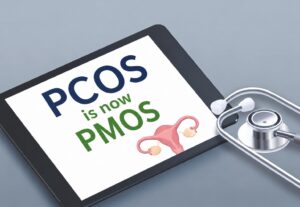
Eventually, the term PMOS — Polyendocrine Metabolic Ovarian Syndrome — gained recognition because it better captures the biological complexity of the disorder.
The new terminology emphasizes three interconnected systems:
- Polyendocrine: The disorder affects multiple endocrine glands and hormone systems throughout the body.
- Metabolic: Insulin resistance and metabolic dysfunction are central to the disease process.
- Ovarian: The ovaries remain important, but they are only one part of the condition.
The renaming reflects a shift from a symptom-based definition to a systems-based understanding.
Understanding the Hormonal Mechanisms Behind PMOS
PMOS is now recognized as a disorder involving complex interactions between hormones, metabolism, genetics, and inflammation.
Insulin Resistance
One of the most important discoveries in recent decades is the role of insulin resistance. In many patients, the body becomes less responsive to insulin, forcing the pancreas to produce more of it.
High insulin levels can:
- Increase androgen production
- Disrupt ovulation
- Promote weight gain
- Trigger inflammation
This explains why metabolic symptoms are so deeply connected to reproductive symptoms.
Elevated Androgens
Many individuals with PMOS have increased androgen levels. These hormones can lead to:
- Excess facial and body hair
- Acne
- Hair thinning
- Irregular periods
However, androgen levels vary widely among patients, making diagnosis challenging.
Chronic Inflammation
Researchers also discovered that low-grade chronic inflammation plays a major role in PMOS. Inflammation may contribute to:
- Insulin resistance
- Cardiovascular disease
- Fatigue
- Hormonal imbalance
This inflammatory component further supports the idea that PMOS is a whole-body disorder.
The Emotional and Psychological Burden
One of the most overlooked aspects of PCOS was its emotional impact.
Many patients experience:
- Anxiety
- Depression
- Eating disorders
- Low self-esteem
- Body image struggles
- Social isolation
Hormonal imbalance itself may influence mood regulation, while visible symptoms such as acne, weight gain, and hair growth can affect confidence and mental health.
The recognition of PMOS encourages healthcare providers to address psychological care alongside physical treatment.

PMOS Across Different Life Stages
Another important advancement is the understanding that PMOS changes throughout life.
Adolescence
Symptoms may first appear as:
- Irregular periods
- Severe acne
- Rapid weight gain
Diagnosis during adolescence can be difficult because hormonal fluctuations are common during puberty.
Reproductive Years
During adulthood, many patients seek medical attention because of:
- Fertility challenges
- Menstrual irregularities
- Hormonal symptoms
This has historically been the stage most associated with PCOS.
Midlife and Beyond
Even after menopause, metabolic risks often continue. Patients with PMOS may remain at increased risk for:
- Diabetes
- Heart disease
- Hypertension
A Shift Toward Patient-Centered Care
One of the most meaningful aspects of the PMOS recognition movement is the growing influence of patient advocacy.
Patients have long argued that:
- Their symptoms were minimized
- Their concerns were dismissed
- Medical research focused too narrowly on fertility
- Emotional suffering was ignored
The new terminology reflects a healthcare model that increasingly values patient experiences alongside scientific evidence.
Conclusion
The transition from PCOS to PMOS represents a major evolution in medical understanding. What was once viewed mainly as an ovarian disorder is now recognized as a complex endocrine and metabolic condition affecting nearly every aspect of health.
The new terminology acknowledges the reality that millions of patients have long experienced: this condition is not simply about cysts or fertility. It influences metabolism, hormones, mental health, cardiovascular function, and lifelong well-being.
By recognizing PMOS, the medical community takes an important step toward more accurate diagnosis, compassionate care, deeper research, and broader awareness. For patients around the world, this change offers something equally important — validation that their experiences have finally been fully seen and understood.