


Nighttime scrolling is especially harmful because it disguises itself as relaxation
 KRC TIMES Desk
SATARUPA ACHARJEE
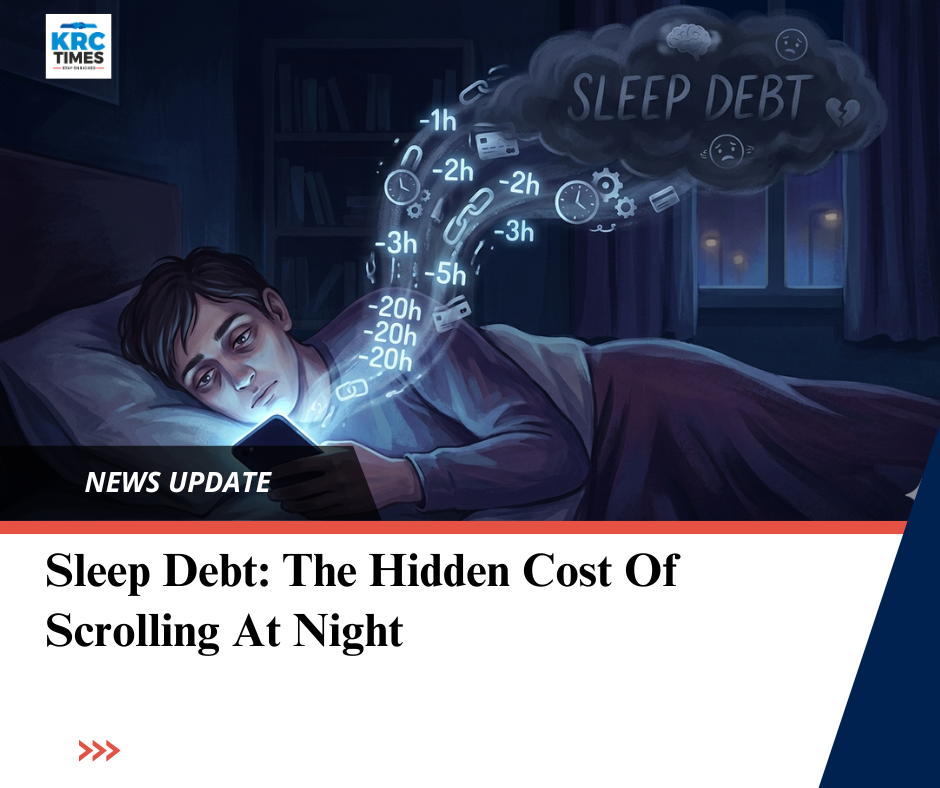
In the quiet hours of the night, when the world slows down, millions of people remain awake, their thumbs flicking endlessly across glowing screens. What begins as “just five minutes” of scrolling often stretches into an hour or more, quietly taking away time from one of the body’s most essential needs: sleep. This increasingly common habit, normalized in the digital age, carries an invisible consequence known as sleep debt.
Sleep debt is the gap between the amount of sleep the body needs and the amount it actually receives. Missing an hour or two of rest may seem harmless at first, but those lost hours slowly build up over days and weeks. Unlike financial debt, sleep debt cannot simply be erased with one long night of rest. Its effects remain, influencing both physical and mental well-being.
Nighttime scrolling is especially harmful because it disguises itself as relaxation. Social media feeds, short videos, breaking news, and endless streams of content are intentionally designed to capture attention. Algorithms continuously provide stimulating material, making it difficult for the mind to disengage.
At the same time, the blue light emitted from screens interferes with melatonin production, the hormone responsible for regulating sleep. This confuses the brain into believing it is still daytime, delaying the body’s natural sleep cycle even after the device has been put away.

The effects of sleep debt extend far beyond feeling tired the next morning. Over time, chronic sleep deprivation can reduce memory, focus, and decision-making abilities. Emotional balance also begins to suffer, increasing irritability, anxiety, and even symptoms of depression.
The immune system weakens, making the body less effective at fighting infections, while the long-term health risks become more serious, including heart disease, obesity, and diabetes. What makes this particularly dangerous is that many people gradually adapt to functioning in a sleep-deprived state, often underestimating how impaired they truly are.
Despite these consequences, nighttime scrolling remains widespread. One reason is a behavior often called revenge bedtime procrastination, where people delay sleep to reclaim personal time after a stressful or demanding day. For many individuals, late-night scrolling feels like the only uninterrupted moment of freedom or leisure.
Digital platforms also contribute to the problem because they are intentionally engineered to keep users engaged. Features such as infinite scrolling, autoplay, and personalized recommendations exploit psychological triggers that make stopping difficult.
The problem deepens because sleep debt does not simply accumulate; it compounds. Losing one hour of sleep every night for a week creates a deficit equal to an entire night’s rest. Even attempts to recover through weekend sleep-ins can further disrupt the body’s internal clock, creating what researchers describe as social jet lag, where biological rhythms no longer align with daily schedules. Over time, this imbalance affects crucial sleep stages such as deep sleep and REM sleep, both of which are necessary for memory consolidation and emotional regulation.

The addictive nature of nighttime scrolling is also linked to brain chemistry. Every new notification, post, or video triggers small releases of dopamine, the neurotransmitter associated with reward and pleasure. This creates a powerful feedback loop in which the brain craves “just one more” piece of content. Unlike traditional entertainment, scrolling provides unpredictable rewards, similar to slot machines, keeping the brain alert and stimulated when it should naturally be winding down for rest.
The relationship between sleep debt and mental health is deeply interconnected. Lack of sleep intensifies negative emotions and weakens the brain’s ability to manage stress. Excessive scrolling, especially on social media, can further increase emotional strain through overstimulation, comparison, and exposure to negative news.
This creates a damaging cycle where poor sleep leads to emotional vulnerability, emotional distress leads to more scrolling, and scrolling further delays sleep. Left unchecked, this pattern can contribute to anxiety, burnout, and depressive symptoms.
Many people believe they have adapted to functioning on limited sleep, claiming they perform normally on five or six hours of rest. Research, however, shows that cognitive performance continues to decline with ongoing sleep restriction, even when individuals feel subjectively “fine.” Slower reaction times, reduced creativity, poorer judgment, and increased mistakes become more common. In situations involving studying, driving, or demanding work, this hidden impairment can have serious consequences.
Modern culture also plays a role in normalizing sleep deprivation. Hustle culture often glorifies late nights and early mornings, while constant digital connectivity keeps people available around the clock. In such an environment, sacrificing sleep for entertainment or productivity begins to feel acceptable. Yet this mindset ignores a basic reality: sleep is not wasted time. During sleep, the brain clears metabolic waste, strengthens neural pathways, and restores emotional balance. Skipping it is not efficiency but self-sabotage.
Recovering from sleep debt and reducing nighttime scrolling does not require abandoning technology completely. Instead, it requires awareness, boundaries, and consistency. Small habits can make a significant difference. Setting a digital curfew by avoiding screens 30 to 60 minutes before bed can help the mind unwind naturally.

Using night mode or blue light filters may reduce disruption, though they are not complete solutions. Replacing scrolling with calming activities such as reading, journaling, meditation, or breathing exercises can help signal to the brain that it is time to rest. Keeping devices away from the bed also reduces temptation, while tracking sleep patterns can create greater awareness and motivation for change.
A gradual reset is often more effective than a sudden lifestyle overhaul. Maintaining a consistent sleep and wake schedule, even on weekends, helps stabilize the body’s internal rhythm. Reducing scrolling time step by step, rather than stopping abruptly, makes habits easier to sustain. Creating friction by logging out of apps, disabling autoplay, or placing the phone in another room can reduce impulsive use. Morning exposure to natural sunlight can further help reset the circadian rhythm and improve sleep quality over time.
Ultimately, sleep debt remains one of the most underestimated consequences of modern digital life. What appears to be harmless nighttime scrolling is often a slow withdrawal from physical health, mental clarity, and emotional stability. Because the effects build gradually, the habit becomes easy to justify, even as the damage quietly grows over time.
Reclaiming sleep does not mean rejecting technology altogether. It means using technology intentionally rather than impulsively and recognizing that rest is not optional but essential. Every night presents a quiet choice: continue scrolling for temporary distraction or protect the sleep that sustains long-term well-being. The difference may seem small in the moment, but over time, it shapes health, productivity, and quality of life in ways that truly matter.