His campaign pivots on shifting attention from visible infrastructure gains to what he describes as structural deficits
 KRC TIMES Barak Valley Bureau
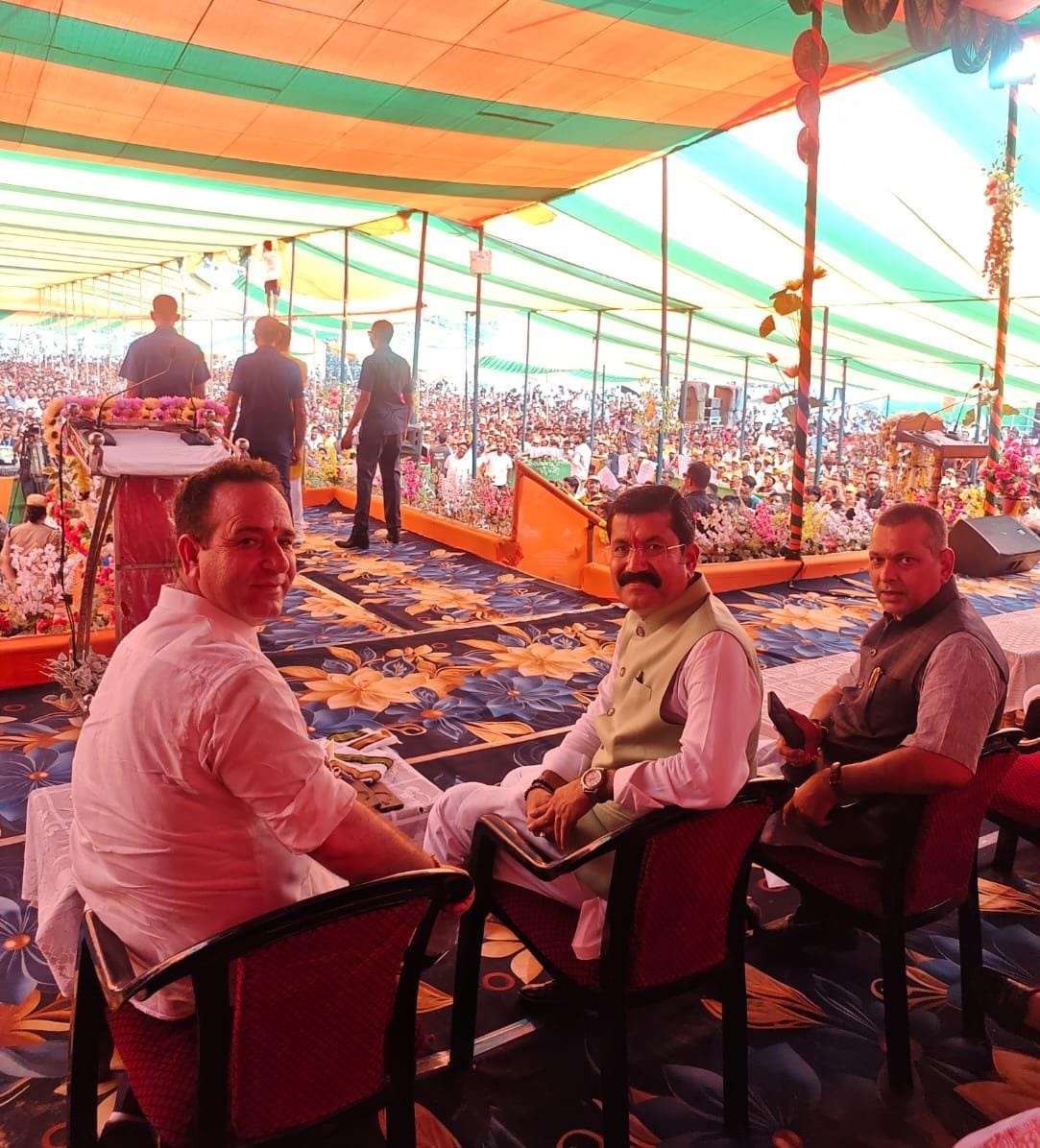
Silchar : As Assam heads toward polling, the Lakhipur Assembly constituency in the Barak Valley has emerged as a politically layered battleground, where the BJP’s structured grassroots campaign is being tested against the Congress’s assertion of subdued voter discontent.
The contest in Lakhipur reflects a broader electoral dynamic playing out across the state-one driven by competing narratives of visible development and underlying dissatisfaction.
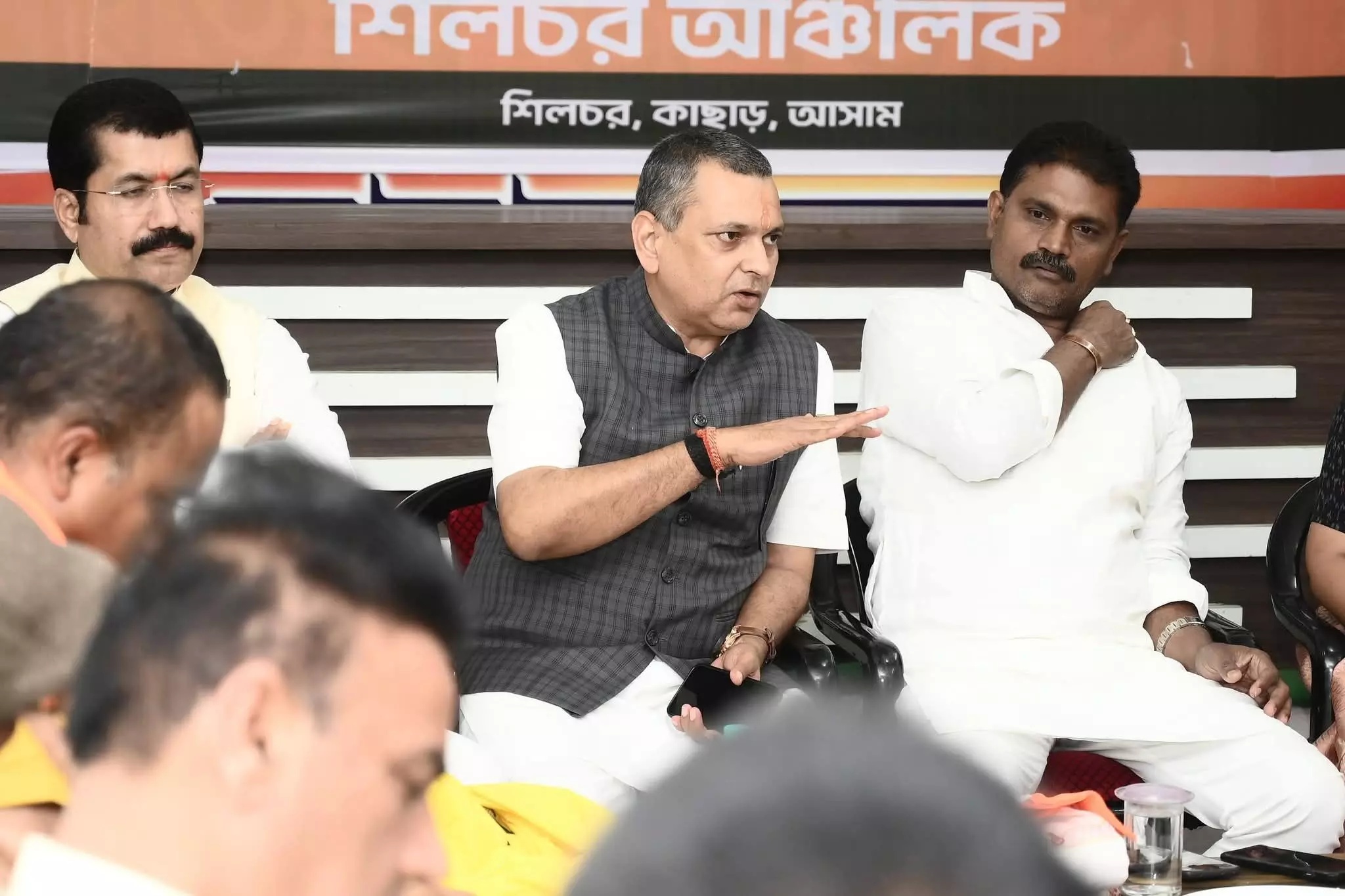
The seat is currently represented by BJP MLA and Cabinet Minister Kaushik Rai, whose campaign is anchored in the advantages of incumbency, organisational depth, and a sustained focus on infrastructure-led development.
Rai has consistently argued that the absence of major protests or corruption allegations over the past five years indicates a stable political environment in the constituency. “In the last five years, the Opposition has failed to create any major issue in Lakhipur. There have been no corruption charges, no mass movements. We have worked in constant consultation with people, and that has built trust,” he said.
At the core of the BJP’s strategy is an extensive booth-level network, which Rai credits for translating governance delivery into electoral confidence. Large-scale outreach efforts, including panchayat-level “Vijay Sankalp” meetings, have been positioned as evidence of public engagement and support.
“We have conducted meetings in every panchayat, with thousands attending each. This shows the confidence people have in us, but we are treating it as a responsibility, not overconfidence,” he added.
Rai has also foregrounded his local roots as a political asset, underscoring the importance of representation in a constituency marked by social diversity. Alongside this, he has highlighted development achievements, particularly in road connectivity, claiming that over 100 roads have been constructed, with additional projects underway.
Looking ahead, the BJP leader has outlined a targeted development roadmap, focusing on infrastructure expansion, education, and employment generation, including plans to establish a degree college in Rajabazar.
On the other side, Congress candidate M. Santi Kumar Singha is attempting to reframe the electoral discourse by questioning both the depth and inclusiveness of the BJP’s development narrative.

While acknowledging the ruling party’s organisational strength, Singha maintains that the contest remains open. “It will be a neck-and-neck fight. Only as polling approaches will the real trend become clear,” he said.
His campaign pivots on shifting attention from visible infrastructure gains to what he describes as structural deficits. “Development cannot be reduced to roads alone. There are serious gaps in employment, healthcare, and industrial growth that cannot be ignored,” he argued.
Singha has also introduced a politically significant claim into the campaign-that of “silent anger” among voters. According to him, a sense of fear has curtailed open political expression, masking underlying dissatisfaction that may surface during voting.
“There is a sense of fear that limits open political discussion, but that does not mean people are satisfied. There is silent anger, and it will reflect in the ballot,” he said.
Lakhipur’s complex demographic composition adds further depth to the contest. The electorate includes Manipuri Hindus and Muslims, tea garden workers, Bengali-speaking populations, and tribal communities such as the Naga and Kuki groups-each with distinct socio-political priorities.
The Congress campaign is seeking to leverage this diversity through targeted outreach and identity-based consolidation. “There is a broad-based desire for change cutting across communities. I have engaged with tribal leaders and different groups, and the response has been encouraging,” Singha said, signalling an attempt to build cross-community alliances.
The electoral battle in Lakhipur thus presents a clear analytical contrast: the BJP’s emphasis on governance delivery, organisational strength, and leadership continuity under Chief Minister Himanta Biswa Sarma, versus the Congress’s focus on latent dissatisfaction, identity mobilisation, and critique of development priorities.
With an electorate of over 1.77 lakh voters, the outcome in Lakhipur is likely to hinge on turnout patterns, the effectiveness of booth-level mobilisation, and whether the Congress’s narrative of suppressed sentiment translates into votes.
As campaigning enters its decisive phase, Lakhipur stands out as a microcosm of the larger electoral contest in Assam-where visible performance and invisible sentiment are set to collide at the ballot box.