


Experts Warn of Possible Risk in Assam
 KRC TIMES Assam Bureau
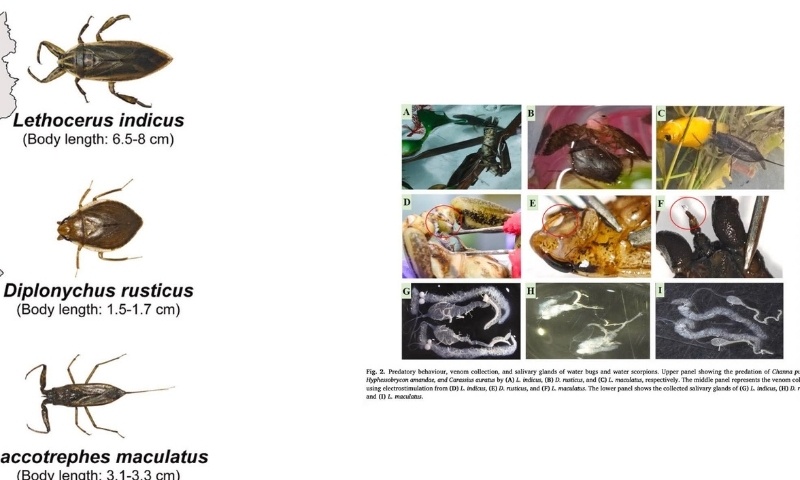
Guwahati : A recent scientific study conducted in Nagaland’s Dimapur has raised concerns over the presence of venomous aquatic insects in local water bodies, with experts cautioning that similar species could also be present in neighbouring Assam, posing a largely unrecognised public health risk.
The research, led by biologist Karthik Sunagar and his team, was published on March 26 and focused on three species of water-dwelling insects found in a pond in Dimapur. The study revealed that the venom produced by these insects contains protein components resembling those found in viper snake venom, a finding that has drawn attention from both medical and ecological experts.
According to the researchers, these insects deploy extremely fine, needle-like mouthparts-thinner than a standard syringe-to inject venom into their prey, immobilising them almost instantly. Their ability to both swim and fly allows them to thrive in stagnant water bodies, where they often remain concealed beneath mud, vegetation, or debris.
While the insects are not known to actively target humans, experts warn that accidental encounters are possible, particularly among people who fish, bathe, or wade through ponds and marshy areas. Such encounters could lead to painful stings or bites.

“The bite can be extremely painful and may result in severe swelling. In rare cases, more serious complications cannot be ruled out,” said Surajit Giri, a snakebite awareness activist working with rural healthcare networks in Assam.
Giri noted that preliminary observations suggest the venom may interfere with blood clotting mechanisms, drawing parallels with haemotoxic effects seen in viper envenomation. This raises concerns about the possibility of prolonged bleeding or internal haemorrhage in severe cases.
He cited a suspected incident from Assam in which an elderly man reportedly died shortly after experiencing sudden, intense pain followed by symptoms resembling a stroke. Though unconfirmed, the case is being viewed by some experts as a potential instance of venom-induced internal bleeding, possibly triggered by an aquatic insect bite.
Medical professionals have cautioned that such cases may be underreported or misdiagnosed, often being attributed to snakebites due to the abrupt onset of symptoms and the absence of clear bite marks. This diagnostic ambiguity, they say, underscores the need for greater clinical awareness and systematic documentation.
Public health experts are now calling for increased surveillance and research into unexplained injuries or deaths linked to water exposure, particularly in rural and semi-urban areas where stagnant water bodies are common.
Authorities and healthcare workers have also urged communities to remain vigilant and report unusual insect sightings or unexplained health incidents associated with ponds and wetlands.
“Community participation will be key to identifying and understanding this emerging risk,” Giri said, stressing the importance of coordinated efforts between researchers, healthcare providers, and local populations to address what could become a significant yet overlooked environmental health concern.