


Relevance and Challenges
 KRC TIMES Desk
Pradip Dutta Roy
Since Independence, the Barak Valley, comprising the three districts of southern Assam, has struggled to achieve its desired level of socioeconomic development. Despite considerable potential in agriculture, natural resources, industry and trade, problems relating to employment, connectivity, healthcare, education and infrastructure remain unresolved.
Allegations of administrative neglect and developmental discrimination have surfaced repeatedly. Demands for separate statehood or Union Territory status have also been raised, but none has developed into a sustained political movement.
Against this backdrop, an important question arises: When regional political parties elsewhere in India have successfully asserted their regions’ interests in state and national politics, how relevant would a similar political force be for the Barak Valley? What obstacles would it face?
This article seeks not to advocate a predetermined conclusion but to encourage informed public debate.
Political Representation versus Regional Interests
Since Independence, the Barak Valley has elected numerous legislators and parliamentarians, some of whom have served as ministers in state and Union governments. Yet several questions remain. How effectively have these representatives addressed the Valley’s longstanding problems? Where does Barak stand among the priorities of national political parties? When party loyalty conflicts with regional interests, which receives precedence?
Most elected representatives undoubtedly wish to serve their constituencies. However, national parties have broader political compulsions, within which the demands of a particular region may not always receive priority. Representatives may consequently find it difficult to adopt independent positions.
This highlights the distinction between electoral representation and effective regional representation. The people of Barak elect their representatives, but whether those representatives collectively exert sufficient political pressure to protect regional interests remains debatable.
Could an independent regional political party overcome this limitation?
Barak’s Distinct Historical and Cultural Identity
The Barak Valley differs from the Brahmaputra Valley geographically, historically and culturally. Although influenced by ancient Kamarupa and subsequently connected with the Tripura, Koch and Dimasa kingdoms, Barak maintained longstanding linguistic and cultural relationships with greater Bengal and the Surma Valley.
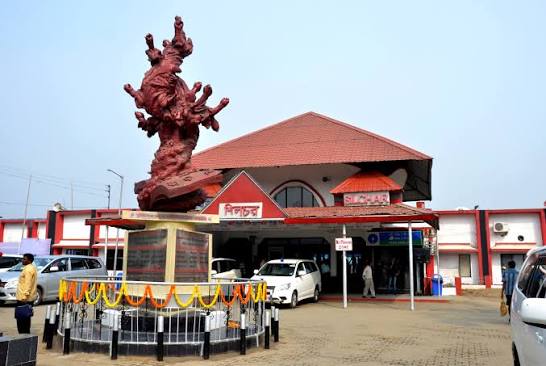
In 1874, the British administration transferred Sylhet and Cachar from Bengal to the newly constituted Chief Commissionership of Assam. The Partition of 1947 and the Sylhet referendum subsequently altered the region’s political geography. The Language Movement of 1961 became a defining moment in Barak’s regional consciousness. On 19 May, eleven language martyrs lost their lives at Silchar Railway Station while asserting linguistic and democratic rights.

Subsequent movements, particularly the struggle for Assam University, again demonstrated the Valley’s collective strength. Nevertheless, these movements never produced a permanent regional political organisation. Understanding why requires serious introspection.
The Bodoland Experience: Lessons for Barak
Bodoland offers a particularly relevant comparison because both regions belong to Assam, yet their experiences of political bargaining have differed considerably. Through sustained movements, the Bodo community secured important institutional gains, including the establishment of the Bodoland Territorial Council in 2003 and the Bodo Peace Accord of 2020.
Regional parties such as the Bodoland People’s Front (BPF) and United People’s Party Liberal (UPPL) subsequently became influential participants in Assam’s political landscape. Following the 2023 delimitation, Assembly constituencies in the Bodoland Territorial Region increased from 11 to 15, while Barak Valley’s representation declined from 15 to 13.
Bodoland’s regional parties have also participated in coalition governments. The BPF joined the BJP-led government in 2016, while the UPPL subsequently allied with the BJP. The BPF’s decisive victory in the 2025 Bodoland Territorial Council elections further demonstrated its regional political relevance.
These developments illustrate how organised regional political forces can influence larger parties. Assam has 126 Assembly seats. A Barak-based party controlling even a substantial proportion of its 13 constituencies could not independently form a government. However, in a hung Assembly, a relatively small regional party might exercise considerable bargaining power.
Conversely, its influence would be limited when a major party commands a comfortable majority. Thus, political bargaining power depends on electoral circumstances and cannot be guaranteed.
Beyond Ministerial Positions: Institutional Empowerment
Should a regional party merely seek ministerial positions, or should its primary objective be permanent administrative and financial empowerment? Assam already has a Barak Valley Development Department. However, its actual authority, independent budget, project approval powers and implementation capacity deserve critical assessment.
A regional political force could demand greater administrative powers, adequate funding, coordinated development planning and transparent expenditure monitoring. Another important possibility is a separate Barak Valley Economic Development Council, responsible for long-term strategies involving agriculture, industry, tourism, natural resources, connectivity and employment.
Such a council could include elected representatives, economists, entrepreneurs, agricultural experts and civil society representatives.
Within India’s constitutional framework, the state government could establish an appropriate development institution through legislation or administrative arrangements. However, its powers would differ from those of an autonomous council under the Constitution’s Sixth Schedule.
Its legal foundation, financial authority and administrative responsibilities would therefore require clear definition. If institutional reforms fail to address regional aspirations, a political organisation could also encourage democratic debate on greater autonomy, separate statehood or Union Territory status.
Lessons from Other Regional Movements
India’s political history provides several instructive examples.
The Jharkhand Mukti Morcha placed tribal rights, land, natural resources and regional identity at the centre of its movement, contributing significantly to Jharkhand’s creation in 2000.
The Telangana Rashtra Samithi transformed the demand for separate statehood into a successful political movement, eventually governing Telangana after its formation in 2014. Its subsequent electoral defeat, however, demonstrated that movement-based popularity does not guarantee permanent support.
In Tamil Nadu, the DMK and AIADMK established enduring political influence by combining linguistic identity with social justice and development. Conversely, the Asom Gana Parishad’s experience demonstrates that even parties emerging from powerful mass movements can gradually lose public confidence.
These examples suggest that regional sentiment alone is insufficient. Sustainable success requires realistic policies, capable leadership, organisational discipline and administrative credibility.
Major Challenges for a Barak-Based Regional Party
Despite its potential, establishing an effective regional party in Barak would involve formidable challenges. First, social and cultural diversity. Barak is home not only to Bengali-speaking Hindus and Muslims but also to Manipuri, Bishnupriya Manipuri, Dimasa, tea-garden and other communities. Each possesses distinct identities and aspirations.
A party representing only one language, religion or community would struggle to gain Valley-wide acceptance. An inclusive regional identity must therefore be its foundation. Second, religious polarisation. Electoral politics frequently allows communal divisions to overshadow shared economic interests. Replacing divisive narratives with common demands for employment, education, healthcare and development would be essential.
Third, established political competition. National parties possess extensive organisational networks, financial resources and longstanding electoral support. Challenging them would require sustained grassroots mobilisation. Fourth, credible leadership. A successful regional party would need leaders committed to collective welfare rather than personal ambition. Popular individuals alone cannot sustain an organisation.
Fifth, electoral uncertainty. Without sufficient electoral support, a new party might remain politically marginal. Vote splitting could even produce outcomes contrary to its objectives.
These challenges make careful preparation indispensable.
Is a Regional Party the Only Alternative?
A separate political party is not necessarily the only solution.
Elected representatives from different parties could jointly pursue a common regional development agenda. Alternatively, civil society organisations, business associations, academics and social institutions could establish a strong non-political regional platform.

However, past experience suggests that such initiatives have not achieved the desired effectiveness. Instances of elected representatives collectively asserting Barak’s interests across party lines remain uncommon. Mass organisations have undoubtedly contributed to important development projects, but none has emerged as a sustained, representative voice of the entire Valley.
An electorally successful regional party could provide a more direct platform for political bargaining and accountability. Even without substantial legislative representation, it could independently raise regional concerns, organise democratic protests and challenge administrative neglect without depending on national party leadership.
Nevertheless, such independence would be meaningful only with broad public support, credible leadership and organisational strength.
A practical beginning could involve participation in grassroots democratic institutions, particularly municipal and panchayat elections. These would provide opportunities to test public acceptance, demonstrate administrative competence and gradually develop political credibility.
Conclusion
The Barak Valley possesses a distinguished history of collective struggles, from the Language Movement to the establishment of Assam University. Yet this tradition of unity has never evolved into a lasting regional political force. Bodoland’s experience demonstrates that organised regional parties can acquire political bargaining power, although its historical and constitutional circumstances differ from Barak’s.
A Barak-based political initiative could pursue stronger development institutions, a separate economic development council, greater administrative autonomy and informed debate on alternative constitutional arrangements. However, its success would depend fundamentally on developing an inclusive regional consciousness that places shared interests above religious, linguistic and communal divisions.
Ultimately, the question is not simply whether a new political party should be established. The fundamental question is whether the people of Barak Valley, irrespective of caste, creed or religion, are prepared to unite around their common aspirations for economic development, administrative rights and political dignity.
The answer will determine the future of any Barak-based regional political force.
The views expressed are personal.The author is an Advocate of the Gauhati High Court.



