

Treated Over 600 Patients in First Year
 KRC TIMES Barak Valley Bureau
Hailakandi: The expansion of critical care services in Hailakandi district during 2021-22 marked a significant milestone in strengthening the local healthcare system and improving access to life-saving treatment for critically ill patients.
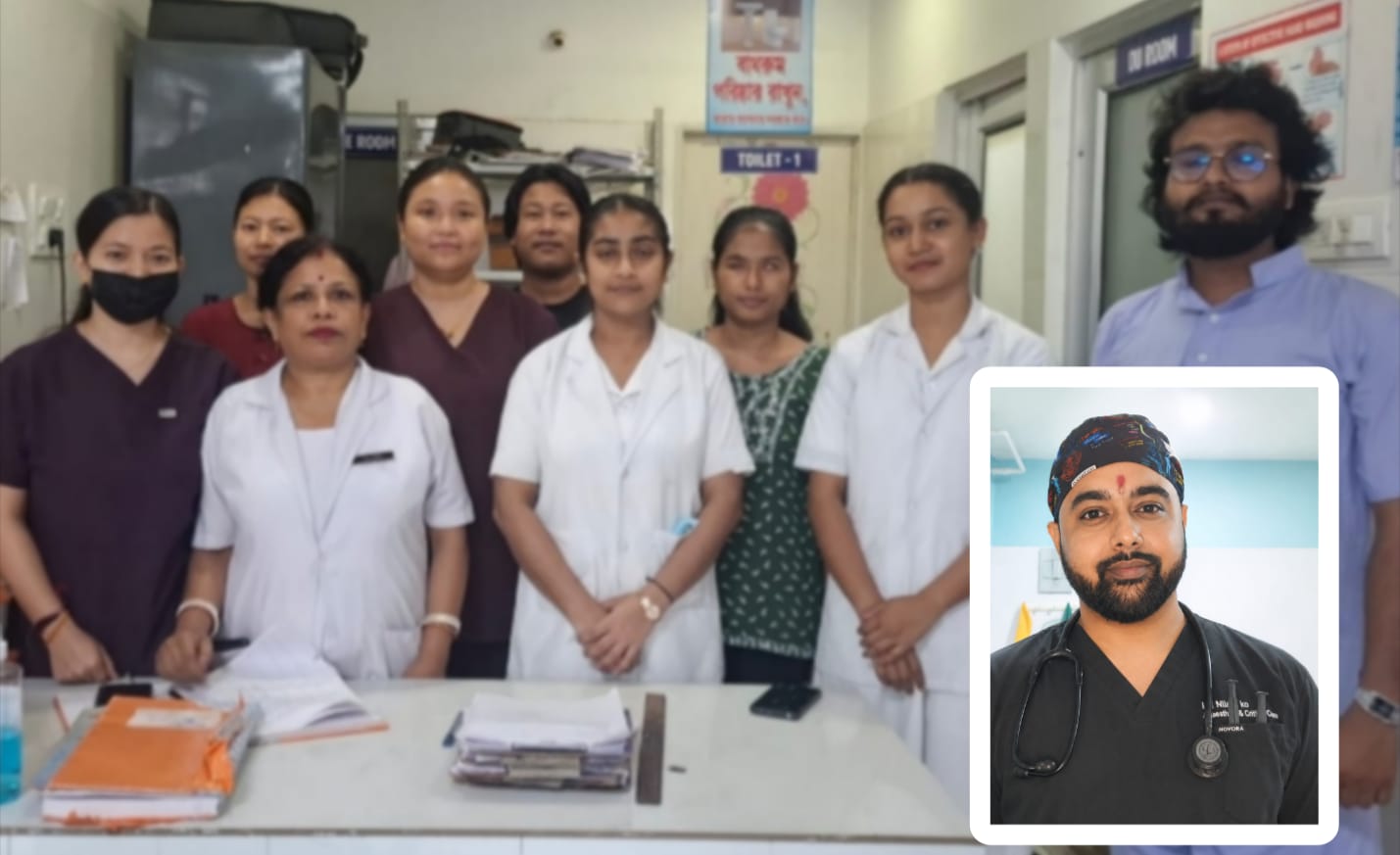
At a time when specialized intensive care facilities were still developing in the district, the Government ICU gradually established itself as a vital treatment center. Despite challenges such as limited infrastructure, a newly formed medical team, and low public awareness about critical care services, the unit succeeded in earning the trust of the community through dedicated service and consistent efforts.
A major contribution to this transformation came from intensivist and anesthesiologist Dr. Nilanko Ghosh, who led the ICU during its formative phase. Under his leadership, the unit provided treatment to more than 600 critically ill patients within its first year of operation.
Medical sources stated that the ICU team successfully managed numerous complex and high-risk cases while introducing several modern critical care practices that were previously unavailable in the district. These advancements significantly enhanced the quality of treatment available to local residents.

Recalling the early days of the ICU, Dr. Nilanko Ghosh said that building public confidence in critical care services was one of the biggest challenges. However, with the support of the hospital administration, the availability of essential resources, and the dedication of healthcare workers, the team was able to establish trust among the people and demonstrate the effectiveness of advanced critical care treatment.
The development of the ICU also reduced the need for patients to travel to distant cities for specialized medical care. As a result, residents of Hailakandi gained access to advanced life-saving treatment within their own district, a benefit that proved especially important for economically disadvantaged patients and those requiring urgent medical intervention.
Healthcare experts believe that the progress achieved during this period significantly strengthened the district’s healthcare infrastructure and represented a major step forward in the treatment of critically ill patients. Even today, the ICU remains an integral part of Hailakandi’s healthcare system, continuing to provide advanced medical care closer to home.
The growth of critical care services in Hailakandi stands not only as the story of a successful medical unit but also as an important chapter in the district’s efforts to expand healthcare capacity, decentralize specialized treatment services, and improve healthcare access for the general population.